Gluten-Free Chocolate Cake Ring

GF Chocolate Almond Cake Ring

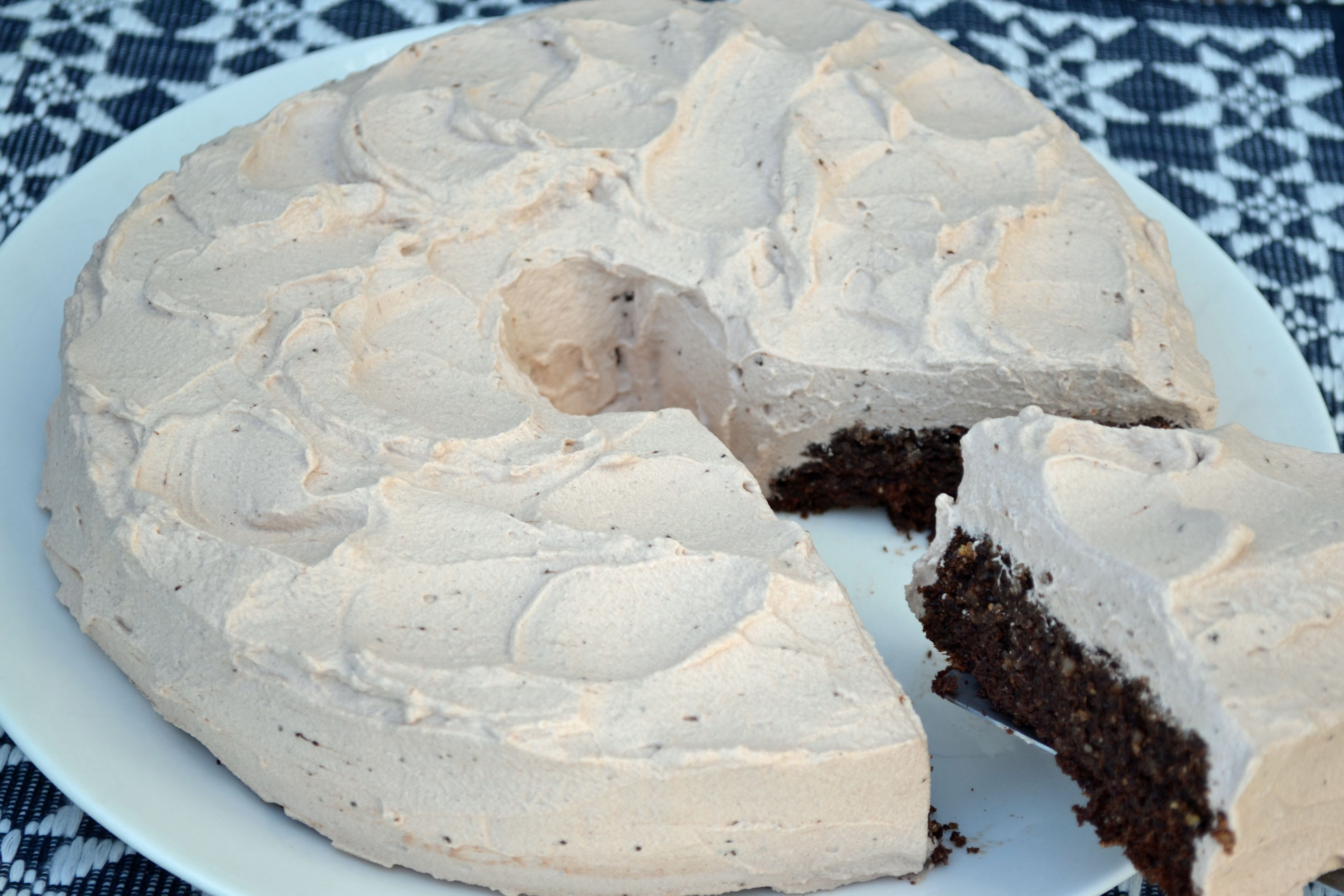
Yes, Paula Peck made a gluten-free cake. She may not have realized it since gluten-free diets were unheard of 50 years ago but this cake recipe qualifies for the popular health trend. Ground almonds are used instead of flour, resulting in a nutty texture and nutritious flavor. If it weren’t for the number of eggs (I said it was gluten-free not vegan), and the lovely chocolate whipped cream frosting, this cake could almost pass as healthy. Whipped cream flavored with vanilla extract and cocoa powder makes a surprisingly delicious frosting. It can also be stabilized using gelatin (see whipped cream frosting recipe for Chocolate Velvet Cake). As you can probably tell from the photo, I might have gone a little heavy on this whipped delight – having a little cake with my chocolate whipped cream :)

I’ve been fairly busy with various projects lately so I haven’t been posting or writing as much. I hope to be up to speed soon but wanted to share this past-meets-present quick GF delight.

Ingredients:

6 eggs
2/3 cup sugar
1 teaspoon vanilla extract
1 cup finely ground almonds or almond flour
7 tablespoons dark, unsweetened cocoa powder
1/3 cup unsalted butter, melted and cooled to lukewarm
4 tablespoons cognac

Chocolate Whipped Cream Frosting
2 cups heavy cream
3-4 tablespoons sugar
3-4 tablespoons cocoa powder
1 teaspoon vanilla extract

Preheat oven to 350 degrees. Grease a 9-inch tube pan.

In a large bowl, stir eggs and sugar together for 1 minute. Set bowl on a saucepan of warm water and heat, stirring constantly. When eggs are warm, beat them until they are cool, fluffy, and tripled in bulk. Beat in vanilla.

Combine ground nuts with cocoa. Sprinkle on top of beaten eggs. Fold in gently, adding the cooled melted butter at the same time. As soon as there is no further trace of butter, pour batter into prepared pan.

Bake 50-60 minutes or until top of cake is springy. Let ring cool before removing it from pan. Sprinkle with cognac.

While cake cools, whip heavy cream until thickened. Add sugar, cocoa, and vanilla while continuously beating until cream is stiff. Frost cake liberally.

Adapted from “The Art of Fine Baking,” by Paula Peck.
Ceviche

Ceviche by Paula Peck

Happy Cinco de Mayo!
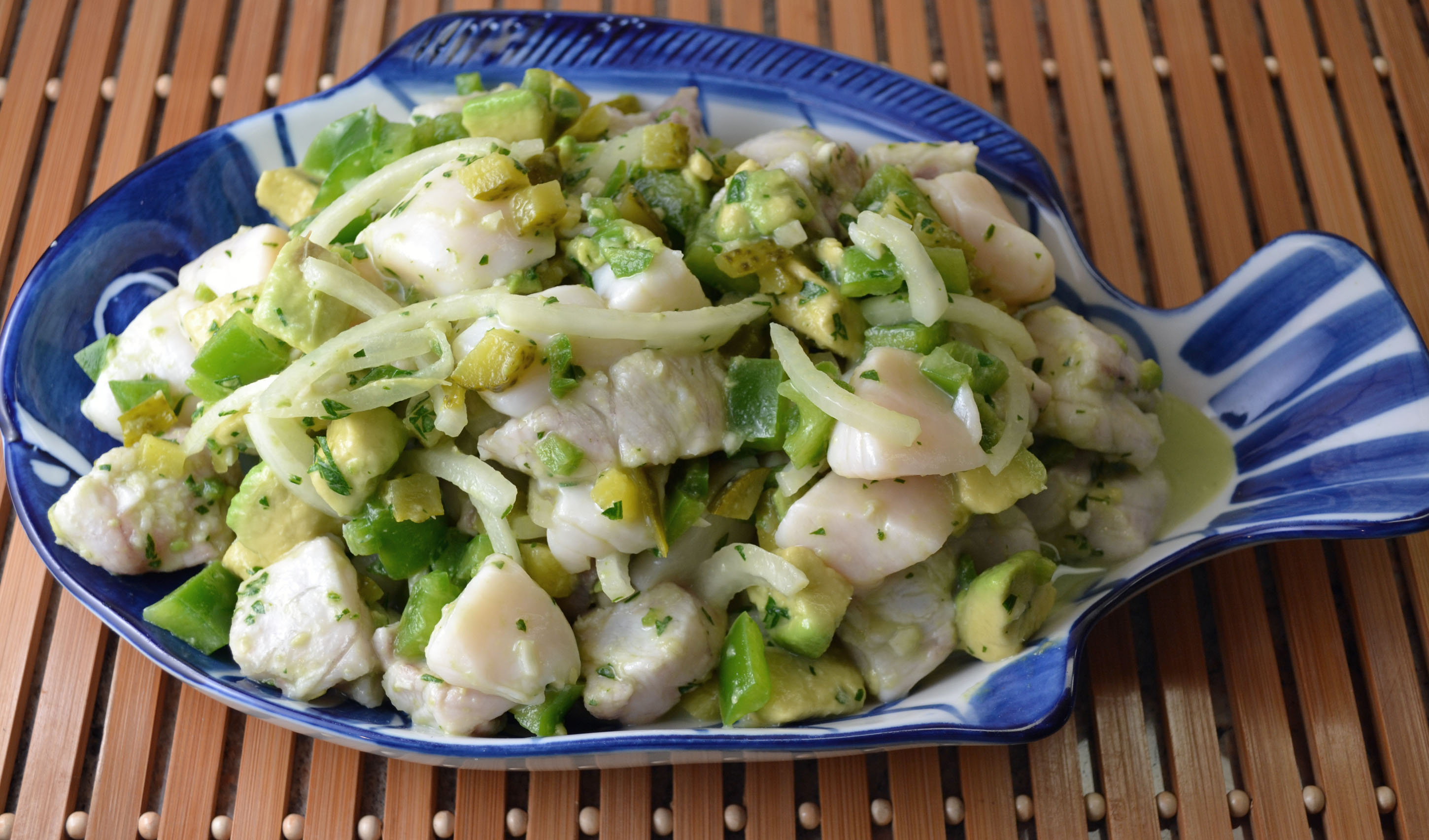
Those of us that like ceviche, usually love it. We recognize fresh fish as a special treat that requires so little cooking that the acid of lime juice can be used without any heat at all. This traditional Mexican dish is not only appropriate for this Cinco de Mayo holiday but also for spring – to get in the mood for summer.

I’ve written previously about my grandmothers exceptional Mexican recipes, many of which she learned while cooking in Mexico. This ceviche recipe definitely falls into that exceptional category. However, there are two very important aspects of this dish that can make or break it. The fish, which is marinated in lime juice for 3-4 hours, must be extremely fresh. Do not use frozen or anything that smells even the slightest bit fishy (ironically fresh fish should always have a clean smell, never fishy). Otherwise, you will be able to taste that fishiness all throughout the finished dish.

The other important aspect is the hot pepper. I recommend Serrano or even Jalapeño but as many of you may know, the heat of each pepper can vary. For this reason, stay away from using the seeds and add the pepper last, a little at a time, while combining and tasting.

My grandmother served this ceviche (while it was a work in progress) at one of her many dinner parties with James Beard and Craig Claiborne. My father was the designated dishwasher for these parties and he could always tell if a particular dish was well-liked by the leftovers on the plates that came back in the kitchen. Despite the lovely plating (in red cabbage cups), the ceviche came back virtually untouched on every plate. It turns out the hot pepper she used was so spicy that it made the dish inedible. Needless to say, my grandmother was mortified. However, this happens to the best of us and she definitely perfected the ceviche after that incident (and before it was published in “The Art of Good Cooking”). It is now by far the best ceviche I’ve ever had.

Note: Any combination of fish maybe used. I prefer to use just scallops and fish and skip the shrimp but I’ve listed the fish proportions as noted in the cookbook.

Ingredients:

1/3 lb fresh bay scallops or sea scallops
2/3 lb shelled, cleaned shrimp
1/3 lb striped bass, halibut or other firm white fish
1 cup lime juice
1 onion, sliced
1 small green bell pepper, diced
1 small hot pepper, minced
2 cloves garlic, minced
2 cans pimentos, minced (optional)
2 teaspoons chopped fresh cilantro
2 cornichons or small dill pickles
salt and pepper to tast
1 teaspoon sugar
1/2 cup white vinegar
1 large avocado

Cut all seafood into tiny pieces. Combine in a bowl. Pour lime juice over seafood. Caver bowl and place in refrigerator for 3-4 hours or until seafood has changed color and looks cooked. Drain the lime juice from the seafood.

Combine all the remaining ingredients-except avocado- in a separate bowl. Taste. The mixture should be quite well seasoned-slightly sweet and spicy. Pour over drained seafood and toss well. Place in refrigerator till serving time. Before serving, peel and dice avocado. Combine with fish mixture.

Serves 6

Adapted from “The Art of Good Cooking.”

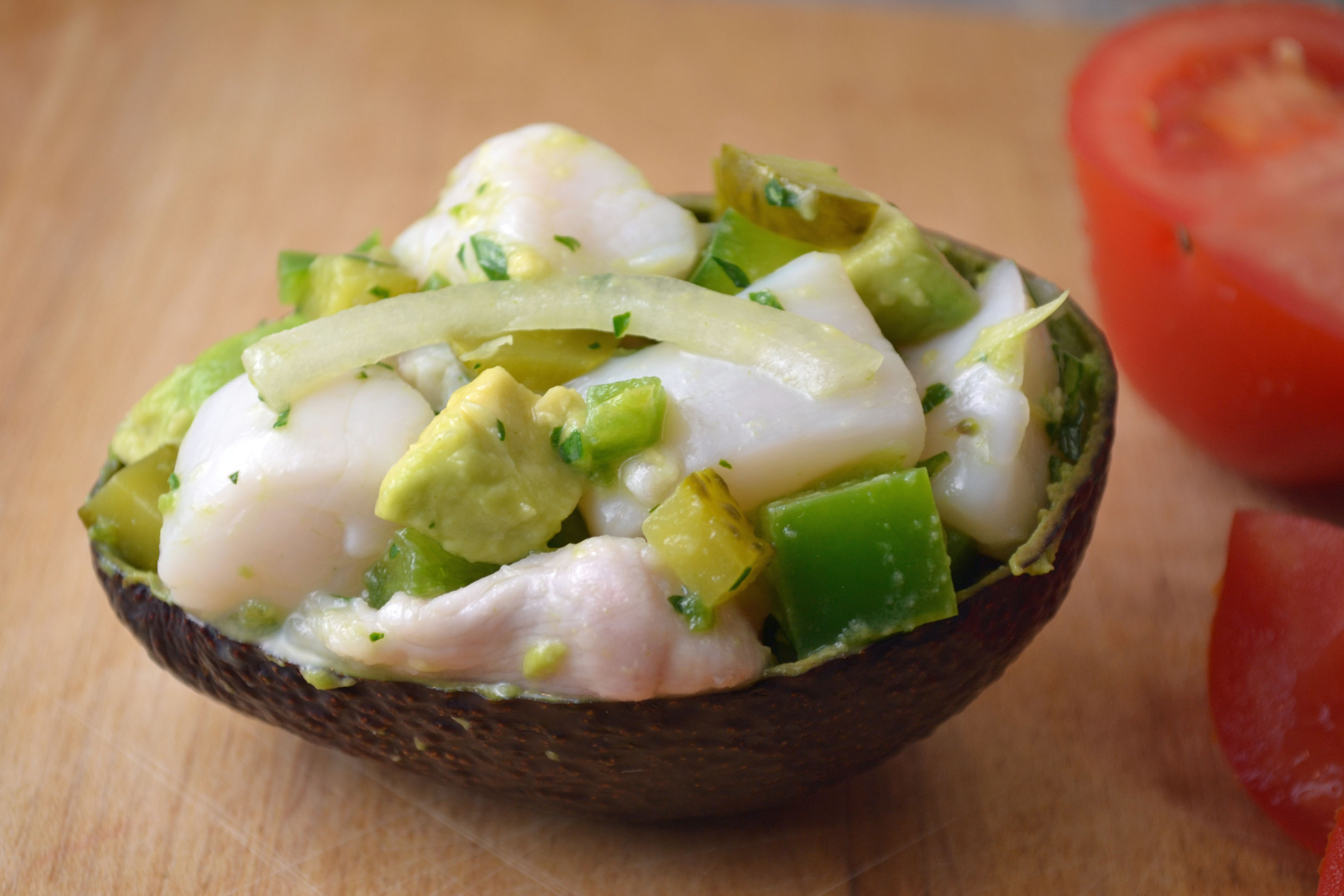
Ceviche in avocado shell

Honey Orange Bread Twist


Honey Orange Twist by Paula Peck

I’m not much of a morning person. But if something tasty is waiting for breakfast, it makes waking up early a bit easier. I don’t necessarily mean eggs and bacon, or stacks of pancakes, though they can be potentially motivating as well. I find comfort in knowing that there is a simple, but delicious breakfast bread just waiting to be toasted and smothered with honey. Healthy? No. Promotes cheerfulness? Yes! Not to mention a perfect complement to that morning coffee.

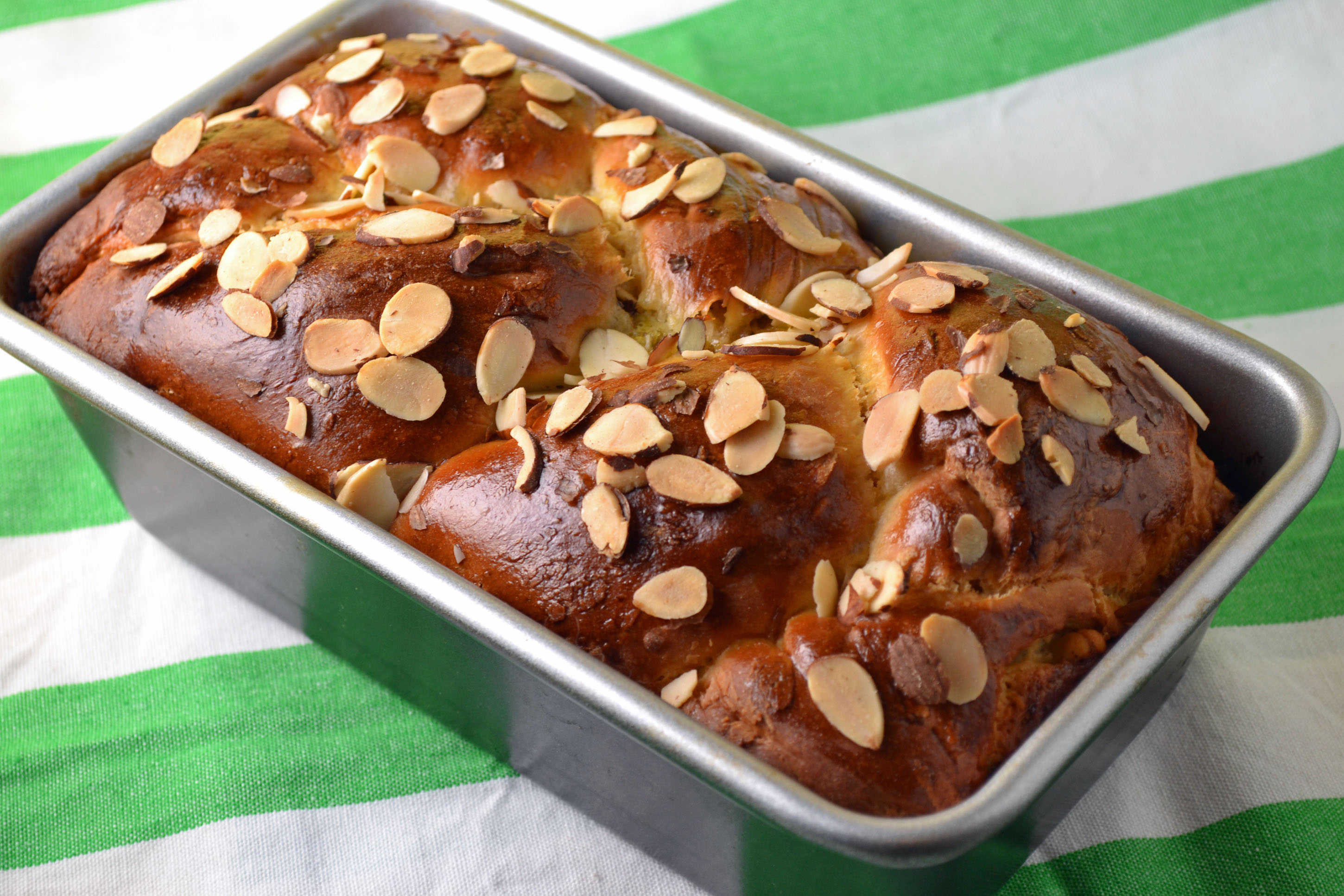
There are many breads in “The Art of Fine Baking” and I hope to one day make my way through all of them. This particular bread, like many others, uses a base recipe that my grandmother managed to turn into many different bread and pastry variations. With its layers of orange and honey, this braided beauty struck me as a spring-ish sweet bread and a lovely light breakfast. Sliced almonds and walnuts add a slight crunch and the candied orange peel is a sweet citrus contrast to the buttery bread. Best served warm or toasted and a little extra honey never hurt :)

Ingredients:

Orange Honey Filling
1/2 cup butter, softened
Zest of 1 orange
2/3 cup honey

1 recipe Basic Coffee Cake Dough
1/4 cup melted butter
2/3 cup finely crushed walnuts
1/2 cup diced candied orange peel
1 cup golden raisins
1 egg yolk mixed with 1 teaspoon heavy cream 1/2 cup sliced almonds

Preheat oven to 350 degrees. Grease two 9x5x3 loaf pans. Cream together butter, zest, and honey for Orange Honey Filling.

Roll dough into a large square, 1/4 inch thick. Brush with melted butter. Spread thinly with Orange Honey Filling. Scatter crushed walnuts, candied orange peel, and raisins over dough. Roll up jelly-roll style. With a rolling pin, press filled dough down to a thickness of 1 inch. Divide flattened dough lengthwise to make three long strips. Cut in half to make 6 shorter strips. Braid cut strips together to make 2 loaves.

Fit each loaf into a greased pan. Let rise until dough doubles in bulk. Brush with egg yolk mixture and scatter almonds over loaf twists.

Bake in preheated oven about 45 minutes, or until golden brown.

Yield: Two Loaves

Lemon Cake Logs

Lemon Cake Logs by Paula PeckI’ve barely scratched the surface of lovely cakes and buttercreams that “The Art
of Fine Baking” has to offer. I’ve resigned myself to slowly working my way through
these lavish chapters since this is where some of Paula Peck’s best work lies. I
would like to go in order, but the intricacy of some of these recipes is
more than my schedule can allow for on a regular basis. This is partly why I
happened to select this recipe. It’s fairly straight forward and can be
completed in a few short hours, possibly less. Also, lemon seemed like an ideal
choice as we make our way through spring and the days grow warmer.

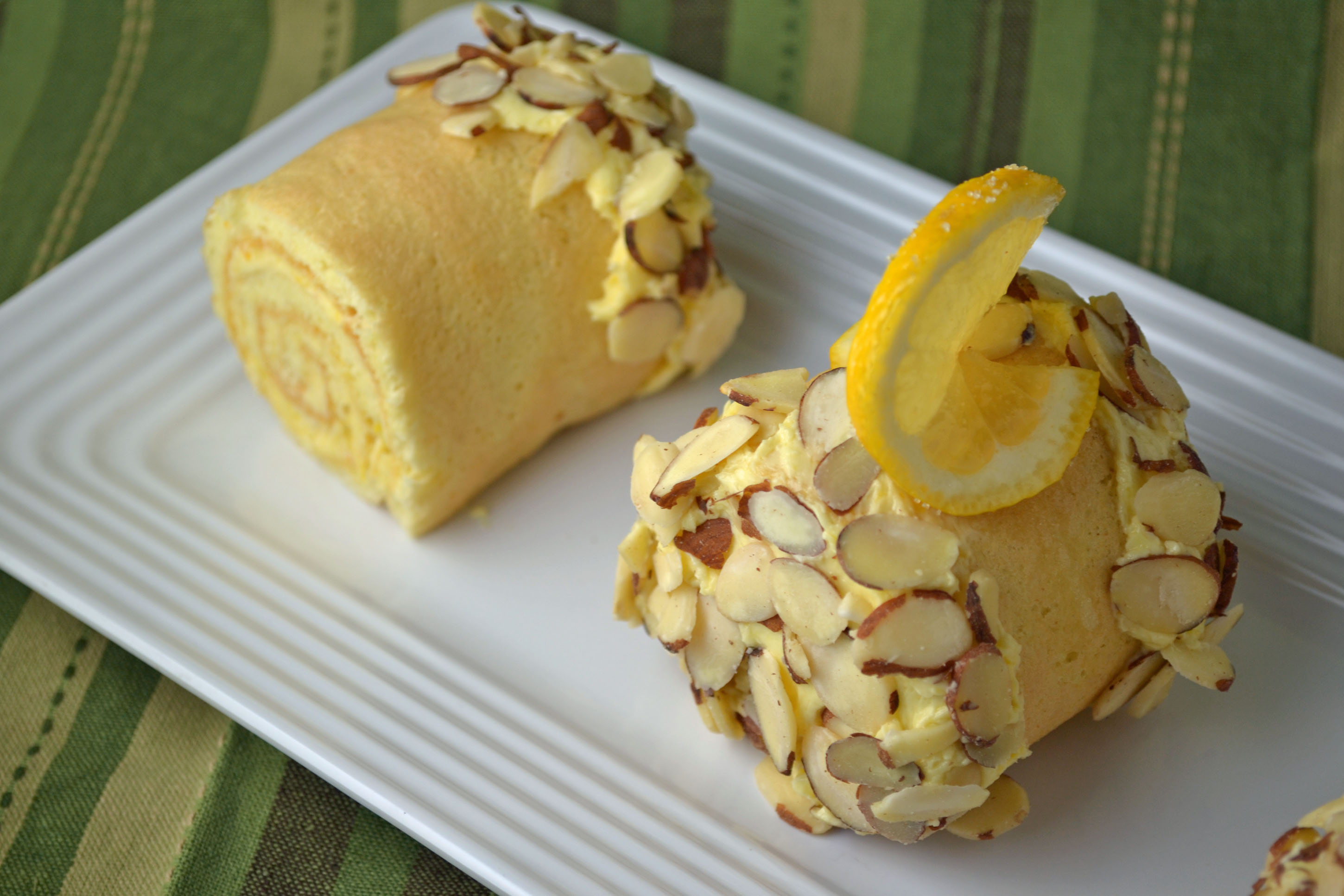
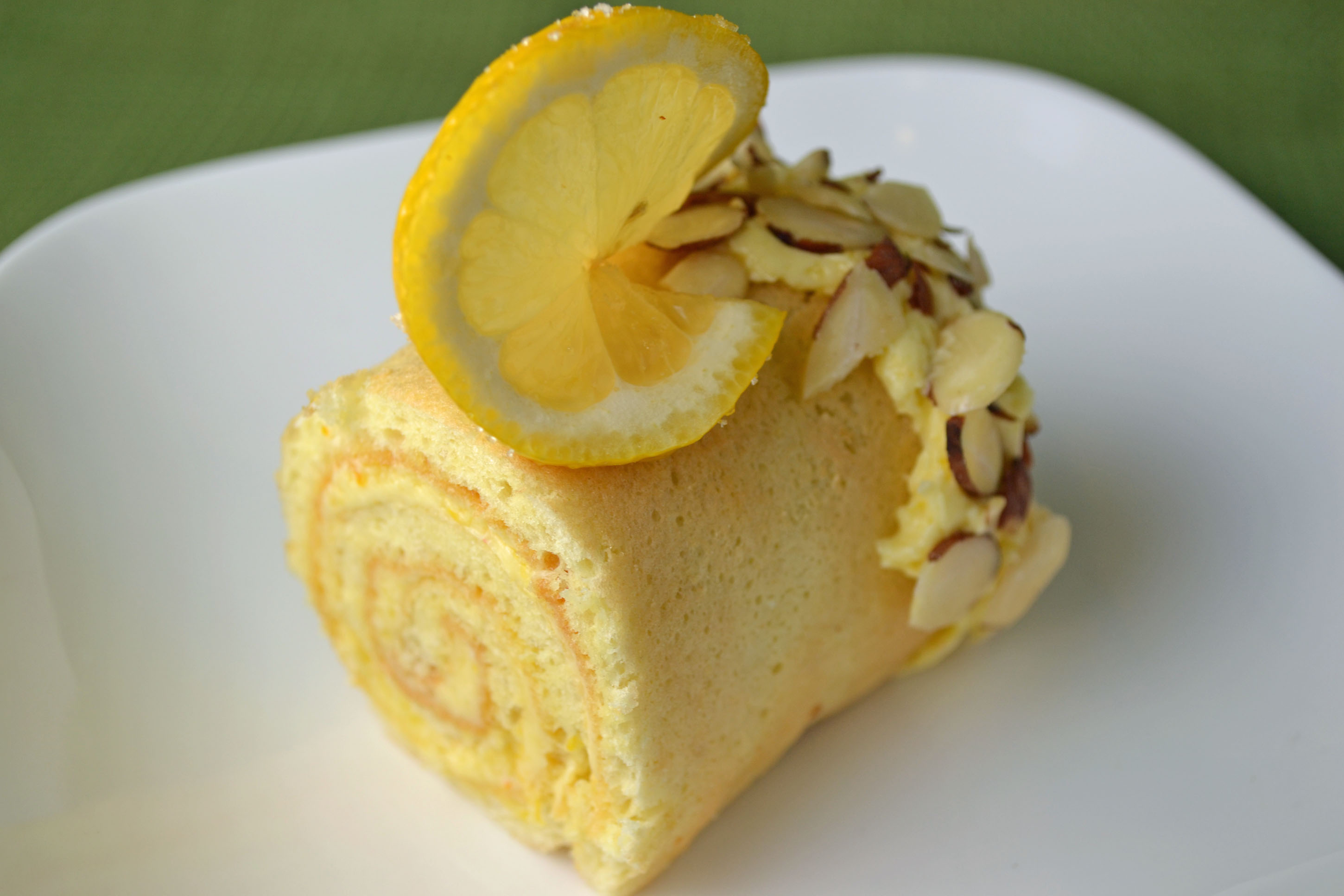
Unlike a traditional 9 inch round cake, you can get pretty sloppy when creating these little logs and they’ll still turn out cute and tasty. You don’t have to worry
much about ensuring the buttercream looks smooth or that cake crumbs don’t
stick to it. That’s the beauty of using sponge cake. Few crumbs and you can just slap on
the buttercream and roll it up. You can choose to frost both ends of the logs or
just one. Again, the buttercream doesn’t have to be perfect since it acts as a
glue for the sliced almonds. Crush the sliced almonds slightly for a refined look and dip slices of lemon in sugar for a sweet and sour garnish. No one has to know how simple this perfect party dessert was to make.

Ingredients:

1 basic sponge cake with 1 teaspoon lemon zest folded into the batter before baking
1 1/2 cups lemon buttercream
1 cup sliced almonds, slightly toasted
vanilla sugar (optional- see note)

Cut sponge roll in half to make 2 long rectangles. Spread each thinly with lemon buttercream. Roll up jelly-roll style, making 2 long, thin rolls. Trim ends. Cut into 2-inch lengths. Spread the ends of each roll with the remaining buttercream. Dip ends into almonds. Dust with vanilla confectioners sugar, if using.

Note: Vanilla Sugar can be made by burying 3 or 4 vanilla beans in a canister containing 1 lb of granulated sugar or confectioners sugar.

Yield 8-10

Lemon Cake Log

Jelly Doughnuts

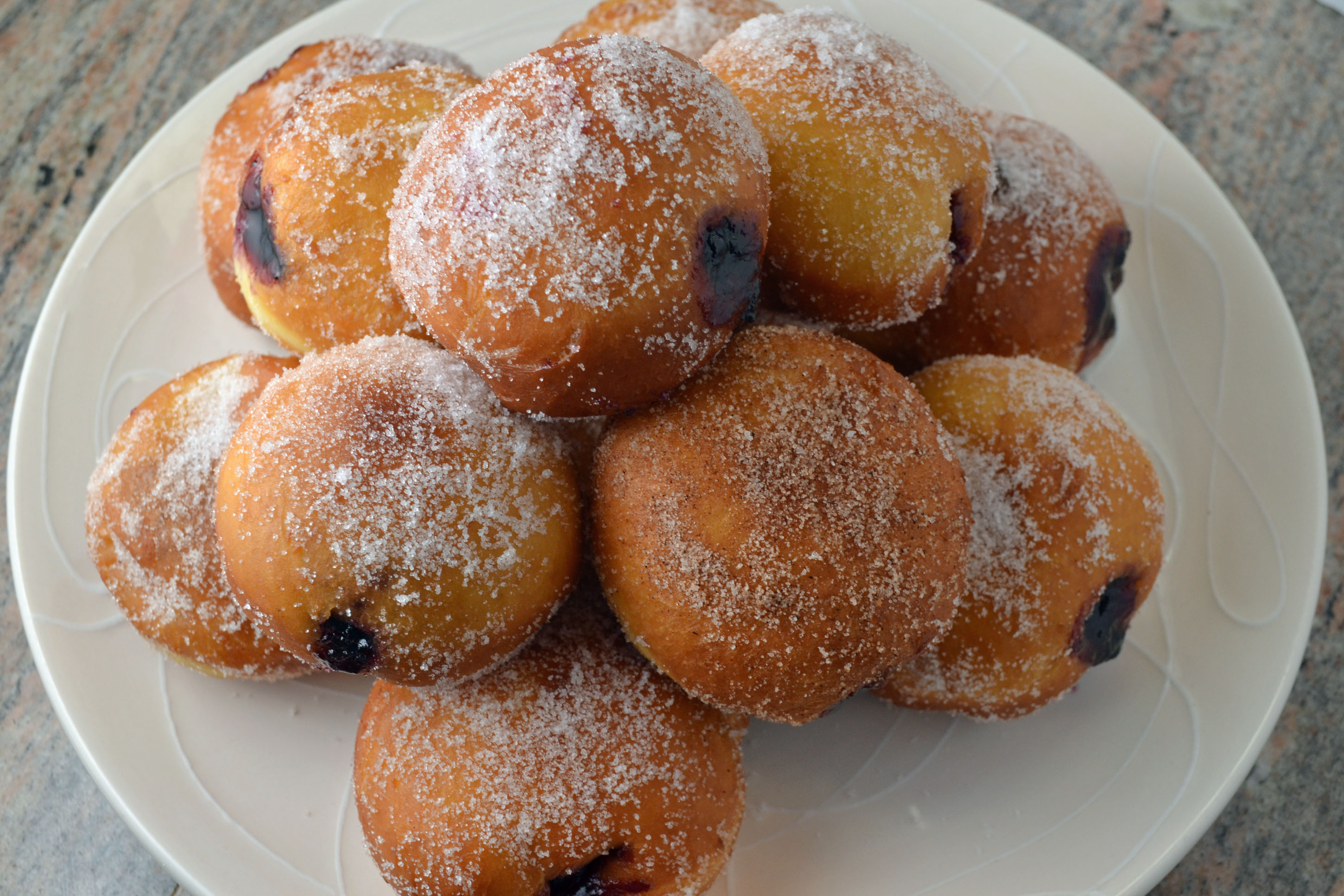
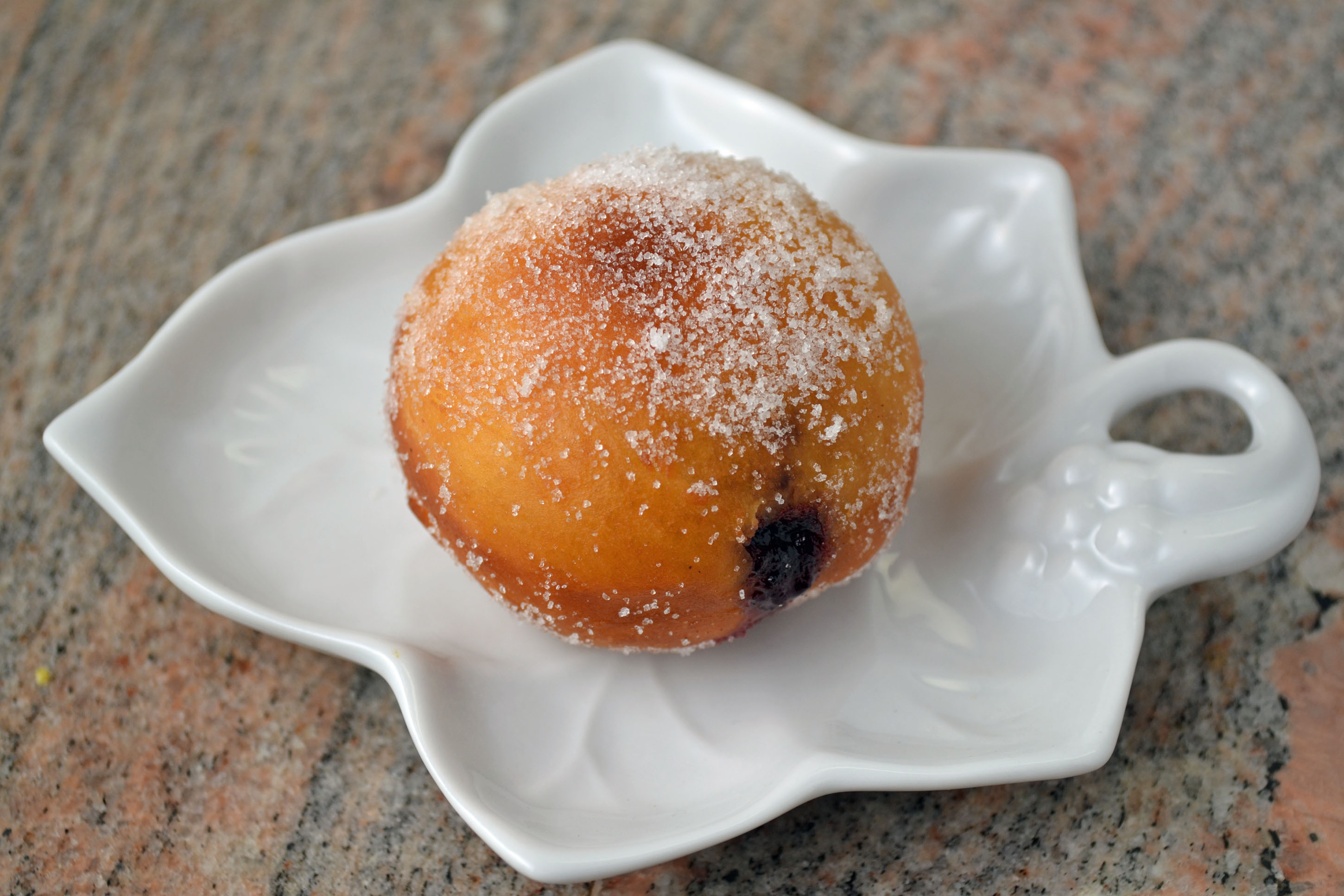
Jelly DoughnutsYes, Paula Peck made doughnuts. It may come as a surprise but this recipe is actually in “The Art of Fine Baking,” tucked away in the unsuspecting “A few breads, many coffeecakes” section. It’s a classic recipe with a base dough reminiscent of brioche. Who needs the jam filling? Warm fried dough dipped in sugar is enough to satisfy even the pickiest doughnut fanatics. And speaking of doughnut fanatics, it seems the once convenience store breakfast treat, often put in the same category as Dingdongs and Twinkies, has come full circle. Doughnuts have become a culinary art form (of some sort). Specialty bakeries are popping up all over, serving both traditional doughnuts as well as creative delights such as Peanut Butter and Jam, Tres Leches, and Green tea doughnuts (check out Doughnut Plant here in NYC). Chefs are now throwing around words like Bombolone and Beignet, which despite sounding fancy, are simply the Italian and French words for Doughnut. Even Saveur magazine recently did an article on the “Americas 50 Best Donuts“. It all comes down to one thing: one way or the other, we can’t resist fried dough glazed or dipped in sugar.

This is a versatile recipe and can be made with or without the jam filling. Try filling the warm doughnuts with Nutella and you may never find a better doughnut.

Ingredients:

2 packages dry yeast
2 tablespoons sugar
1 teaspoon honey
1 teaspoon salt
1 cup warm milk
1 egg
2 egg yolks
1 teaspoon lemon zest
3-4 cups all purpose flour
1/4 cup soft unsalted butter
vegetable oil for frying
1 1/2 cups jam
vanilla sugar (or cinnamon sugar) – see note

Mix yeast with sugar, honey, milk, eggs, egg yolks, and zest. Add enough flour to make a medium-soft dough, working in soft butter at the same time. Knead well until dough is smooth and elastic. Place dough in bowl. Dust lightly with flour. Cover bowl and place in a draft free place until dough doubles in bulk.

After dough has risen, punch it down and allow it to rise a second time.

Shape doughnuts by pinching off egg-size pieces of dough and forming each into a smooth, slightly flattened ball. Place on a well-floured towel and let balls rise until doubled in size.

While doughnuts are rising, pour at least an inch and half of vegetable oil in a heavy bottomed saucepan and heat to 375 degrees. Drop doughnuts into fat, 2 or 3 at a time and fry until undersides are a deep golden brown. Turn and fry until the other sides are also well browned, about 5 minutes in all.

Remove and drain on paper towels. When doughnuts are cool, fill them by squirting jam into their centers with a long, narrow pastry tube. Dust with vanilla sugar.

Note: Vanilla Sugar can be made by burying 3 or 4 vanilla beans in a canister containing 1 lb of granulated sugar or confectioners sugar.

Yield: 3 dozen

single

Jim Beard’s Deviled Crab

Jim Beard's Deviled Crab


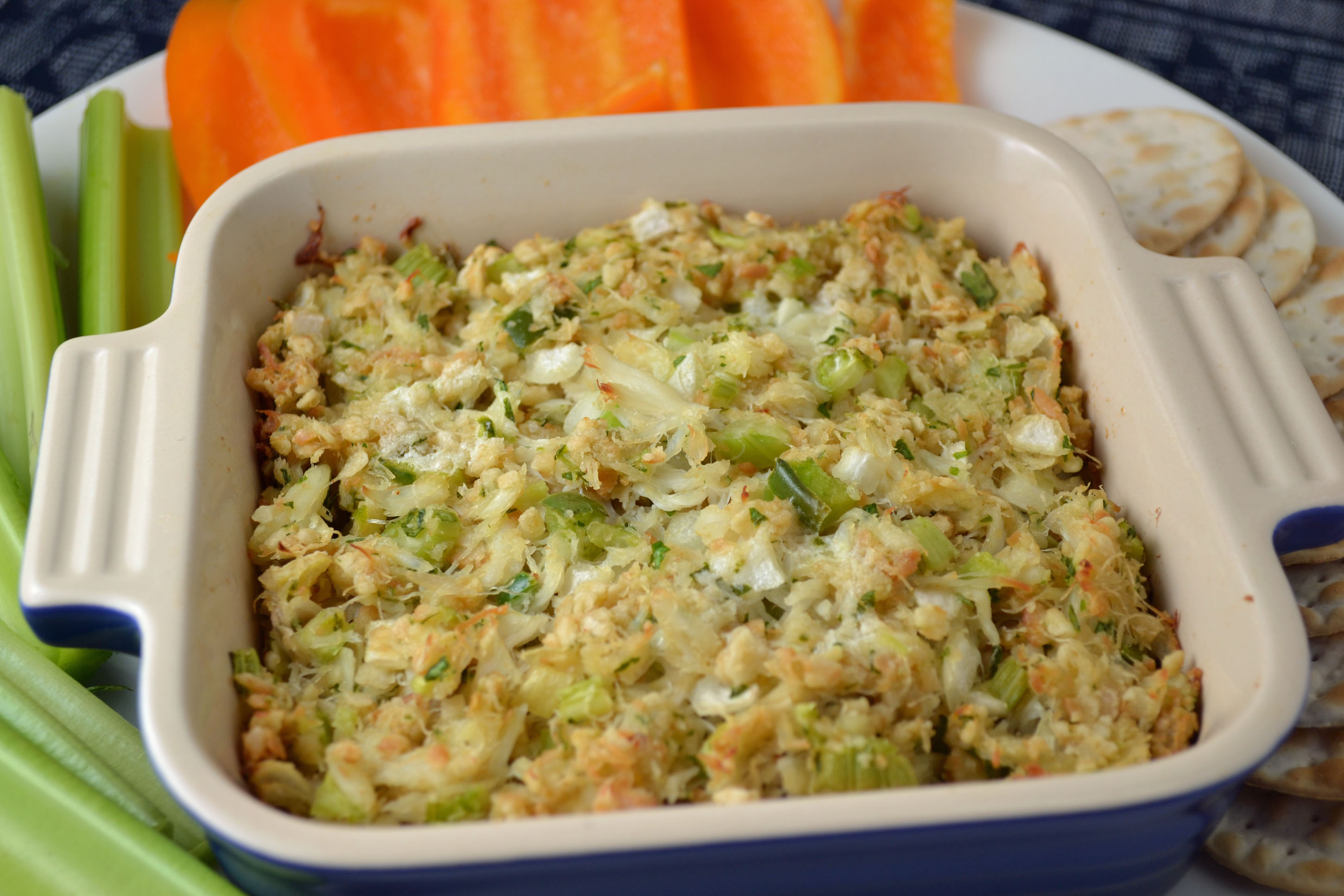
I’m not sure if this recipe exists in one of the many James Beard cookbooks. If I did, I would definitely list the source here. I actually came across this delightfully simple casserole/dip in the Paula Peck stack of unpublished recipes. Since I will usually make any crab recipe I happen to come across, this was an obvious must try.

At first glance, I wasn’t really sure what this recipe was. Is it a casserole? A dip? A side dish? I’m still not quite sure. So I’ve decided it can be any one of those things and more, because it’s just that good. One simple description says it all –  deconstructed crab cake. Think your favorite part about a crab cake but amplified. Easier to make and the emphasis is on the crab, the real star of the show (and not the often overused mushy breadcrumbs).

Though I’m sure Paula Peck and James Beard exchanged numerous recipes over the years that they cooked and shopped for ingredients together, I wish I knew more about where this recipe came from. I can definitely see similarities in their cooking and it makes me wonder if this was served at one of their many fabulous dinner parties…
Wherever it came from, I’m glad I discovered it and I think you will be too.

Ingredients:

1 lb crab meat
1 1/2 cups cracker crumbs
3/4 cup chopped celery
3/4 cup chopped onions
3/4 cup chopped parsley
1 tablespoon chopped green bell pepper
1 teaspoon dry mustard
1/2 teaspoon salt
dash cayenne
1/4 cup melted butter
1/4 cup heavy cream
3 tablespoons extra virgin olive oil

Pick over crab meat and remove any cartilage. Roll or crush crackers and measure correct amount. Preheat oven 350 degrees and butter a 1 1/2 quart casserole or 6-8 individual crab or seashells.

Mix crab meat, crumbs, chopped vegetables, all seasonings, melted butter, and heavy cream together thoroughly. Spoon into casserole or shells and dot the top with a little additional butter. Bake 30-40 minutes or bake individual shells 20 minutes. Serve hot with crudités or crackers.

Serves 6.

Chinese Style Shrimp with Black Bean Sauce

Chinese Shrimp 1

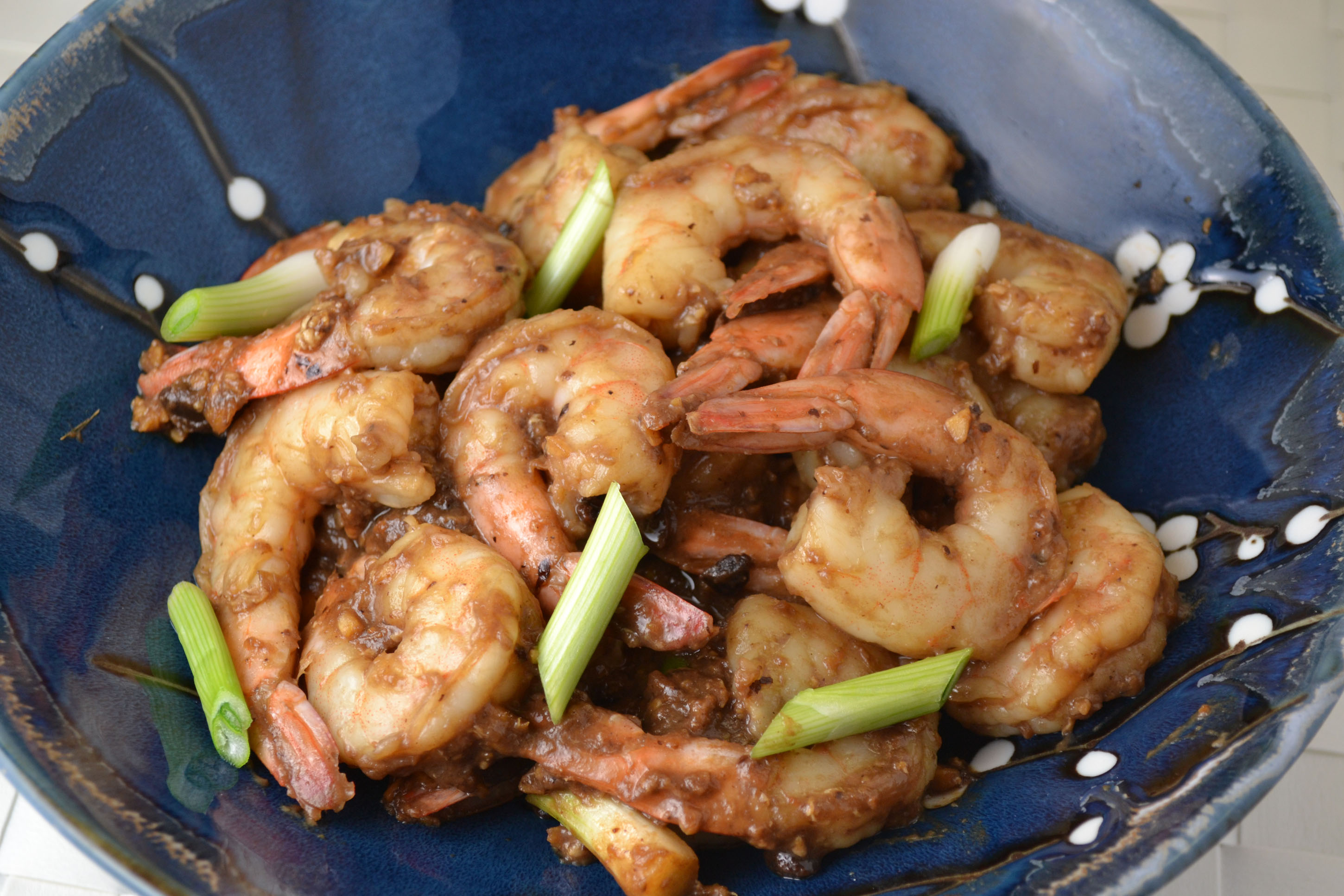
Paula Peck and Chinese food may not seem like they go together. Though she wrote a cookbook full of international recipes, she’s usually associated with croissants or lovely baked treats and not the inexpensive take-out dinner, complete with MSG (though she did go through a phase of excessive MSG use in the mid 60’s). Surprisingly, she has a fair number of Asian inspired dishes. Her recipes span from Korean Meat and Oriental Chicken Kebabs from “The Art of Good Cooking,” to Sushi and this lovely quick shrimp saute, that remain as unpublished recipes she was preparing for a new book.

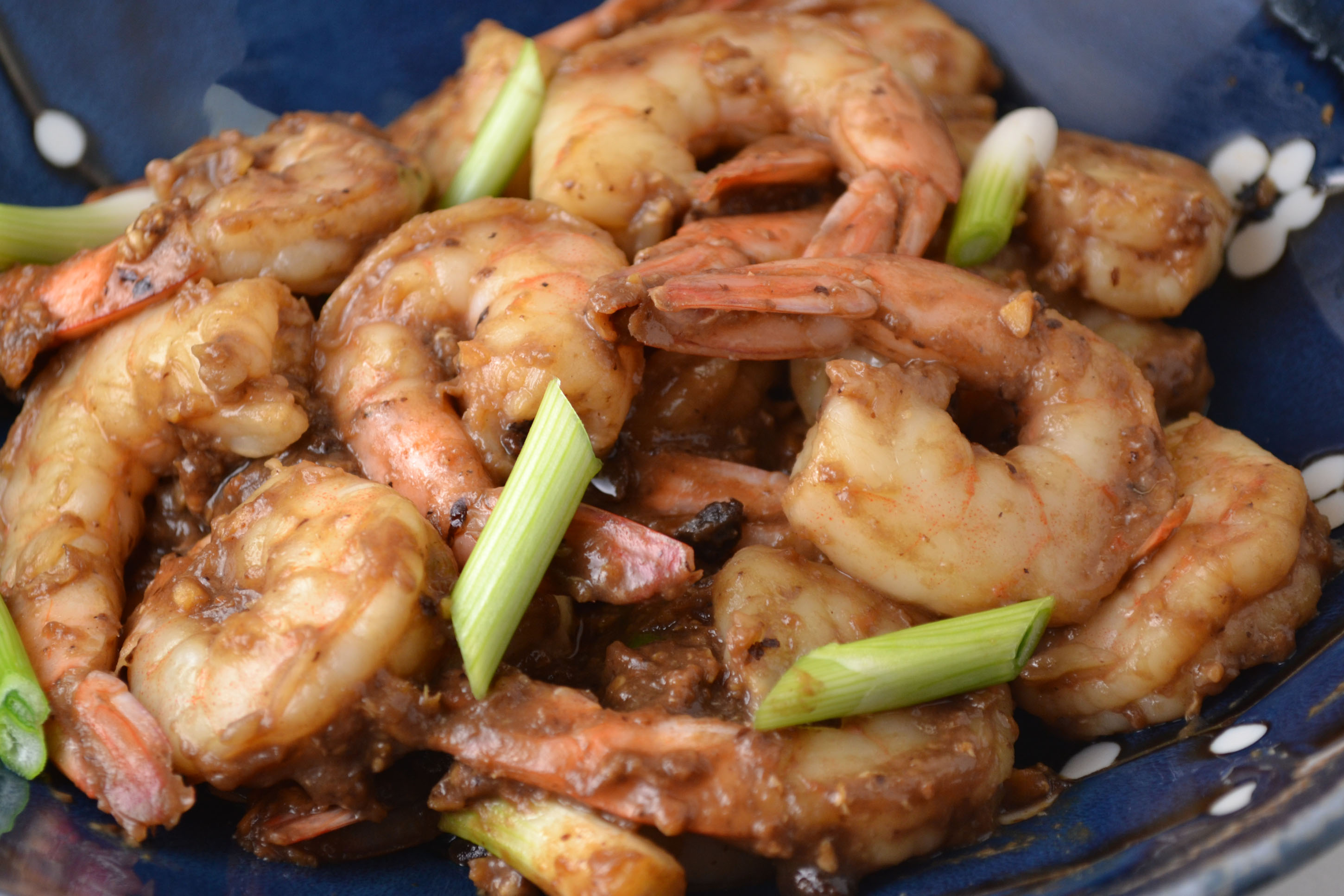
I’m not entirely comfortable improvising with Asian ingredients but I’m always surprised at how quick and easy many of the recipes are. The fermented black bean sauce is not as scary as you may think. It’s a basic sauce made up of fermented and salted black soy beans, garlic, rice wine, and salt and can usually be found in the international foods aisle at your grocery store. You could also try making your own sauce from fermented black beans, but the theme of this meal is quick! Combined with the cornstarch mixture (which Paula Peck notes will keep the shrimp moist and succulent during cooking), the sauce coats the shrimp so that the garlic bean flavor can be enjoyed with every bite. Serve alone or create a balanced meal with brown rice and a side of steamed broccoli.

Ingredients:

1 1/2 lb uncooked shrimp, peeled and deveigned
1 tablespoon cornstarch
1 large egg white
4 tablespoons peanut oil
1 tablespoon fermented black bean sauce (located near the soy sauce in the international foods section at the grocery store)
2 cloves garlic, minced
2 teaspoons chopped fresh ginger
3 tablespoons sherry (mirin/japanese rice wine may be substituted)
2 tablespoons soy sauce (amount will depend on the amount of sodium in the black bean sauce)
3 scallions cut in 1 inch pieces

Combine shrimp with cornstarch and egg white. In a large skillet, heat oil. Add black beans, garlic, ginger, and half the green onions. Cook over high heat, stirring constantly. Add shrimp. Cook stirring constantly for just a few minutes or until shrimp become opaque. Stir in sherry and soy sauce. Stir only until sauce is thickened. Sprinkle with remaining scallions.

Serves 4.

Chinese Style Shrimp in Black Bean Sauce


Homemade Whole Wheat Bread with Honey Nut Cinnamon Butter

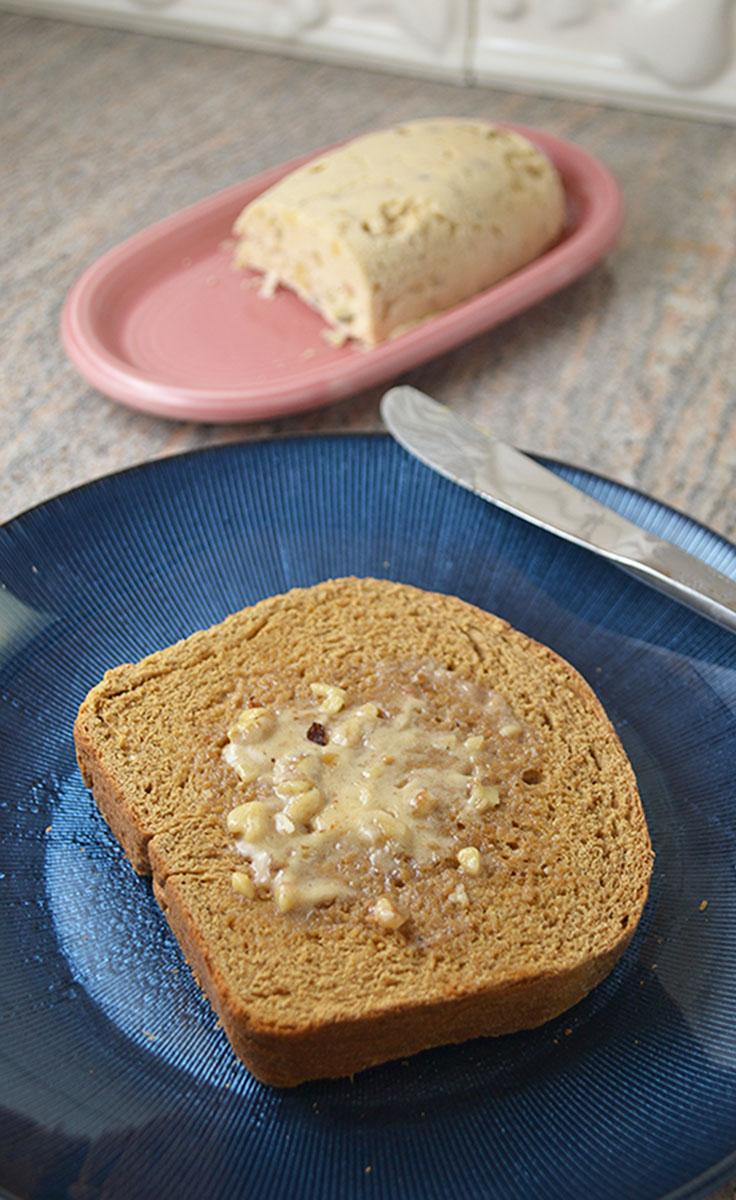
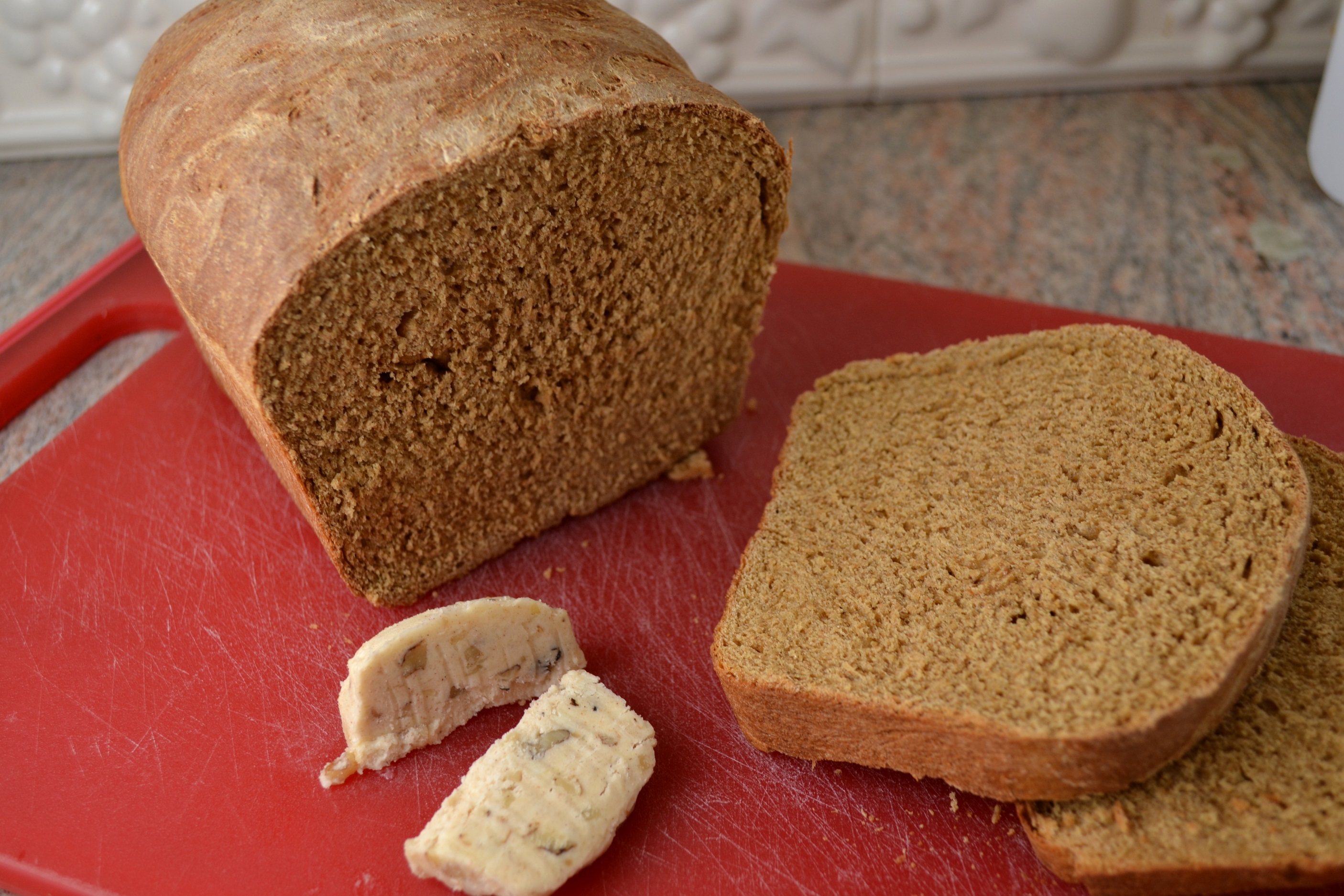
Whole Wheat Bread with Honey Nut ButterFinally a new post! I was busier than expected for most of February and though this sounds like it might be a good excuse for not posting in three weeks, I admit to have fallen victim to the is-it-spring-yet lack of motivation. There are many great winter recipes throughout my grandmother’s books but surprisingly, this simple whole wheat sandwich bread is what pulled me out of my slump. It’s hard to beat warm fresh bread and butter, even in it’s most basic form.

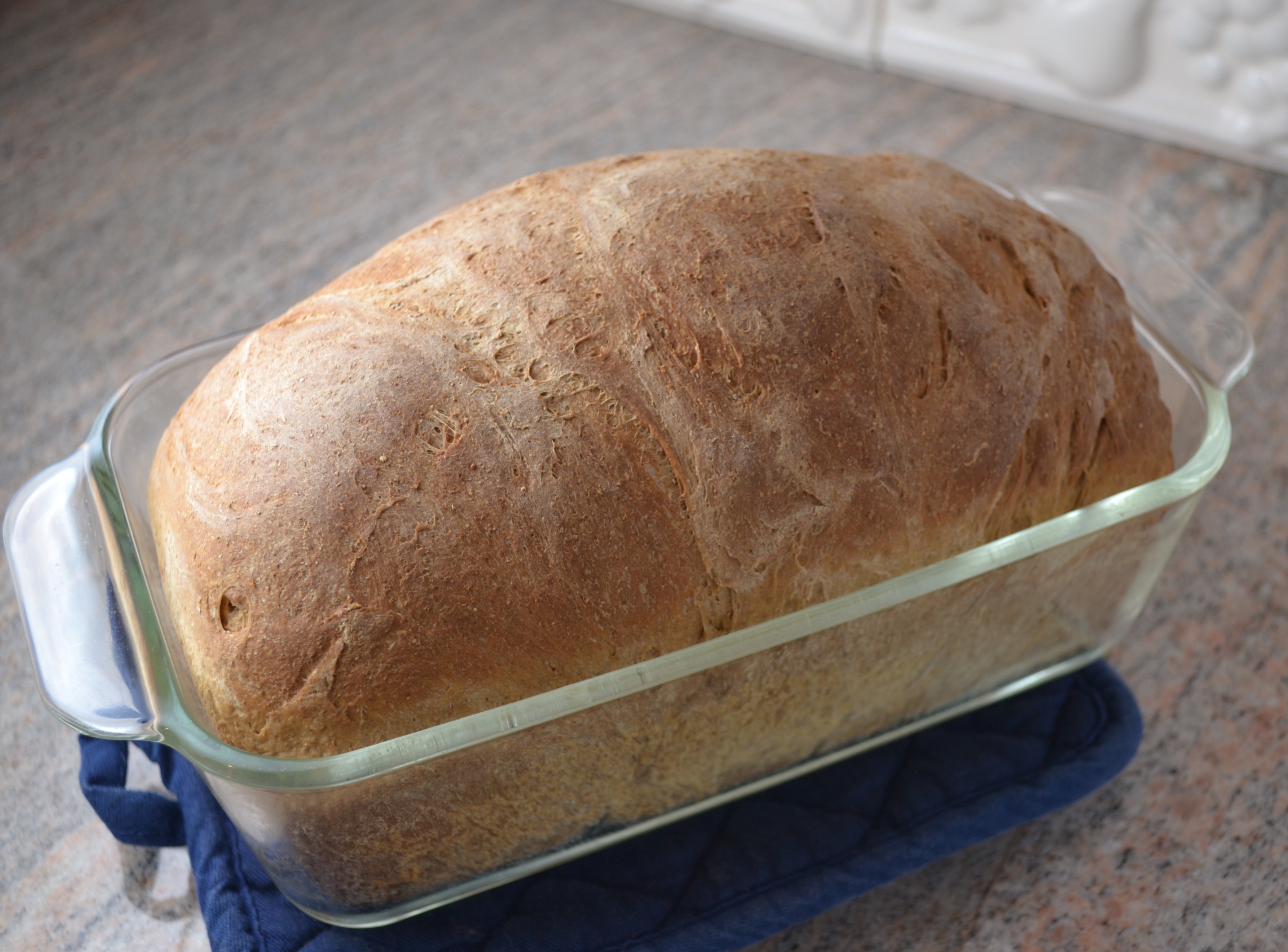
I’m far from an expert but I’ve played around enough with bread to know that whole wheat breads are more difficult than white breads. They often don’t rise as well, or they come out dense due to the lack of gluten. Even those with only 50% whole wheat flour can be tricky. This is why I am so impressed with this recipe. Rising/proofing was not a problem and the bread came out fluffy and not crumbly (also a potential issue with homemade sandwich bread).

I like to think of this bread and butter combination as a joint effort. This whole wheat bread recipe comes from my grandmother’s book,”The Art of Fine Baking.” While the Honey Nut Cinnamon Butter is my own recipe. I figured they would go nicely together but was surprised by such a perfect match. The bread, though rich with flavor from the whole wheat flour and a bit of molasses, is not sweet. It’s complimented by the nutty honey butter that adds both texture and that missing touch of sweetness. With such a killer combination, it’s hard not to eat half a loaf right from the oven – but that’s ok because the whole wheat flour makes it healthy, right? Let’s just pretend…

Whole Wheat Bread with Honey Nut Cinnamon Butter

Ingredients:

4 packages of dry yeast
2 tablespoons salt
1 tablespoon sugar
3 tablespoons dark molasses
2 1/4 cups lukewarm milk or water
3-4 cups all purpose flour
3-4 cups whole wheat flour
3 tablespoons unsalted butter
1 recipe Honey Nut Cinnamon Butter

Grease two 9x5x3 loaf pans.

Combine yeast with salt, sugar, molasses, and milk. Add enough flour to make a stiff dough. Add soft butter. Knead, adding more flour if necessary, until dough is smooth and elastic – about 10 minutes.

Place dough in bowl. Flour lightly. Cover and let rise in a draft free place until it has doubled in bulk (30-45 minutes). Punch down dough and knead briefly to remove all air. Divide mixture in half. Mold dough into two compact loaves which are higher and rounder in the centers. Place in greased pans, filling them 2/3 full. Cover and let rise until dough reaches tops of pans.

While dough is rising for the second time, preheat oven to 425 degrees. Bake on lowest rack in oven 30-40 minutes or until loaves are golden brown. Immediately remove bread from pans and cool on rack.

Makes 2 Loaves

Adapted from the “The Art of Fine Baking,” by Paula Peck.
Whole Wheat Bread by Paula Peck

Florentines

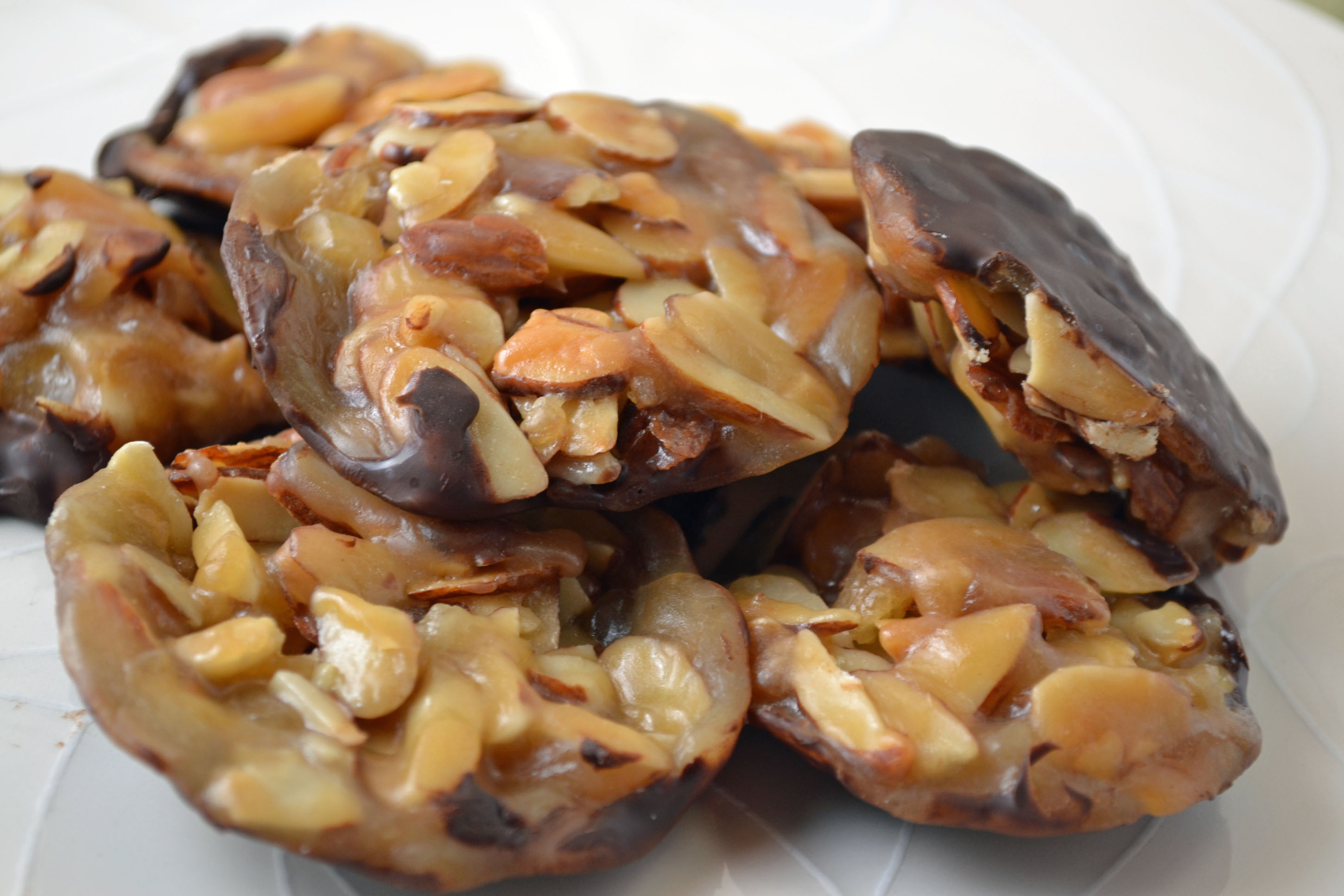
Florentines by Paula Peck

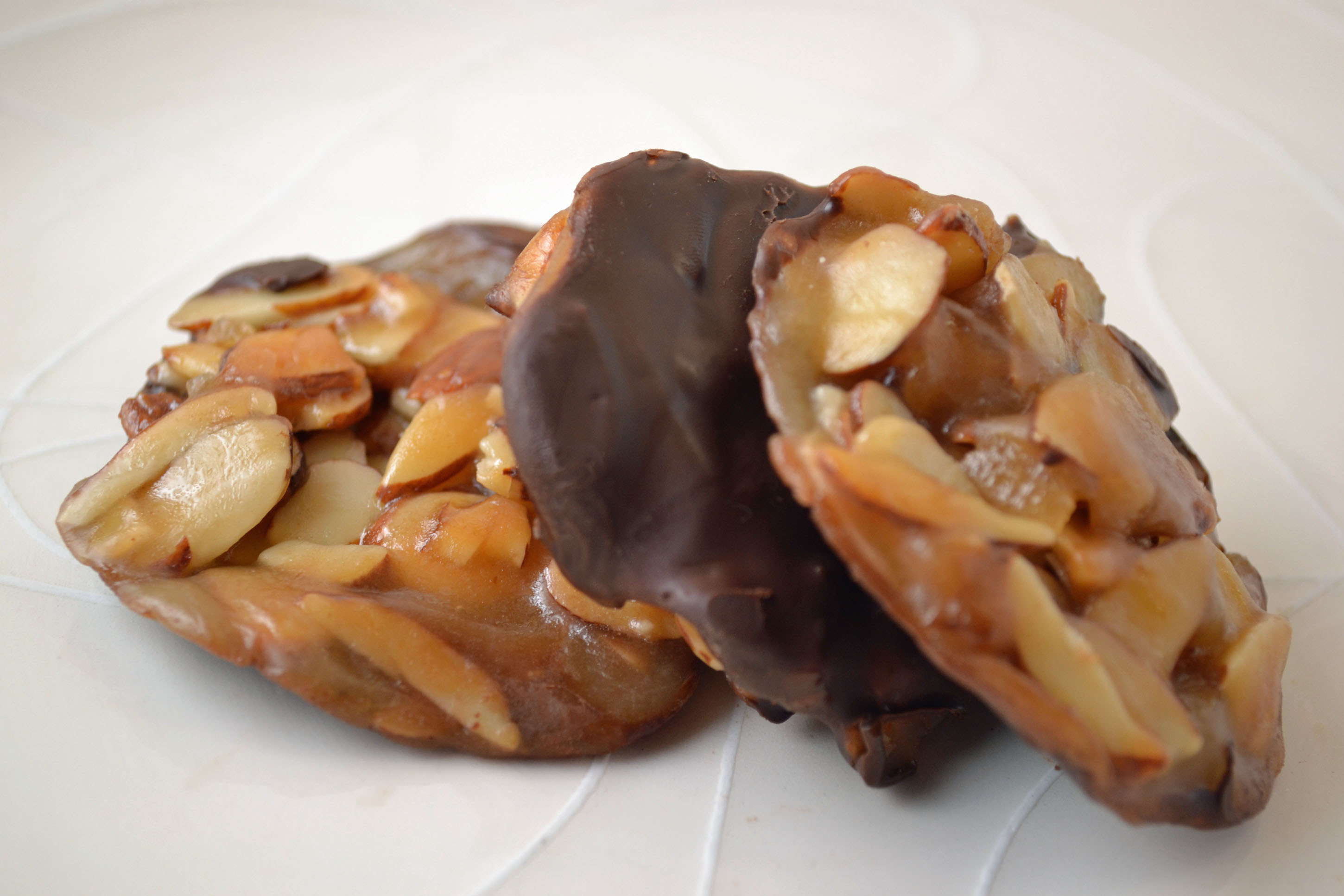
I’m no expert in making Florentines but it’s hard to go wrong with these gooey chewy chocolate dipped cookies. I realize they should probably be crispier, thinner, maybe rounder, and more even. But I’m not complaining. A cookie recipe that my father remembers my grandmother making, he confirmed that these turned out how she intended. Candied orange peel is the special ingredient that makes these different from many Florentine recipes that use grated orange zest. It maybe a little harder to find, but candied orange peel is what will definitely win over those orange-chocolate lovers. Not a orange-chocolate fan (I’m not particularly crazy about it myself)? Try candied ginger and you’ll have a whole different cookie.

A note about this recipe: those of you who are foolish ambitious enough to try to replace the shortening in this recipe with coconut oil, feel free but just make sure you use a very a mild one. Otherwise, the results are..lets just say, less than ideal. I would recommend skipping the shortening all together and just using melted chocolate as is.

Ingredients:

1/2 cup sugar
1/3 cup heavy cream
1/3 cup honey
2 tablespoons unsalted butter
1/4 cup candied orange peel, finely chopped
1/2 cup sliced almonds
3 tablespoons sifted flour
8 ounces semisweet chocolate, chopped
1 tablespoon vegetable shortening

Preheat oven to 400 degrees. Grease baking sheets well.

Combine sugar, cream, honey, and butter in a heavy saucepan. Stir over low heat until sugar is dissolved. Raise heat and boil without stirring until soft-ball stage (a ball forms when a bit of mixture is dropped into cold water) or until mixture registers 238 degrees on a candy thermometer. Cool slightly.

Stir in orange peel, nuts, and flour. Drop small rounds of batter on the prepared cookie sheets, leaving at least 2 inches between each cookie. Flatten each cookie with a fork dipped in milk (if necessary). Bake 8-10 minutes or until cookies are golden brown. They will spread while baking. Therefore, immediately upon removing them from the oven, pull each one back into the shape of the round with a greased 3-inch cookie cutter. Using a cutter will ensure their final roundness.

When cookies are firm, remove from cookie sheet and finish cooling on a rack. Melt chocolate in a double boiler. Stir in shortening. Coat underside of each cookie thinly with melted chocolate. Place in refrigerator long enough to set chocolate.

Yield: approximately 16

Adapted from “The Art of Fine Baking,” by Paula Peck

few

Roquefort Bars (or Blue Cheese Bites)

Roquefurt Bars (blue cheese bites)

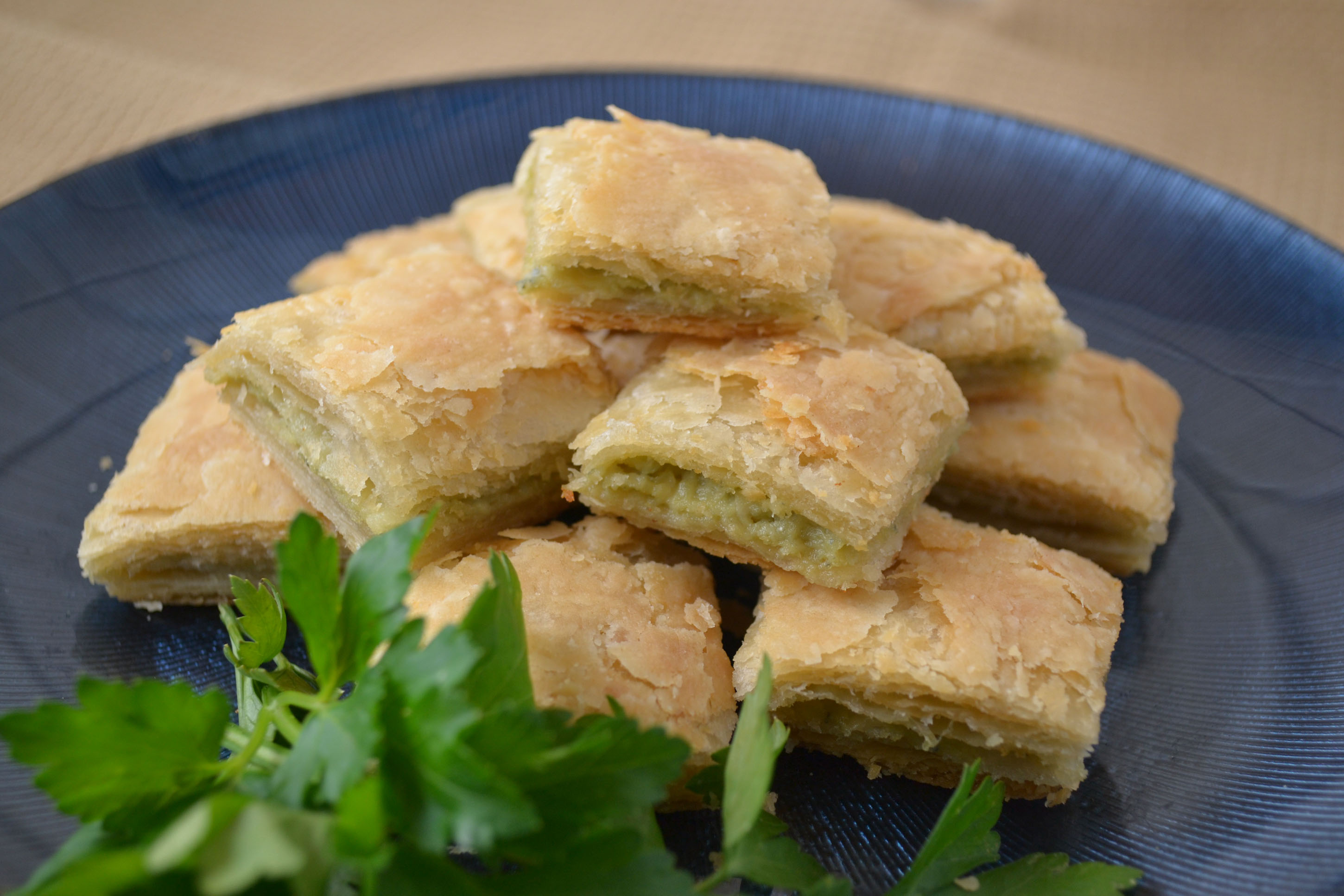
Tucked away in the back of “The Art of Fine Baking” is an hors d’oeuvres section I keep finding myself coming back to. With recipes such as pizza pennies, potato puff sticks, and poppy seed straws, I always seem to find something interesting that I haven’t seen done before. Using puff pastry for a savory appetizer is somewhat foreign for me since as a dessert lover, I’m usually inclined to make something sweet or chocolatey. In this case, I happened to have some leftover puff pastry from my adventures in making puff pastry, so I set out to throw this quick appetizer together. If using store bought or pre-made puff pastry, this recipe couldn’t be easier. Roquefort or any blue cheese is combined with an egg yolk and a little cream, then spread on strips of puff pastry dough. The strips are then sandwiched together, baked, and simply cut into squares or rectangles. Served warm, the rich buttery taste of the flaky pastry and the sharp blue cheese is a decadence any party guests (perhaps the Superbowl?!) will definitely appreciate.

Ingredients:

1/2 puff pastry recipe or 1 sheet of frozen puff pastry, thawed
2/3 cup roquefort or blue cheese of your choice
1 egg yolk
1 teaspoon chopped parsley
1/4 teaspoon white pepper
1 to 2 tablespoons heavy cream

Preheat oven to 350 degrees.

To make the cheese filling: cream together cheese, egg yolk, chopped parsley, and pepper. Add 1-2 tablespoons heavy cream or just enough to make the mixture spreadable.

If using homemade puff pastry, roll out puff pastry dough to less than 1/8 inch thick and trim edges.

Divide sheet of puff pastry into strips 2 1/2 inches wide. Spread half the strips thinly with cheese filling. Cover filling with remaining strips of pastry.

Place on baking sheet lined with parchment paper. Chill 30 minutes. Bake 50-60 minutes or until pastry is golden brown. Cool slightly. Trim edges and cut into rectangles or squares.

Yield: Approximately 2 dozen