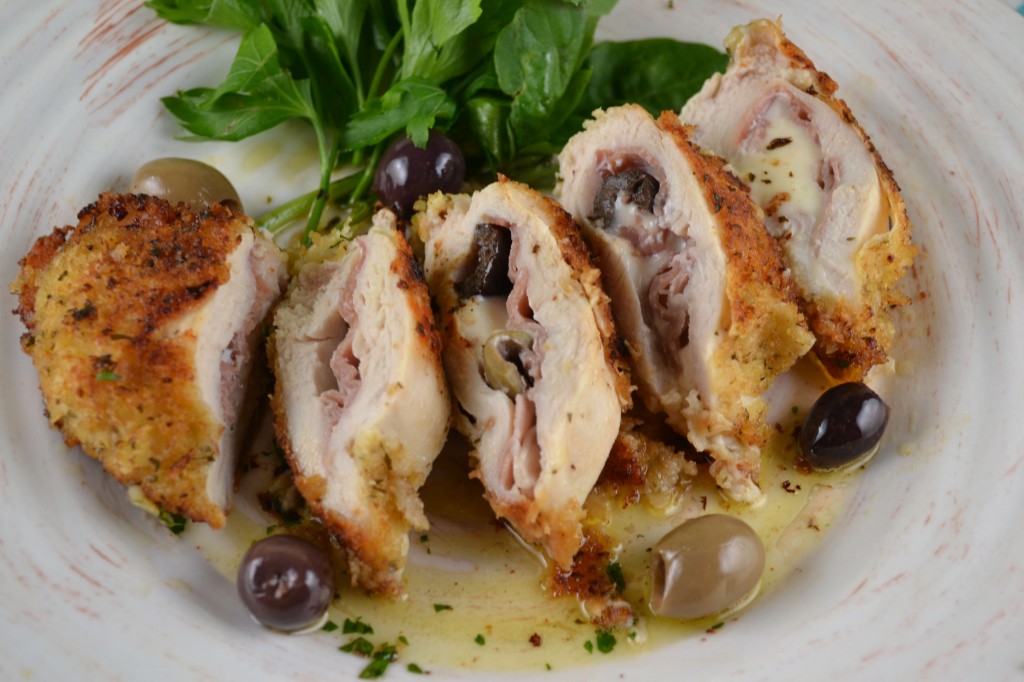
Chicken Saltimbocca

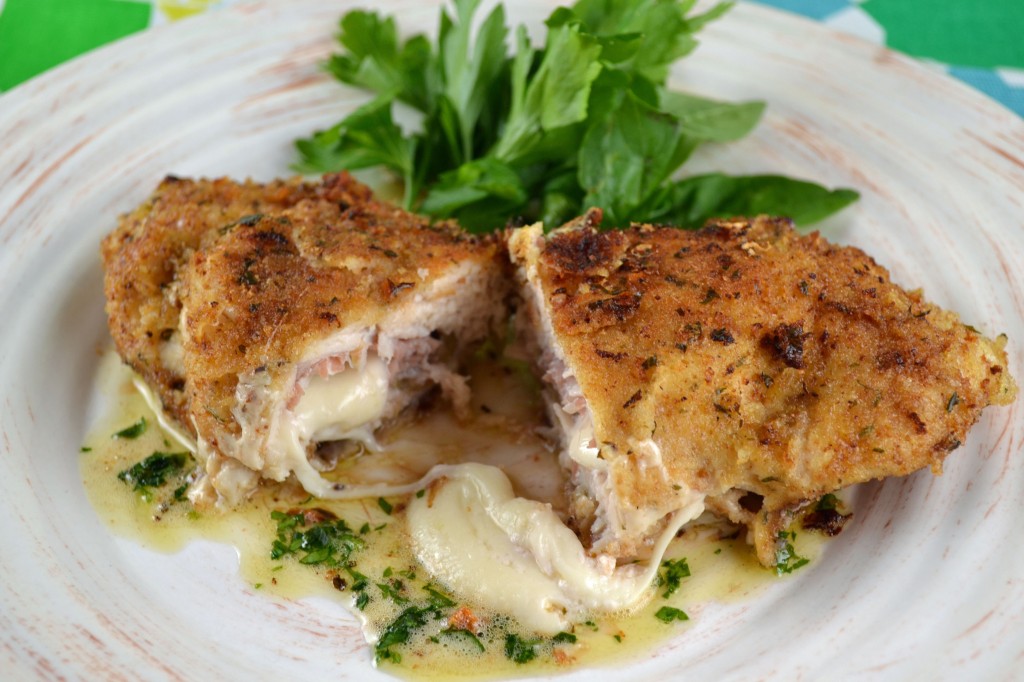
Saltimbocca has become somewhat of a classic. Originally Mediterranean, the name Saltimbocca is Italian for “jump in mouth” – a reference to the flavor explosion that takes place while eating this dish. There are varying ways to make saltimbocca. Veal, sage, capers, and sometimes provolone cheese are common ingredients. However, in each scenario the basics remain the same: the chicken or veal is sautéed and prosciutto is always involved (though I see no reason why you couldn’t use ham for a less expensive version). This recipe for Chicken Saltimbocca from “The Art of Good Cooking” happens to include black olives, which is somewhat rare but the beauty of this dish is its flexibility. Though I didn’t add it here, I think roasted red pepper could also make a nice addition to the center filling. The mozzarella is a natural match with the prosciutto and the crunchiness of the breading that soaks up some of the garlic butter is a combination that’s worth it alone – the other ingredients are just a bonus!

Note: the original recipe did not include toothpicks. I find that it’s easier to ensure the filling stays between the two cutlets by securing each package with a couple of toothpicks. Just make sure to take them out after cooking!

Chicken Saltimbocca

Ingredients

6 chicken breasts, boned, skinned, and cut in half (or 12 thin chicken cutlets)
6 thin slices of prosciutto, cut in half
12 pieces of mozzarella cheese, about ½ inch thick rectangles
12 pitted black olives, halved
1 teaspoon ground black pepper
½ cup flour
1 egg
3 tablespoons milk
2 cups bread crumbs of your choice
¼ cup unsalted butter
2 cloves garlic, finely minced
½ cup chopped Italian parsley
toothpicks (optional)
¼ cup butter and ¼ cup olive oil (or enough to cover the bottom of a large skillet to a ¼ inch depth, equal parts)

Instructions

On one side of each breast or cutlet, place a piece of prosciutto, a piece of mozzarella, and two olive halves. Sprinkle with freshly ground pepper. Fold unfilled side over to cover filling, and press edges firmly together to enclose filling or secure with toothpicks.

Flour each package so it is dusted on all sides. Beat egg slightly, adding milk. Dip chicken packages into mixture on both sides. Then dip into bread crumbs. Chill for at least a ½ hour or longer.

Melt ¼ cup butter in a small saucepan. Add half the chopped garlic and parsley. Keep warm until chicken is cooked.

Heat butter and olive oil in skillet with remaining garlic and parsley until fats are hot but not smoking. Place breaded chicken in skillet and turn heat to medium high. Saute chicken quickly, only until golden. Turn once to cook the other side.

Remove to heated serving dish. Remove toothpicks, if using. Pour warm garlic parsley butter on top.

Serves 8-10.

Adapted from “The Art of Good Cooking,” by Paula Peck.
Schnecken

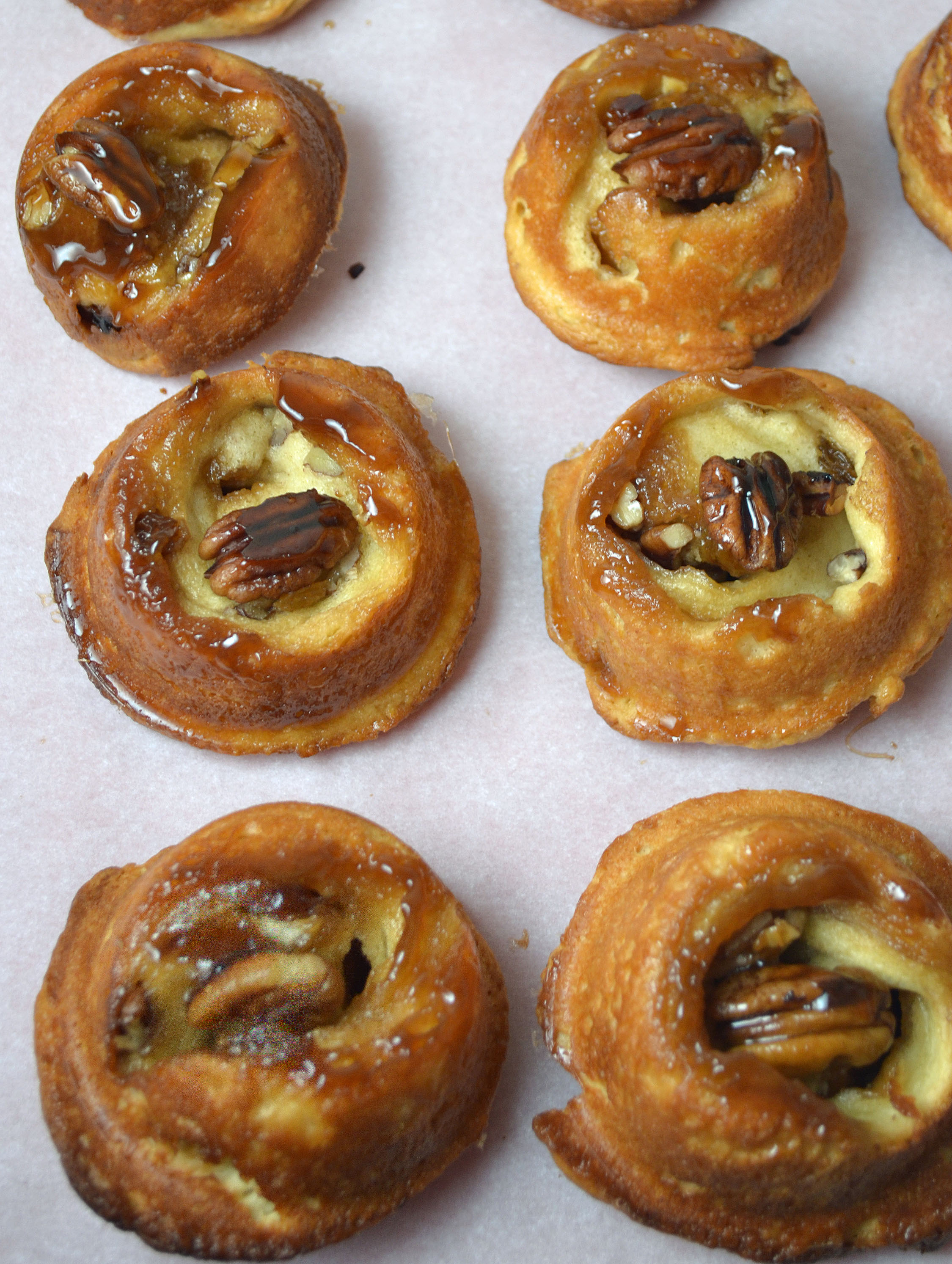
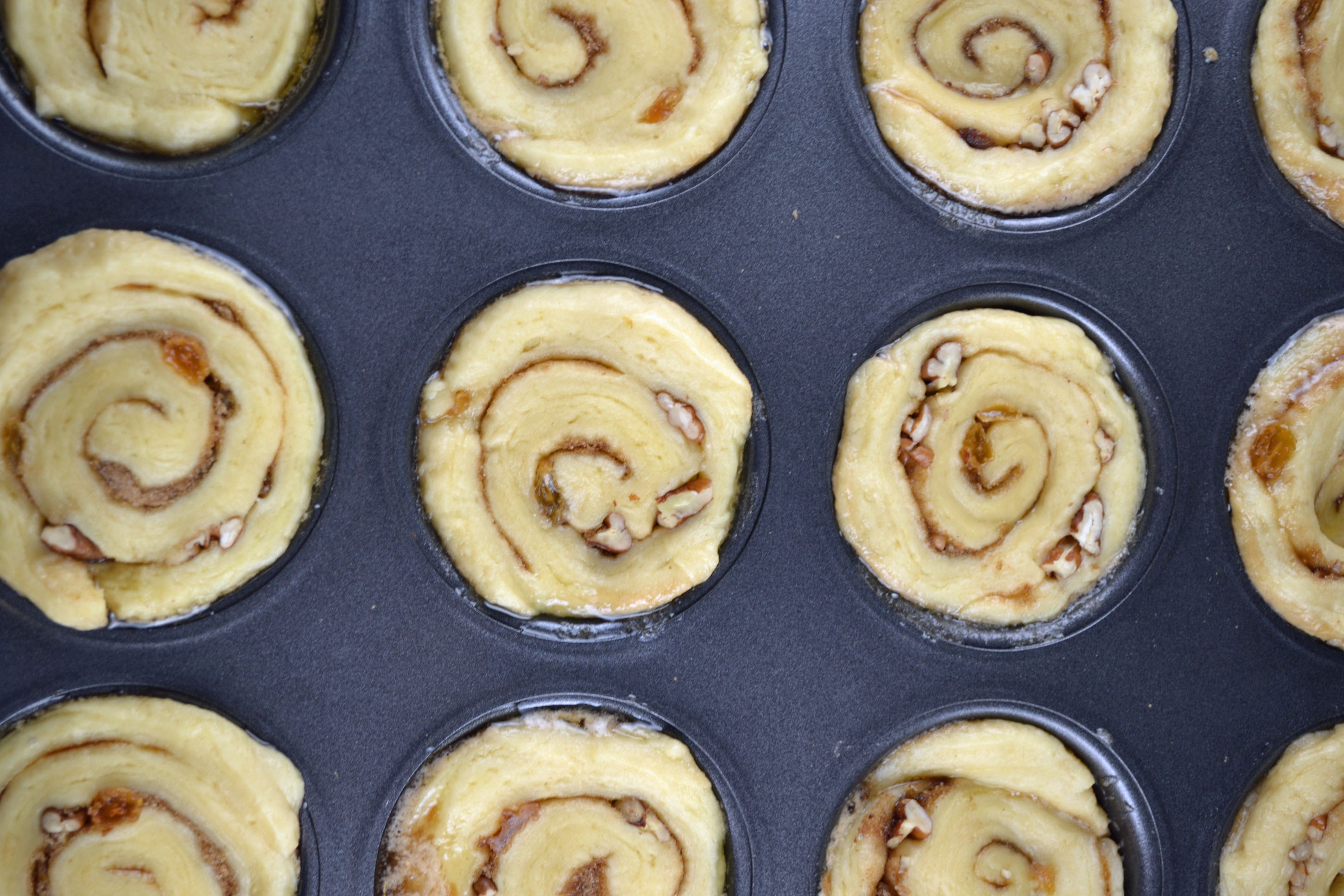
What’s a Schnecken? Some kind of gadget souvenir? This was the thought that crossed my mind when I found this recipe in “The Art of Fine Baking.” After reading through it and then of course baking some, I came to the conclusion that these are basically small, almost bite sized, cinnamon/caramel rolls. For those of you who are unfamiliar with Schnecken, as I was, it’s a German pastry and the name Schnecken means snails – referring to the shape of these delicious breakfast treats. Apparently, Schnecken are often confused with rugelach (also German) but I don’t see much of a similarity other than that they are both rolled pastries creating a spiral of the filling.

I happen to have a weakness for caramel and cinnamon rolls and though these photos may lack the bells and whistles of a carefully styled shoot, you can see that this recipe definitely delivers on all the important aspects: ooey gooey caramel, crunchy nuts, cinnamon, and raisins. One tip: just make sure to use enough of the butter sugar mixture –  the softer and stickier, the better.

Ingredients:

1/2 cup soft unsalted butter
1 1/2 cups well-packed light brown sugar
1 tablespoon white corn syrup
1 1/2 cups coarsely broken or whole pecans
1 recipes Rich Sour Cream Dough
2 teaspoons cinnamon
1 cup raisins
1 cup finely crushed pecans

Cream butter with 1/2 cup light-brown sugar. Beat in corn syrup. Grease regular size or mini muffin tins with this mixture, using it generously. Place 2 or 3 pecan pieces into each muffin cup.

Preheat oven to 375 degrees.

Roll dough into a long rectangle 1/4 inch thick. Sprinkle with remaining sugar, cinnamon, raisins, and crushed pecans. Roll dough tightly, jelly-roll style, sealing the seam. If roll becomes much thicker than the size of muffin tins, stretch it out. If it is too thin, gently compress it.

Slice roll into pieces which will fill muffin cups halfway. Press into cups firmly. Let rise only until dough looks puffy.

Bake in preheated oven about 20 minutes, or until tops of shnecken are golden brown.
Turn muffin pans upside down immediately, to remove schnecken and to permit glaze to run over sides.

Yield: approximately 7 dozen small shnecken or 5 dozen larger ones. Recipe can be easily halved.

Adapted from “The Art of Fine Baking,” by Paula Peck.
Baked Heirloom Tomatoes and Onions

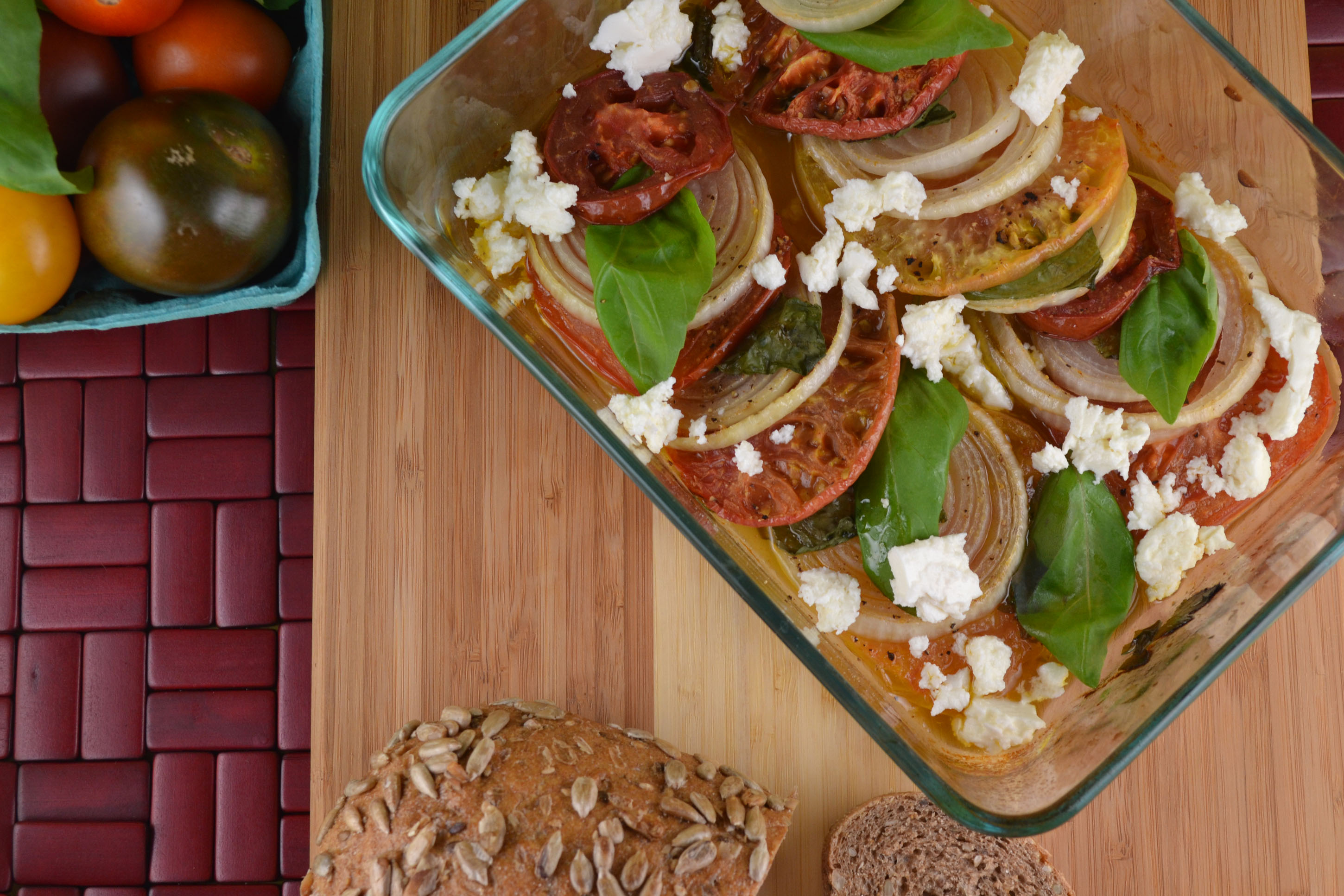
You may be looking at this photo and thinking this dish is leftover from summer, that this was taken in mid-August when Tomatoes are supposed to be at their peak. I actually found these fabulous heirloom tomatoes in all different sizes prominently displayed at one of the busiest whole foods in the country here in NYC this week. And at summer prices. Pumpkins and apples are definitely here (though still on the expensive side) but let’s use up the best of summer before jumping into fall.
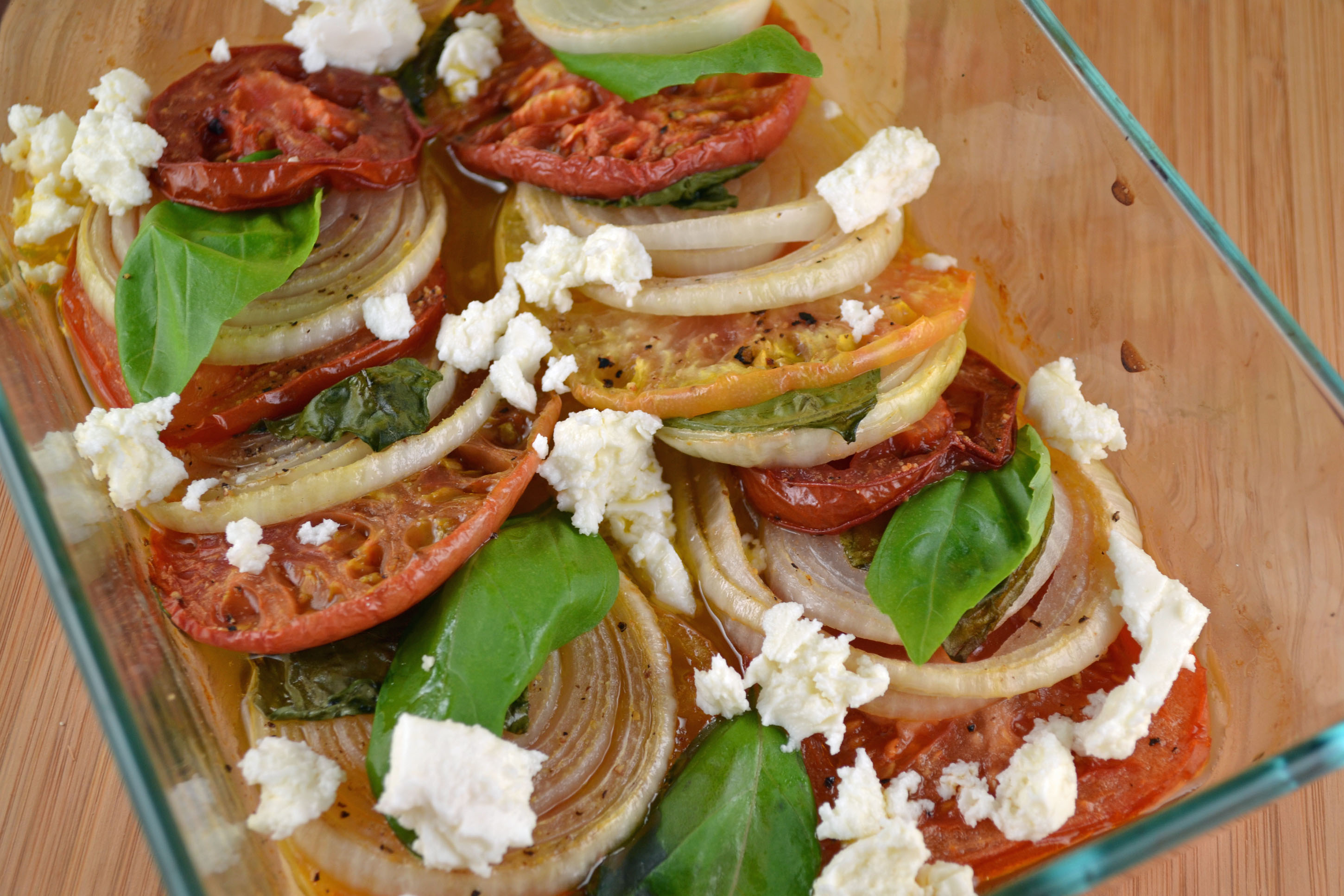
I was surprised by both the simplicity and tastiness of this dish from “The Art of Good Cooking.” I added some fresh herbs like basil, parsley, and thyme both before and after baking. I then sprinkled the whole dish with fresh feta cheese and served it on slices of a toasted seeded grain bread. A healthy and light appetizer or lunch reminiscent of those dog days of summer and the colorful produce it brings.

2 large spanish onions
salt and pepper
2-3 tablespoons extra virgin olive oil
2-3 large heirloom tomatoes
1 sprig fresh thyme
8 fresh basil leaves
2 tablespoons chopped parsley
1 tablespoon capers (optional)
feta cheese for sprinkling (optional)
1 loaf rustic grain or rye bread, sliced (optional)

Preheat oven to 375 degrees.

Peel onions and slice about 1/4 inch thick. Place onions in baking dish and season with salt and pepper. Drizzle a little olive oil over each slice. Cut tomatoes in slices. Place a slice of tomato on each slice of onion. Or, stagger slices, alternating onion and tomato. Drizzle with remaining olive oil and season with salt and pepper. Lay 4-5 basil leaves across the top or sandwich them between the tomato onion layers. Place a sprig of thyme between the 2 rows of layers.

Bake about 45 minutes or until onions are tender and tomatoes are wrinkled. Baste occasionally with additional oil if needed.

Remove from oven and garnish with remaining basil leaves, chopped parsley, capers (if using) and sprinkle with feta cheese.

Serve warm or at room temperature on toasted slices of rustic grain or rye bread.

Serves 6.

Adapted from “The Art of Good Cooking,” By Paula Peck.

Gougeres

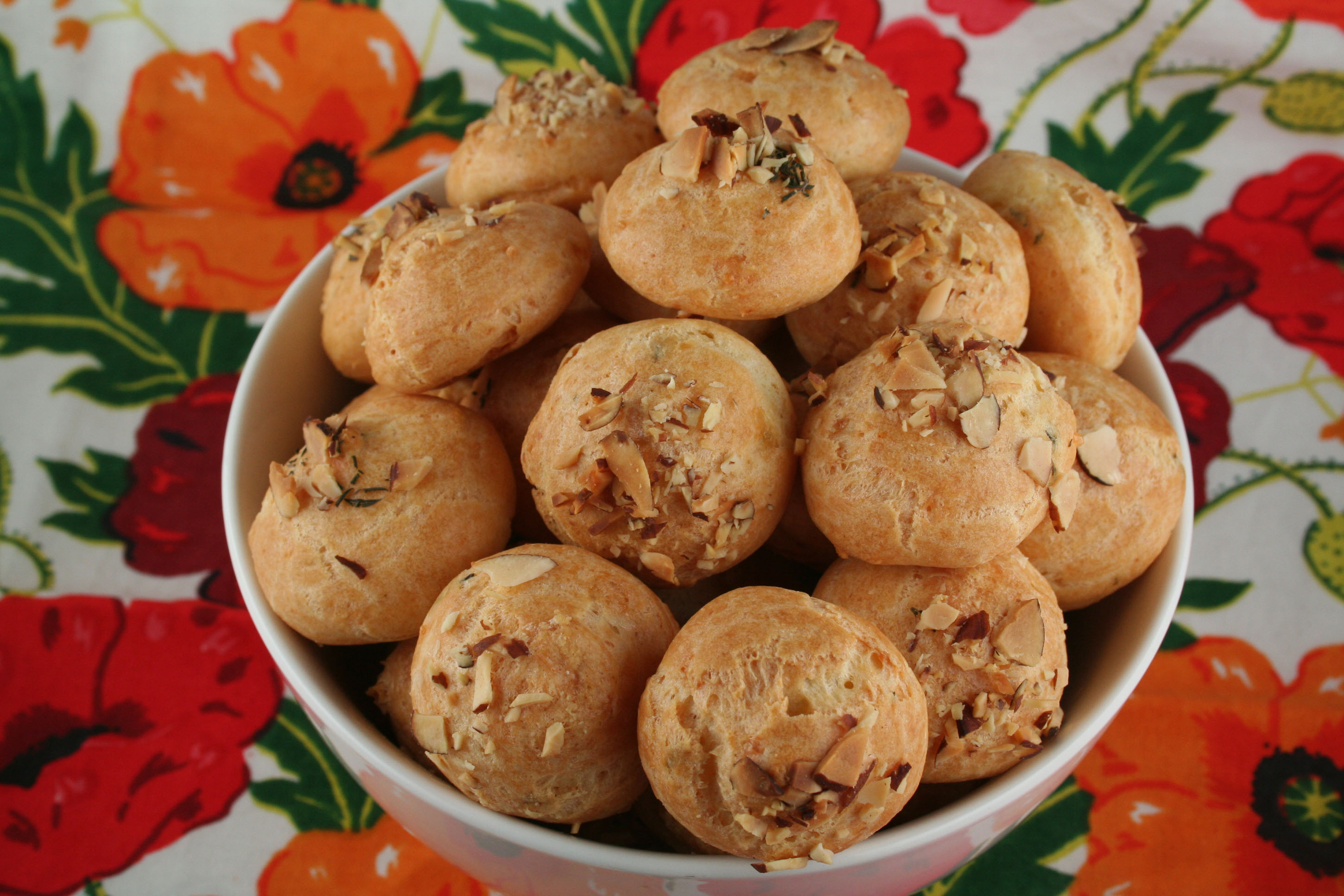
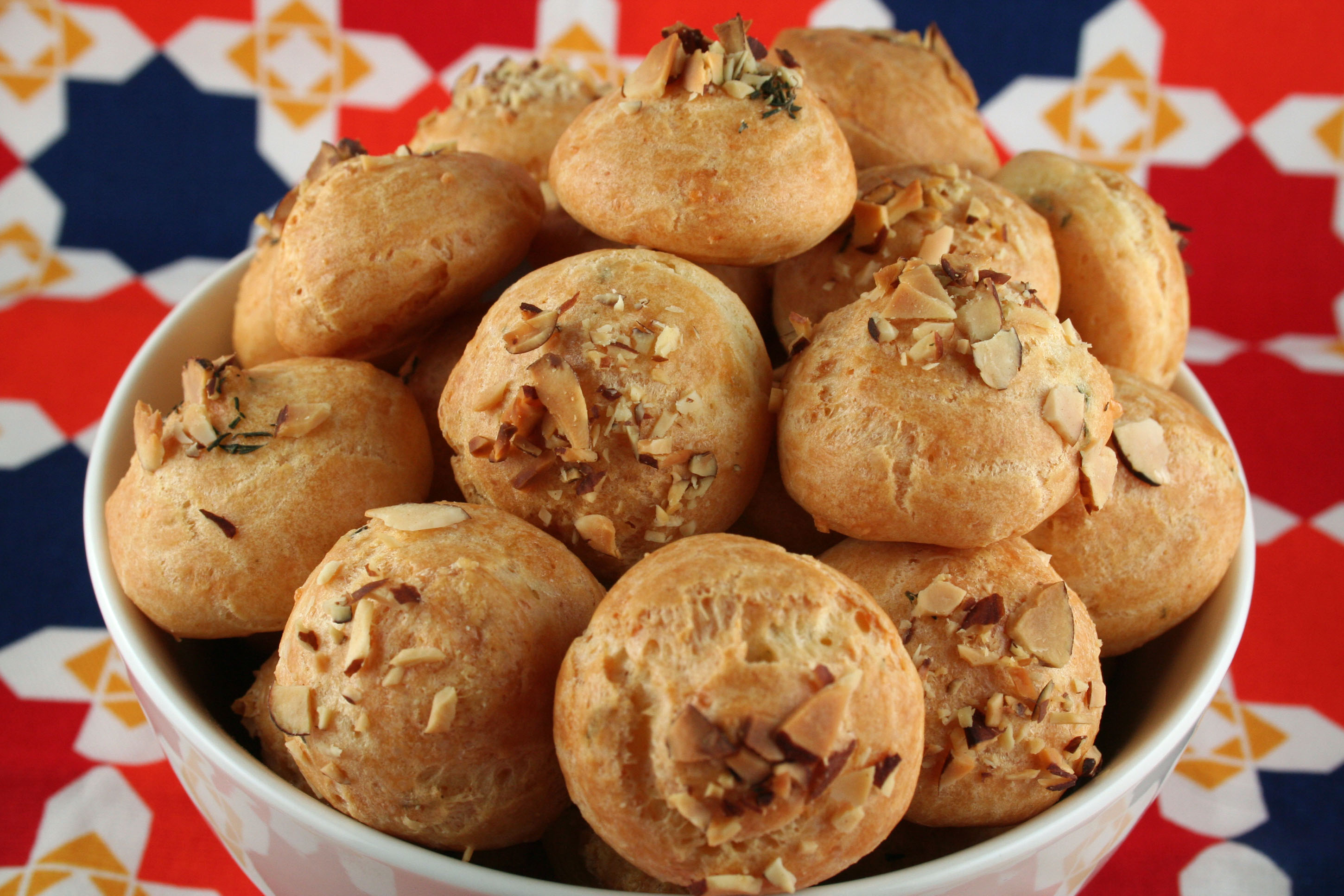
Classic cheese puffs or French gougeres are always a delicious addition to any meal. Unfortunately, like cream puffs (same pate a choux batter base), these are scrumptious shortly after coming out of the oven but barely edible the next day. The recipe as written in The Art of Fine Baking lacked the strong cheese flavor I craved from these light puffed morsels. I ended up using an incredible amount of cheese, double the amount in the original recipe. Plus I added Parmesan for an additional punch and a pinch of cayenne and paprika for a little zip. Of course, I then had to take it one step further and add a fresh herb. A sad bunch of thyme happened to be sitting in my fridge, waiting to be used, so I added it to the almond Parmesan sprinkle before baking. The rich smell that wafts through your kitchen while these sharp cheesy nutty bites bake, is almost worth it in itself.

A note about the baking time for this recipe: unlike cream puffs, you do not want to bake these until they dry out in the center. These should be removed from the oven within 5 minutes of barely turning a light golden brown.

1/4 cup (4 oz) unsalted butter, cut in small pieces
1 cup water
1 cup sifted flour
3/4 teaspoon salt
4 eggs
1 1/4 grated gruyere cheese
1/2 cup Parmesan cheese
1/4 cup sliced almonds, chopped
2 tablespoons thyme, chopped
1 teaspoon kosher salt

Preheat oven to 375 degrees.

Combine butter and water in saucepan. Cook over medium heat until butter is melted and mixture is boiling. Turn heat to very low. Add flour mixed with salt all at once. Stir vigorously until a ball forms and does not stick to the pan. Stir over heat another minute or two to slightly dry out. Remove from heat and transfer to a clean bowl. Allow to cool 1 minute.

Add eggs, one at a time, beating hard after each addition. The final egg should beaten with a fork and added gradually to ensure the right consistency. Batter should be just stiff enough to stand at a peak when a spoon is withdrawn or if a finger is run through it, the channel fills in slowly. Sometimes it’s necessary to add slightly less or even one more egg depending on the dryness of the flour and the temperature of the room.

Beat all but a 1/4 cup of cheese into pate a choux batter. Combine nuts, thyme, and remaining cheese in a small bowl. With a pastry bag or spoon, form small high mounds on parchment paper lined baking sheet. Sprinkle nut cheese mixture on top. Bake about 35 minutes or until puffs are lightly golden brown and there are no beads of moisture showing. Serve warm.

Frozen Raspberry Mousse

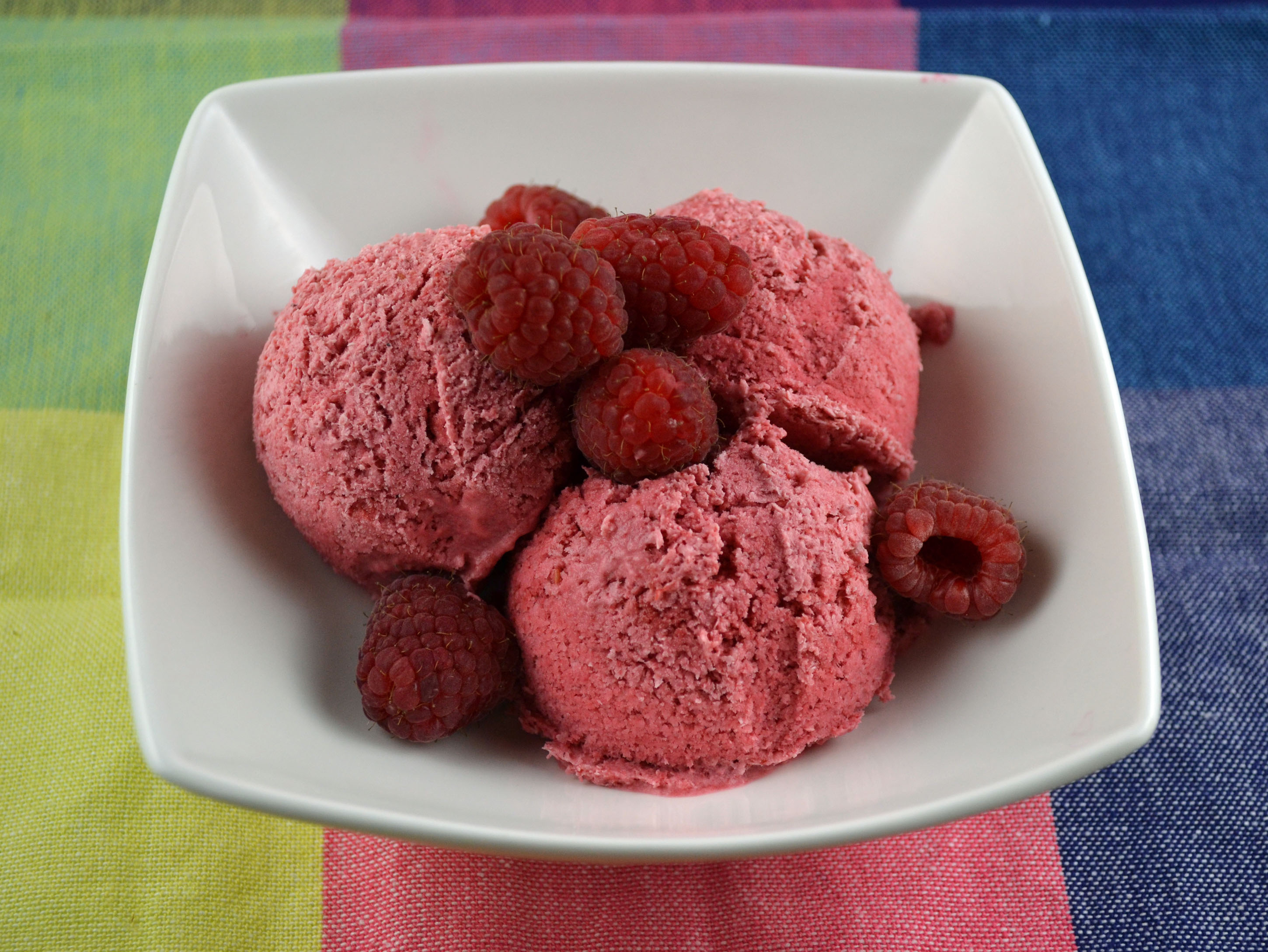
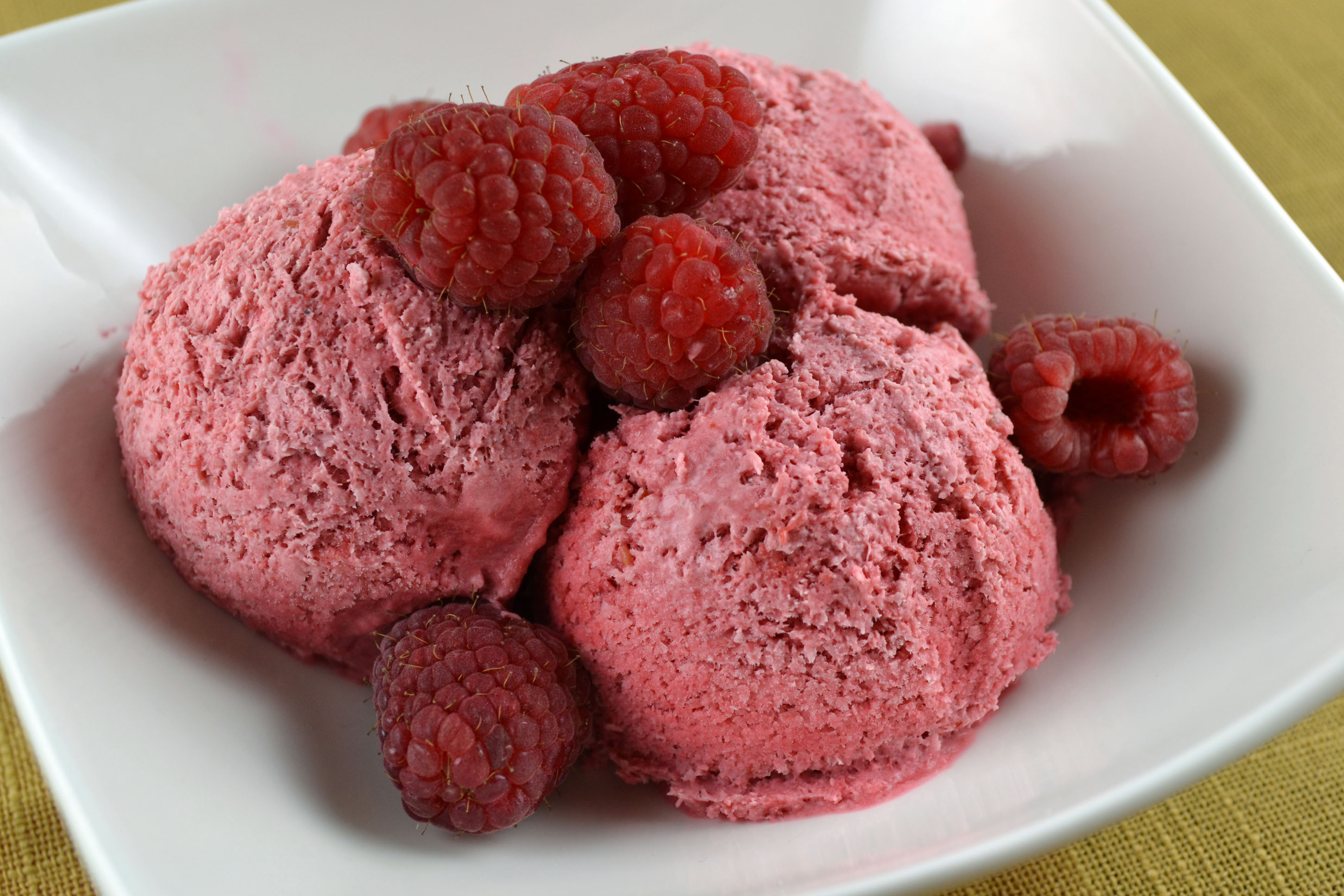
Don’t let the photo deceive you. This is not ice cream despite what you maybe thinking. At least not conventional ice cream (it is afterall, a form of iced cream, literally). No ice cream maker needed for this bright mousse made with fresh or frozen (more affordable) raspberries. Easily summed up with 5 ingredients and though the final texture is more icy and less creamy than I would normally want in a mousse, I keep going back for more. The tang of the raspberries is balanced by the richness in the cream and the kirsch or framboise ensures the mousse doesn’t harden too much in the freezer. As summer comes to a close, this quick mousse is a reminder of light refreshing desserts as the heavier fall pies and cobblers begin to takeover.

1 cup raspberry puree (1-2 packages frozen raspberries or 2-3/6 oz packages fresh raspberries, pureed and sweetened to taste with 1-2 tablespoons confectioners sugar; seeds discarded)
2 tablespoons framboise or kirsch
2 egg whites
pinch of salt
2 tablespoons granulated sugar
2 cups heavy cream, whipped

Combine raspberry puree with framboise or kirsch. Beat egg whites with salt till they are stiff. Beat in sugar, a little at a time, and continue beating till whites are very firm. Fold whipped cream and stiffly beaten egg whites together. Fold in raspberry puree. Pour into a bowl which can be placed in the freezer. Cover and freeze in freezer until mixture is firm.

Serves 6.

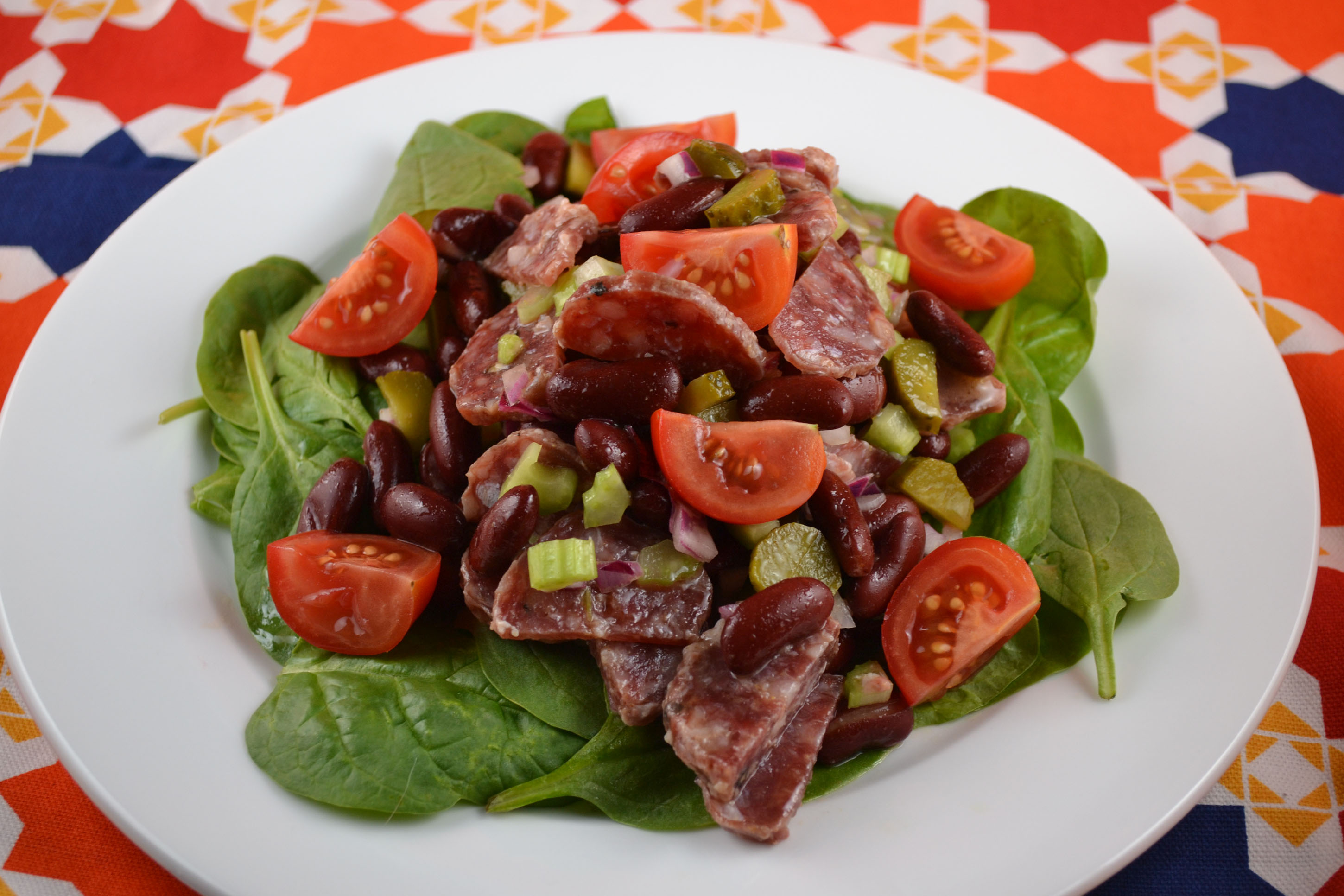
Red Bean and Sausage Salad

 A hearty protein filled salad that promises to keep you full. Red bean and Sausage Salad is an unpublished Paula Peck recipe that includes just the right combo of fat and acidity to make it an antipasto like satisfying addition to any meal or greens.
Though the recipe recommends salami, any cured sausage may be used. I happened to have an Olli salami on hand which is part of a high end artisinal salami line made using old fashioned family recipes (how appropriate!). This recipe is flexible and the sweet pickles and kidney beans provide the right balance to work well with just about any variation of sausage or greens.

Ingredients:

2 1/2 cups cooked kidney beans
1 lb salami or other cooked sausage, sliced
1 cup finely chopped celery
1/2 cup chopped sweet pickles
1/4 cup chopped parsley
1/2 cup chopped red onion
1 tomato diced or a handful of grape tomatoes, halved
1/2 cup olive oil
1/4 cup red wine vinegar
1 tablespoon dijon or spicy mustard
salt and freshly ground pepper to taste

Combine the first seven ingredients in a bowl. Allow to stand while you make dressing. Combine oil, vinegar, mustard, salt, and pepper in a container with a lid. Close container and make sure it is well sealed. Shake vigorously for about 30 seconds to blend and thicken. Pour over salad and season to taste. Serve on spinach or other fresh greens.

Serves 6.

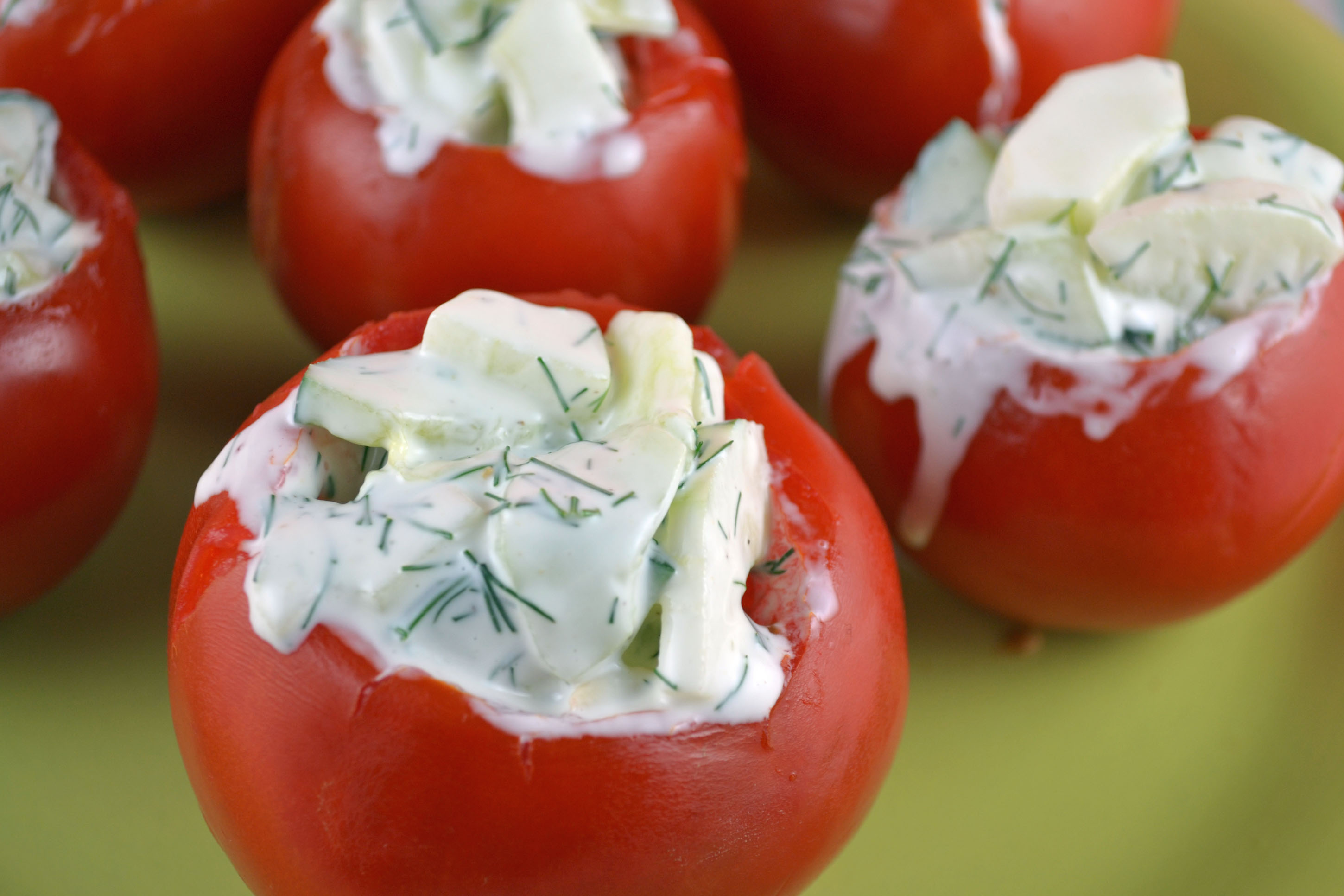
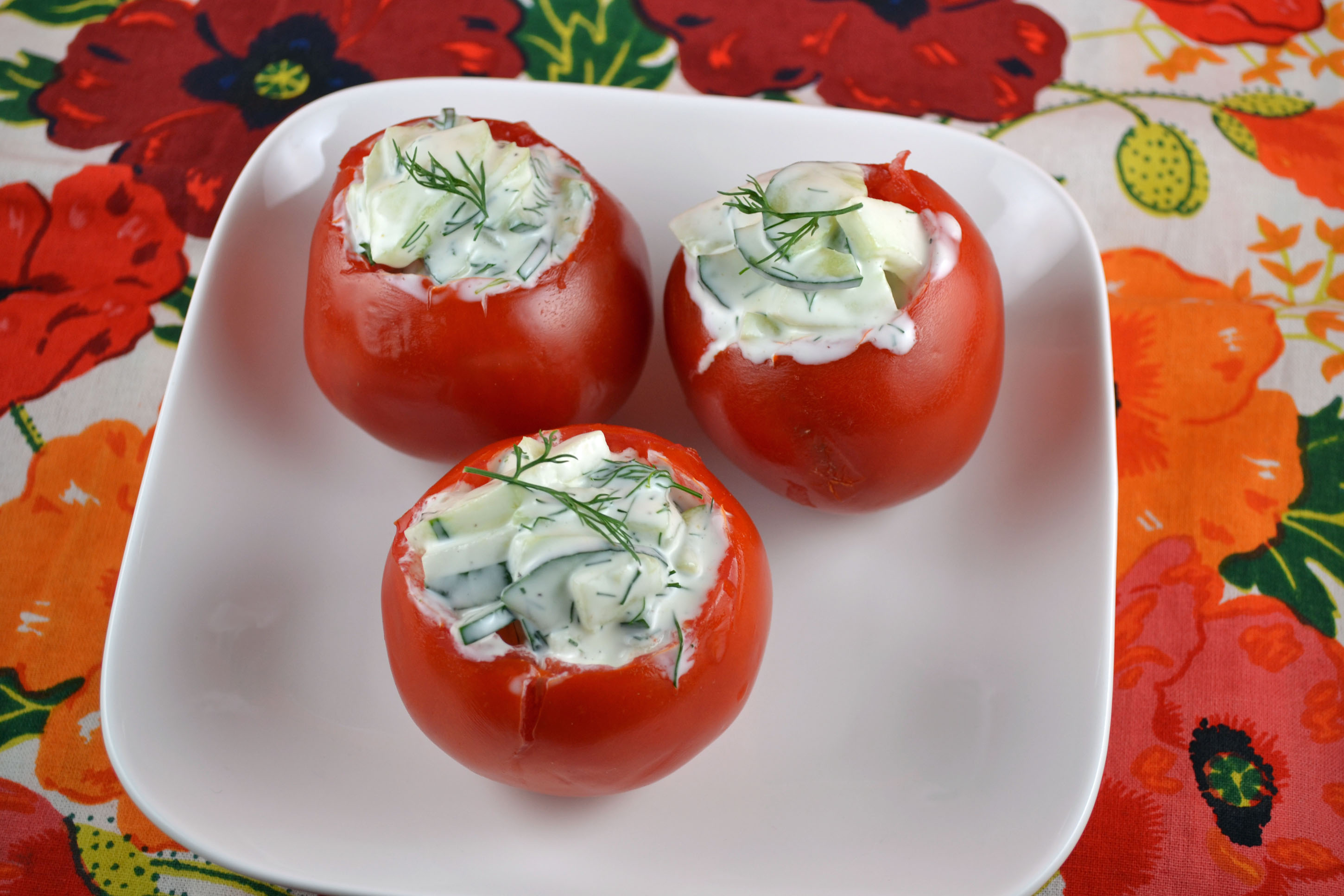
Tzadziki Stuffed Tomatoes

The original title of this recipe from “The Art of Good Cooking” is Danish Stuffed Tomatoes. However, when I tried to research this recipe, I found little on what makes them “Danish.” I decided to lighten the stuffing by using yogurt, making it more about the cucumbers and less about the overbearing amount of sour cream and mayo originally used. It now maybe considered more Greek than Danish since the stuffing is more of a basic tzadziki. Creamy yogurt, garlic, and dill brighten the cucumbers that then add crunch to the soft juicy ripe tomatoes.
This is a tasty little no bake/cook seasonal appetizer or side dish that presents beautifully.

2 hothouse cucumbers
2 teaspoons salt
1 teaspoon sugar
1 teaspoon cracked pepper
1 small garlic clove, minced
1 ½ tablespoons lemon juice
2 cups lowfat yogurt or greek yogurt
2-3 tablespoons chopped dill
6 vine ripe tomatoes

Peel cucumbers and cut in half lengthwise. With a spoon, scoop out seeds and discard them. Slice cucumbers thin. Place in a bowl, sprinkle with salt and place in refrigeration for at least 2 hours. Pour off water which has accumulated and press out any additional water so that cucumbers are dry. Add sugar and pepper and stir.

Combine garlic, yogurt, and lemon juice. Pour over cucumbers and toss lightly, adding half of the dill. Place in refrigerator until needed.

Remove a circle from the stem ends of the tomatoes. Carefully scoop out all the seeds and pulp. Turn the tomato shells upside down on paper towels so that any juice may drain.

Stuff each tomato with the cucumber mixture. Sprinkle remaining dill on top of each tomato.

Serves 6

Adapted from “The Art of Good Cooking.”

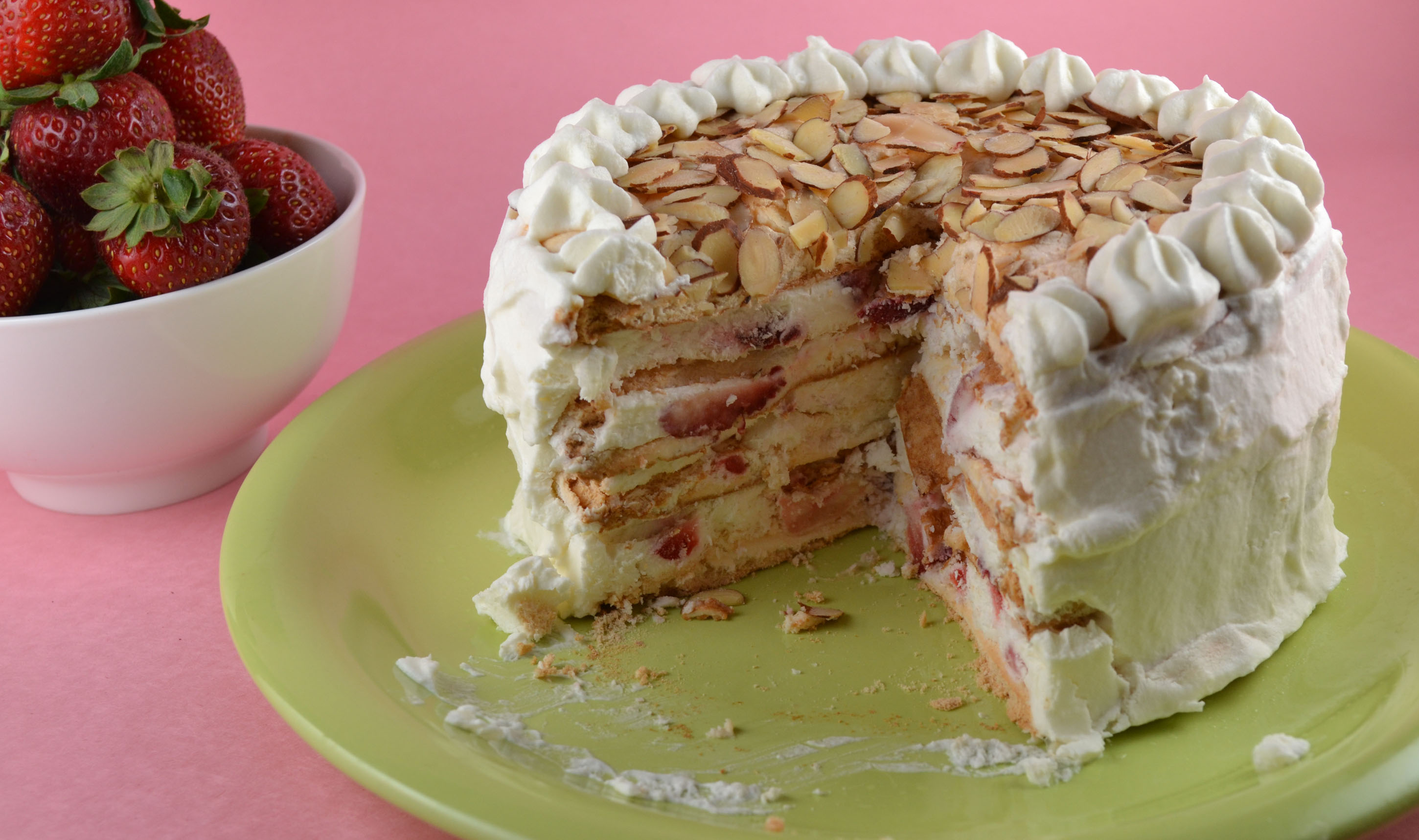
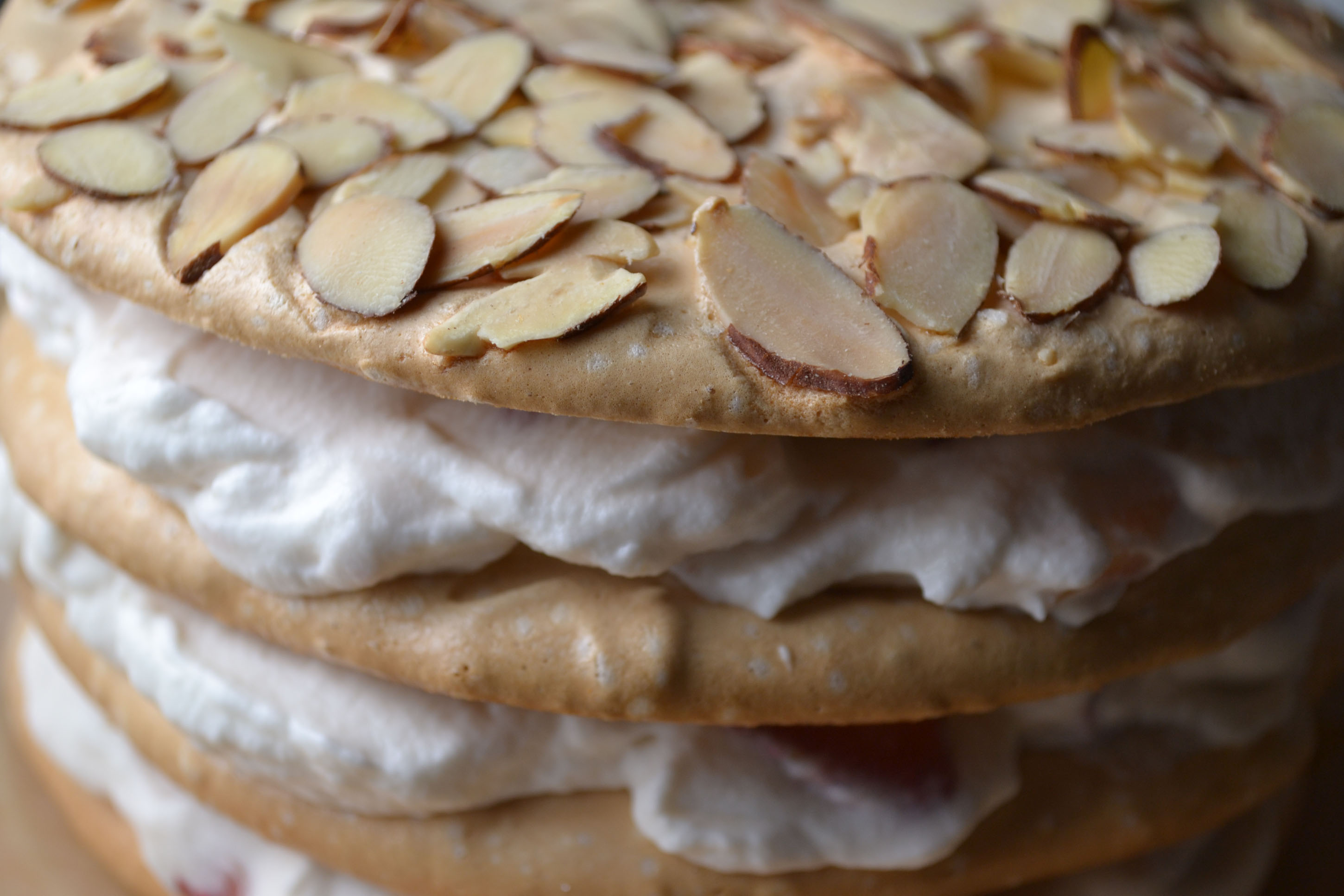
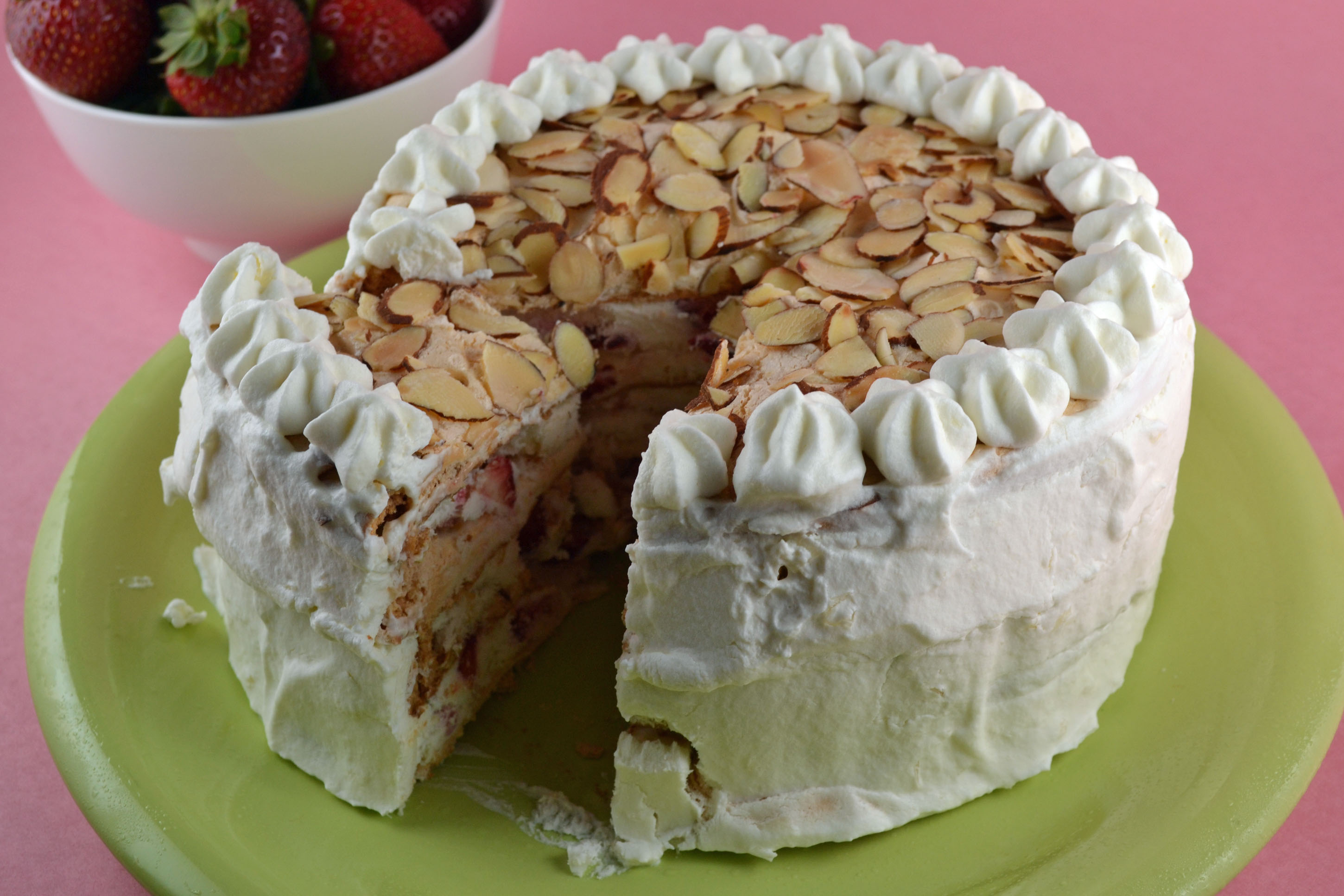
Frozen Strawberry Cream Torte

Few Paula Peck desert recipes really lend themselves to Summer. A couple of fruit tarts, a mousse or two, and a few fruit tortes are summery as is without modification. Maybe because she spent most summers in France, renewing her tastes and inspirition or maybe she just didnt bother much with the heat of baking in a hot humid Manhattan building before AC was a regular commodity. Whatever the reason, this frozen torte is part of this small exclusive group of her summer desert recipes. Not exactly quick or easy, if meringue is foreign to you, but the construction is fairly simple and the finished torte is impressive. There are two methods used in the original recipe for which I have strong opposing feelings. The first is the suggested baking time of the meringue to ensure it doesn’t brown. Though technically incorrect, in my opinion the baking time for meringues takes long enough without having to worry about making sure it maintains pure white and doesn’t brown. In this particular instance, I don’t mind if the meringue is slightly tan on top. It speeds up the baking/drying process and has little effect on the taste.
The second method, which I agree with, is adding gelatin to whipped cream. This works well to stabilize whipped cream if using it like a frosting, which in itself is an interesting technique that I’m not quite used to. Substitute powdered agar-agar or vegetarian gelatin for vegetarians.
A last point that needs to be emphasized is to serve the torte frozen. It just doesn’t taste the same when it begins to thaw. A finished frozen slice should taste creamy and light, like strawberry shortcake and meringue cookies smashed together in a giant sandwich then hidden beneath a layer of silky cream and frozen to combine the textures into a cool summer treat.

Swiss Meringue

5 egg whites
1/4 teaspoon cream of tartar
1/4 teaspoon salt
1 teaspoon vanilla extract
1 1/4 cup sugar
1/2 cup blanched sliced almonds
2 1/2 cups heavy cream, whipped with 2 tablespoons sugar and dissolved gelatin (see note)
1 cup fresh strawberries, sliced

Sprinkle strawberries with 1/4 cups sugar and set aside.

Combine egg whites, cream of tartar, salt, and vanilla extract in the bowl of a  mixer. Beat at medium speed until egg whites hold soft peaks. Gradually add 1 cup sugar, a few tablespoons at a time, beating continuously until stiff peaks.

Preheat oven to 350 degrees. Line with parchment paper or grease and flour two large baking sheets. Trace four circles in flour, each 6 inches in diameter. Spread a thin layer of meringue within each circle. Sprinkle one layer with sliced almonds.

Bake meringue layers at 325 degrees for 10 minutes. Reduce oven to 300 degrees and bake meringue until puffed and cracked, about 50 minutes. Turn the oven off and prop the door open. Let cool in oven for 30 minutes until room temperature.

Drain sweetened berries. Combine with about 2 1/3 cups of whipped cream. Working as quickly as possible to prevent meringue from softening, sandwich layers with whipped cream mixture. Place the almond studded layer on top. Place in the freezer for 2-3 hours, or until cake is frozen.

Spread the remaining whipped cream around sides. Place again in the freezer. When sides are frozen, the torte can be wrapped for freezer storage for up to 6 weeks.


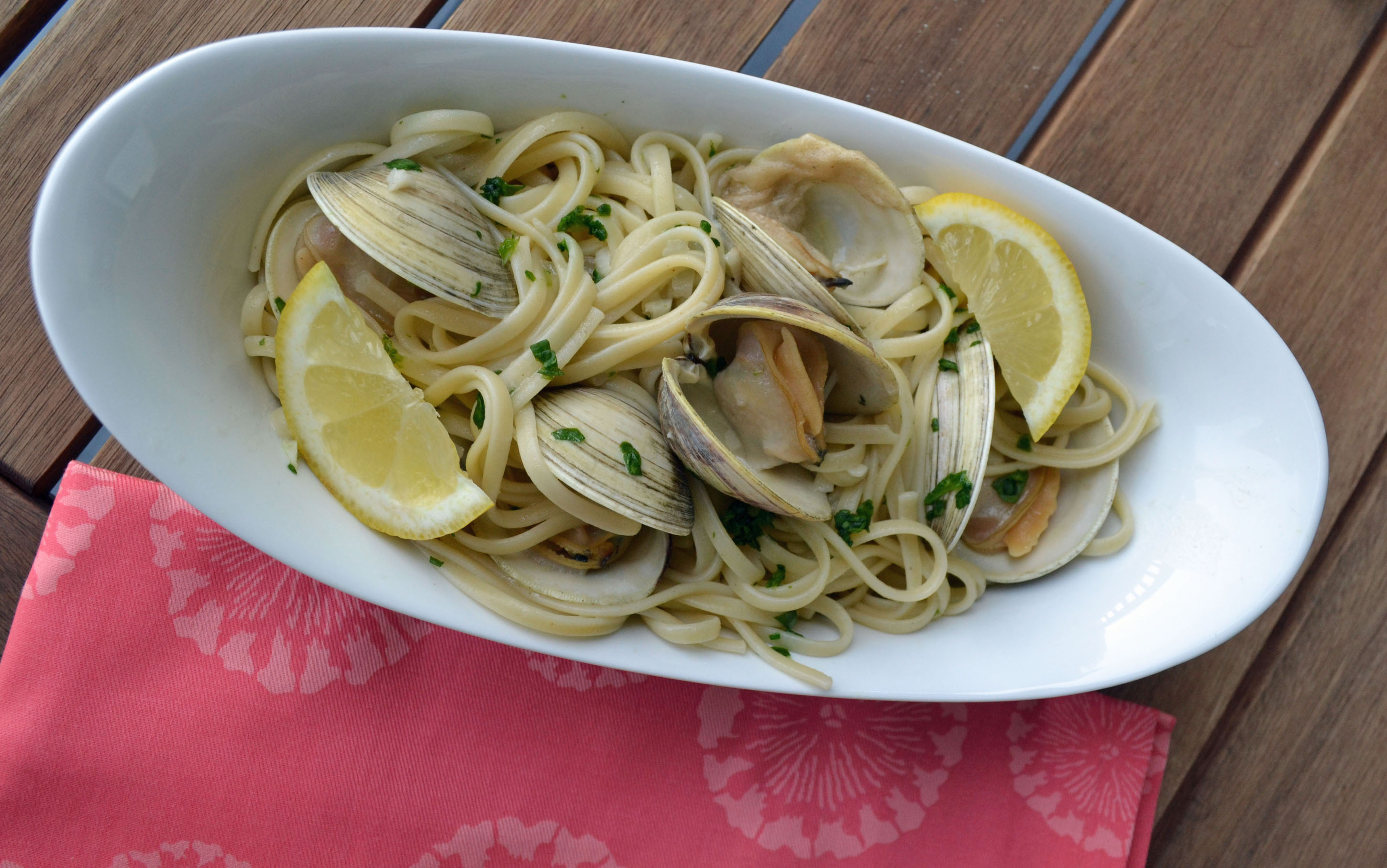
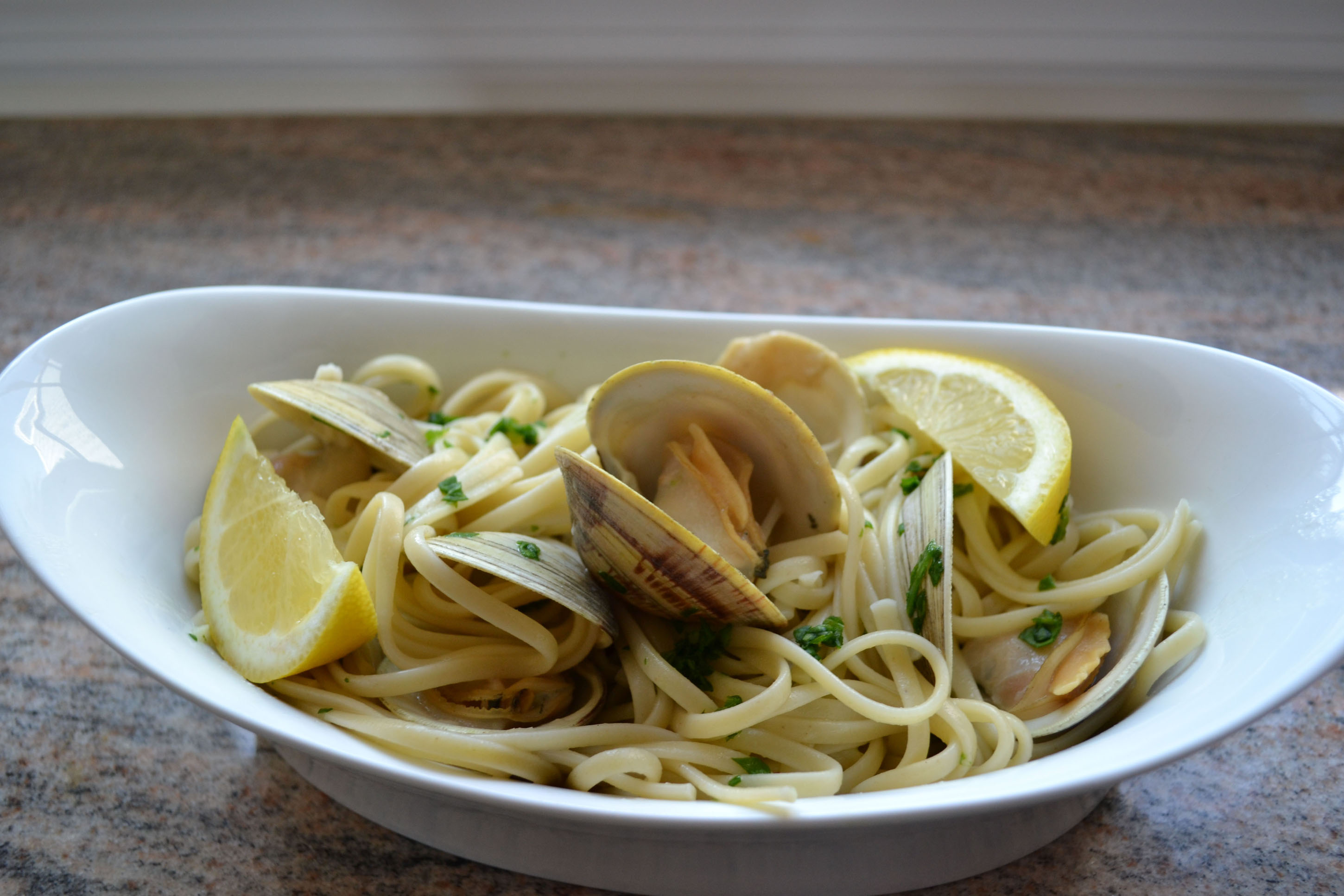
Linguine with White Wine Clam Sauce

If you’re a clam lover, this dish will make your mouth water. A new England classic and a combination of three different unpublished recipes by my grandmother, Paula Peck: veloute, linguine in white clam sauce, and white wine sauce. I’ve combined them into one easier to follow recipe minus the heavy cream. A hodge-podge that becomes a garlicky semi-creamy sauce with a tang of sweet and sour citrus clam flavor. Exactly what you want in a white clam sauce.

Ingredients:

2 tablespoons unsalted butter
1/4 cup all purpose flour
3 cups stock (fish or chicken)
2 shallots, chopped
1 1/2 cups white wine
¾  cup milk
1 lemon, juiced
2 tablespoon butter
2 tablespoons olive oil
8 cloves garlic, minced
16-18 cherrystone clams, scrubbed
1lb cooked linguine
½ cup chopped parsley

Melt the butter in a medium saucepan over medium low heat. Stir in flour, using a wire whisk. Slowly whisk in 1 ½ cups stock. Bring to a boil then lower to a simmer.

Combine shallot, remaining stock, and white wine in a large skillet over medium high heat and bring to a boil. Add milk and lemon juice. Heat through.  Whisk white wine sauce into butter flour stock mixture. Season sauce with salt and pepper.

In the same large skillet, heat butter and olive oil over medium heat. Add garlic. Saute for 1 minute. Add sauce and clams. Simmer until clams open. Stir in cooked linguine and chopped parsley. Serve immediately with grated Parmesan and lemon slices.

Serves 4-6.

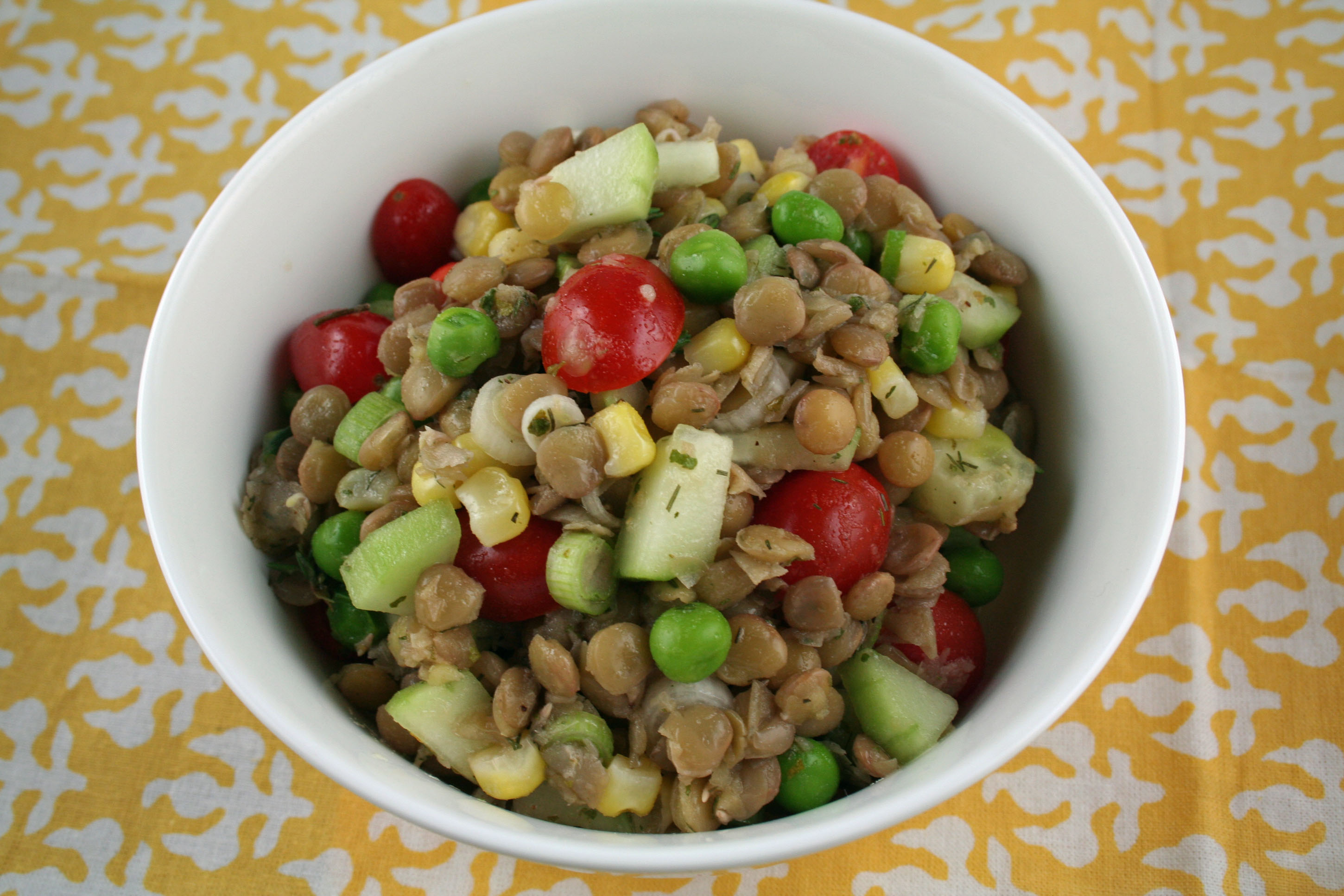
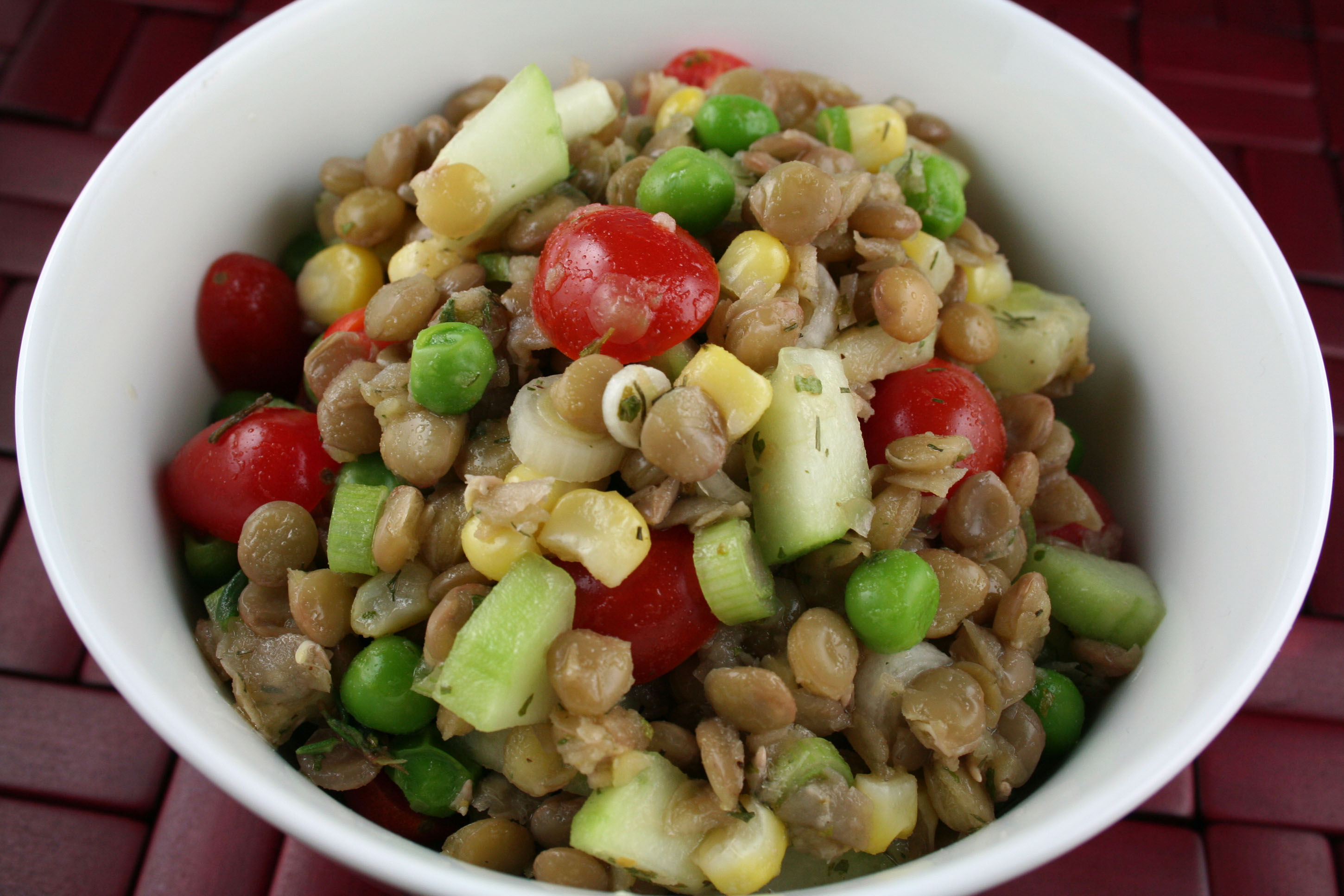
Lentil Vegetable Salad

Paula Peck Marinated Lentil Salad

Lentil salad is quickly becoming an American classic. With the popularity of ancient grains and heirloom beans, legume salads are trending and gaining a new hipster following. Satisfying but simple, healthy, and high in protein (so it will keep you full longer). Lentils, which date back thousands of years and possibly originated in Eastern Europe or the Mediterranean, are getting a face lift in salads these days but are not completely unrecognizable compared to those of the 1960’s – when this recipe was most likely written.

Unlike the original recipe titled “Marinated Lentil Salad” from “The Art of Good Cooking” that has parsley and scallions as its only fresh components,  I used extra veggies so this salad can be eaten as a well rounded light lunch by itself. The crunch of the cucumber and the brightness of the herbs along with the smooth, slight tenderness of the lentils, shouts summer fresh.

Ingredients:

3/4 cup dry green lentils
2 cups water
salt and pepper
1/4 cup olive oil
3 tablespoons red wine vinegar
1/2 a hothouse cucumber, halved and sliced
1/4 cup frozen corn kernels
1/4 cup frozen peas
1/4 cup grape tomatoes, halved
2 scallions, finely chopped
1/4 cup chopped fresh parsley
1 tablespoon chopped fresh dill OR fresh thyme (optional)

Prepare frozen corn and peas according to package instructions or cook in boiling water for 2-3 minutes and drain. Set aside.

Pick over lentils and wash them well. Place in pot, add water, and bring to a boil. Lower heat and simmer until tender, about 30-40 minutes. Scoop out any loose shells that floated to the top while cooking. Drain. Add salt, pepper, oil and vinegar. Then cool to room temperature. Add green onions, cucumber, corn and peas, parsley, dill or thyme (if using), and grape tomatoes.

Serves 6.

Marinated Lentil Salad by Paula Peck