Scandinavian Christmas Cookies

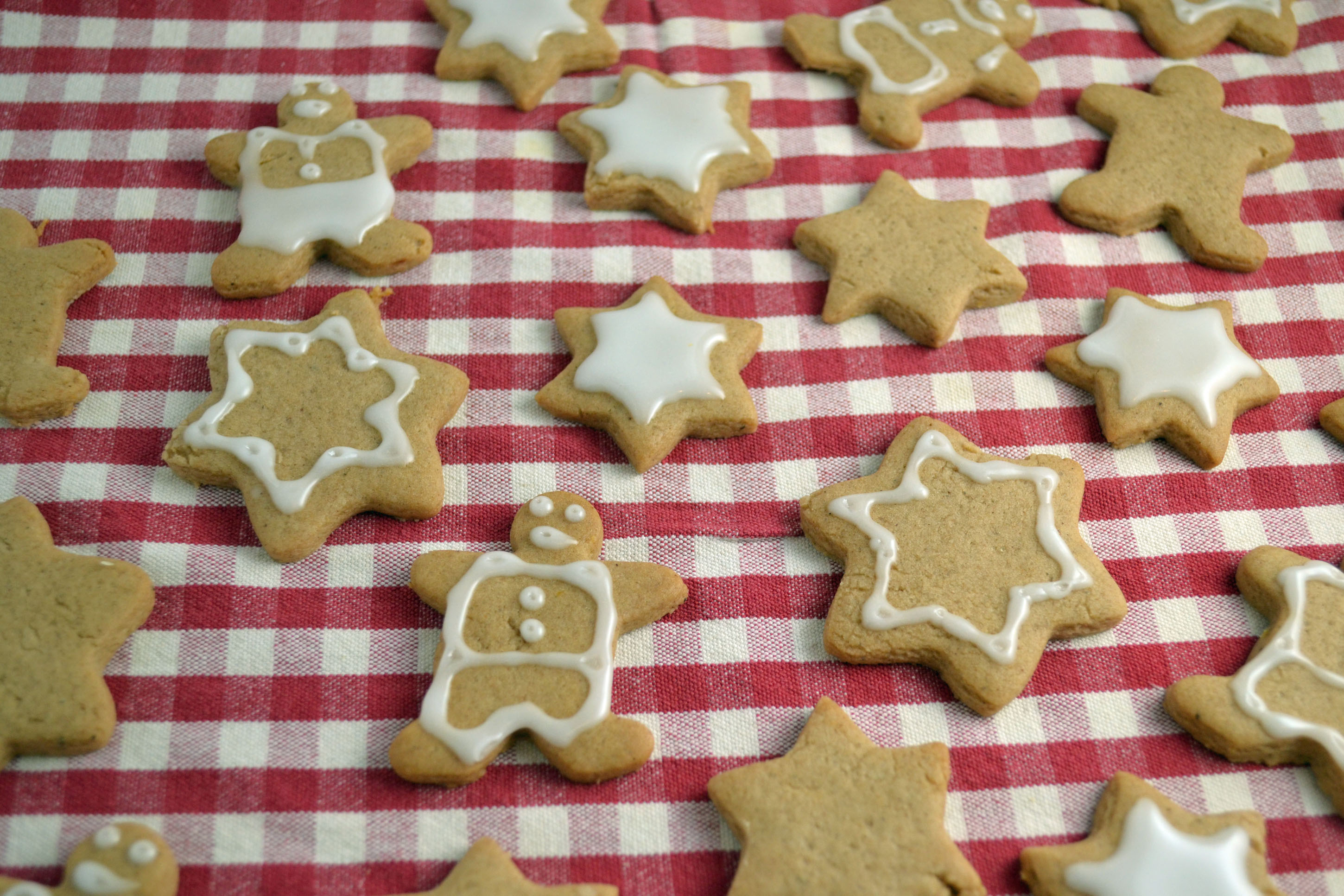
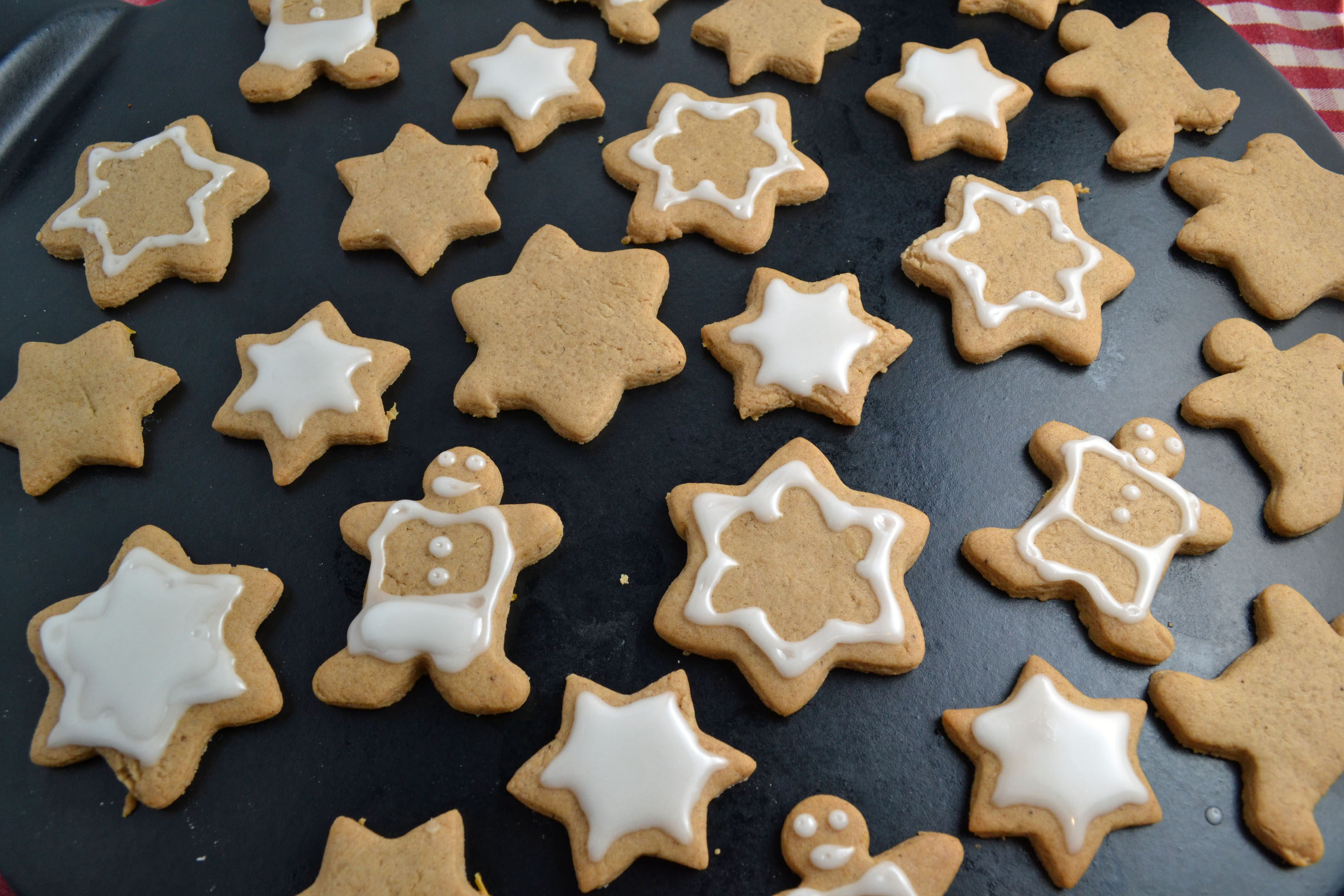
This festive cookie recipe from “The Art of Fine Baking” was actually recommended by a few of you readers. Lightly spiced but with a brightness from the lemon zest, they are the perfect alternative for ginger cookies. Cut them in whatever shapes you like and eat them with or without icing. This versatile cookie can be served for dessert, with tea, as a fix for that sudden sugar craving, or even left out with a glass of milk for Santa. I may just have to make this a new holiday baking tradition.

Ingredients:

1 cup unsalted butter
2/3 cup brown sugar
1/3 cup light corn syrup
2/3 cup maple syrup or honey
1 teaspoon grated lemon zest
1 teaspoon dark rum
4 1/2 cups sifted all purpose flour
1 teaspoon salt
1 teaspoon baking soda
1 teaspoon ground ginger
1/2 teaspoon cloves
1 teaspoon cinnamon
frosting or icing of your choice (optional)

Cream butter with sugar. Add syrups, lemon zest, and rum. Mix well. Add flour mixed with salt, baking soda, and spices. This should make a soft dough.
Chill dough until firm enough to roll.
Preheat oven to 350 degrees. Grease and flour baking sheets.
On a well-floured cloth, roll dough very thin (less than 1/8 inch, if possible). Cut into desired shapes. Transfer cookies to baking sheets with a spatula. Bake 8-10 minutes, or until cookies are puffed and lightly browned. Cool and frost (if using icing or frosting).

Yield: approximately 9 dozen
Sauteed Apple Cake

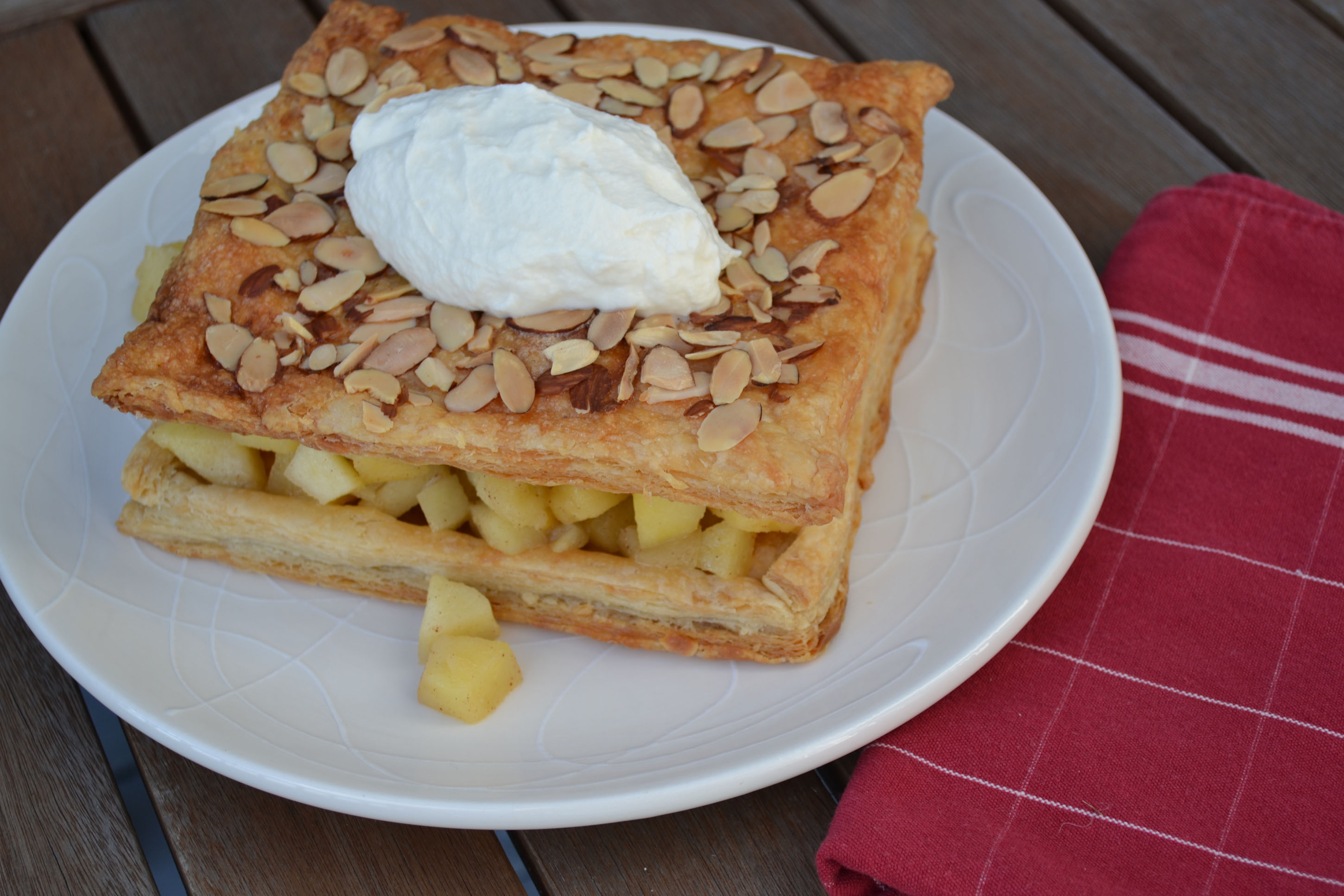
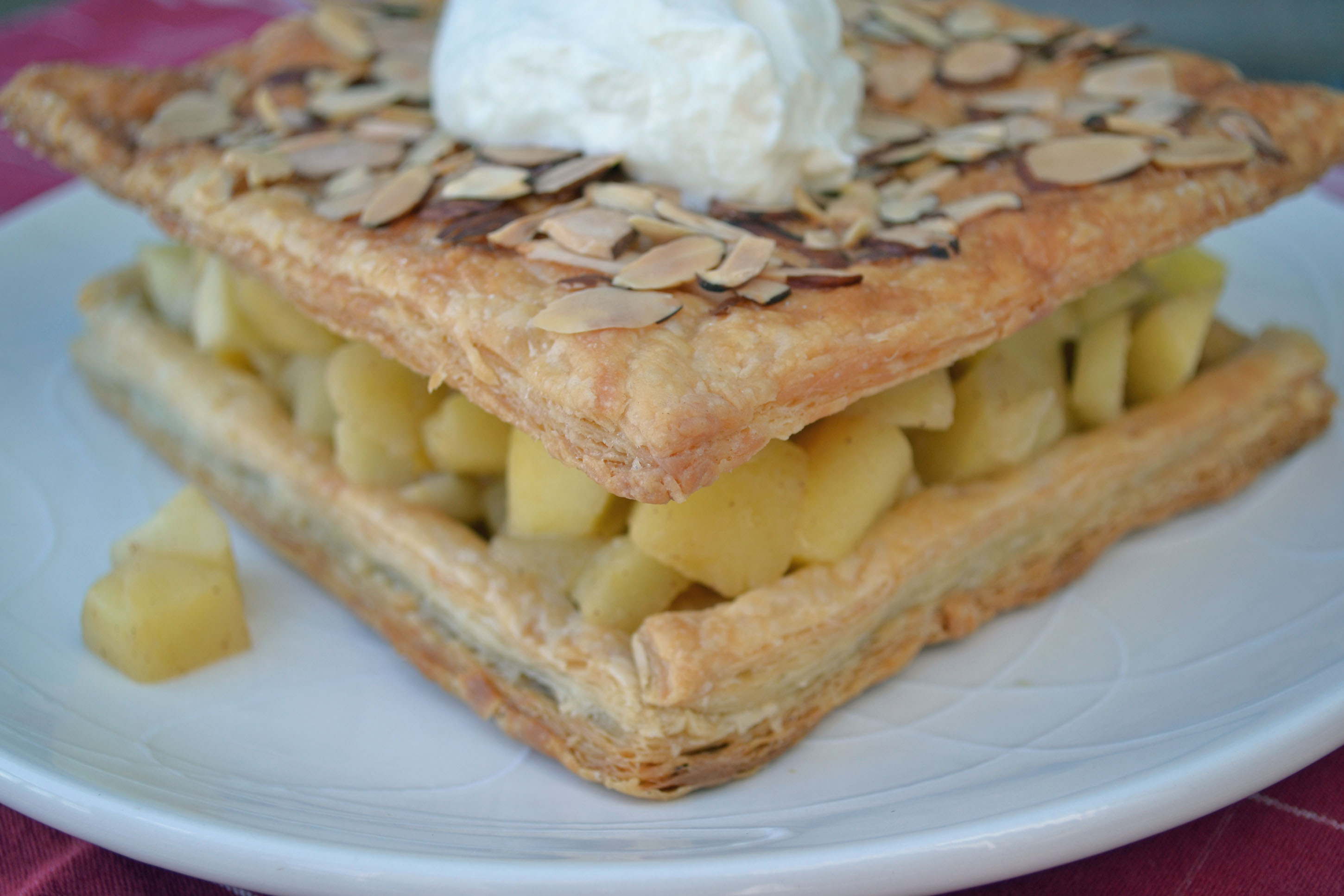
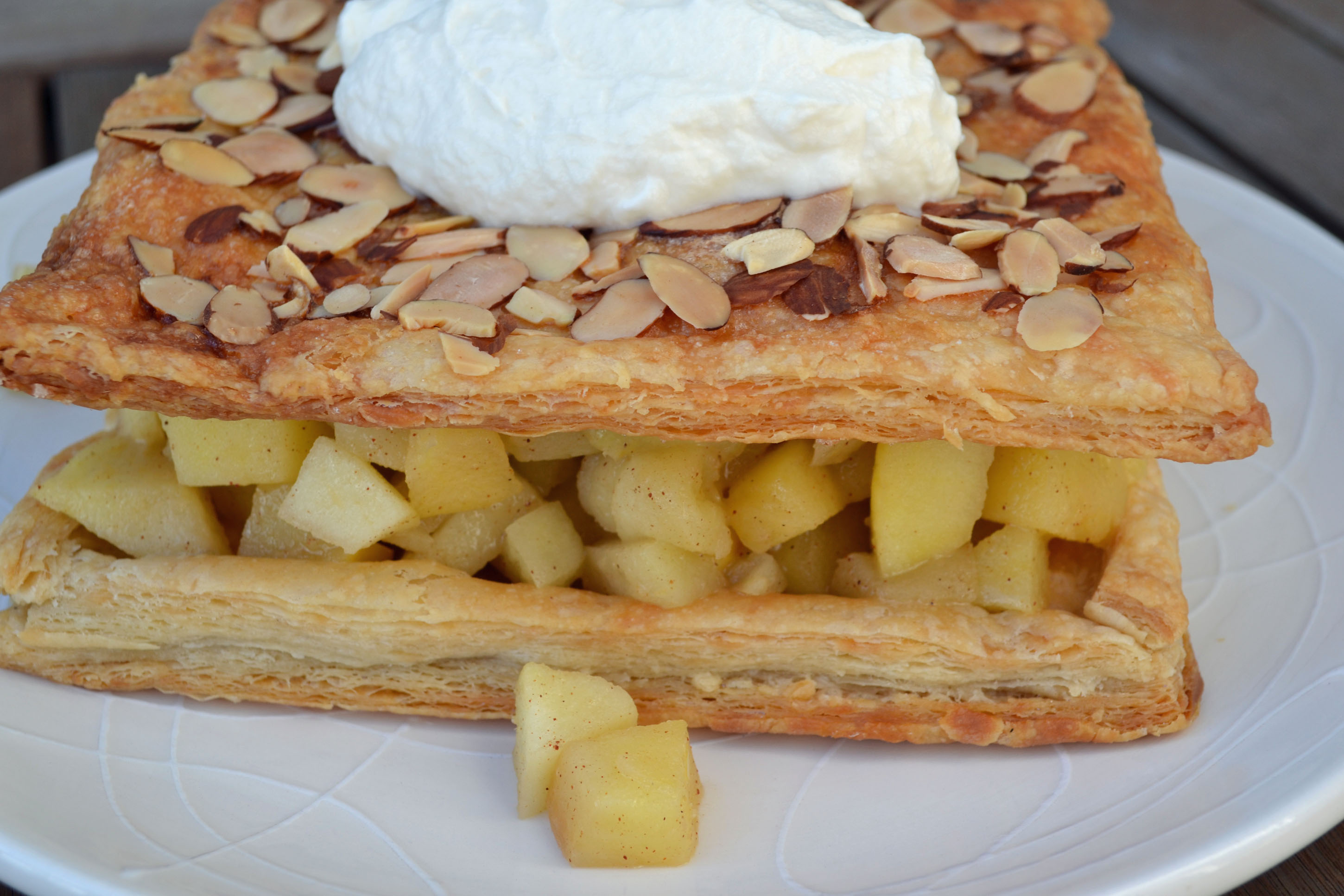
When I found this recipe nestled in the puff pastry and strudel section of “The Art of Fine Baking,” the end result seemed difficult to visualize and definitely wasn’t what I expected from a recipe with the title “Sauteed Apple Cake.” I therefore had to try it. Layers of flaky puff pastry hold buttery sautéed apples and a giant dollop of sweetened whipped cream with a crunch of almond ties it all together. I don’t think I’ve ever seen anything quite like it.

As shown in the photos, I chopped the apples in fairly large pieces so that they wouldn’t become too mushy during the saute process. However, I actually think the finished cake benefits from slightly smaller pieces or just slices, because it holds together better. The taste, of course, isn’t affected either way and is reminiscent of apple pie.

I made the flaky puff pastry (or “puff paste” as it is referred to in the book) layers from scratch…yes, from scratch. Homemade Puff Pastry is pretty much unheard of today. It’s very time consuming and it also makes you very aware of how much butter you are consuming when eating something as simple as a turnover or palmier. I actually enjoyed the process of repeatedly rolling the dough to create the butter layers. The resulting pastry tastes richer and a little more pure than those made with frozen puff pastry. However, such a lengthy process isn’t for everyone and this recipe can be made easily using the frozen version for this same unique twist on a cake.

Ingredients:

1/2 recipe Homemade Puff Pastry or two sheets frozen puff pastry
2 egg whites mixed with
2 teaspoons water
1/4 cup granulated sugar
1/4 cup sliced almonds

Sauteed Apple Filling
3 lbs tart apples – such as granny smith- peeled, cored, and sliced or coursely chopped
1/3 cup butter
1/4 cup sugar
1/2 teaspoon cinnamon
1 teaspoon lemon zest

Preheat oven to 350 degrees.

If using homemade puff pastry, roll out pastry slightly less than 1/8 inch thick. Trim edges. Divide into two 8 inch squares and 4 strips 1/2 inch wide. Place squares on baking sheet. Brush one square with egg white mixture and arrange strips along edges to make a border. Chill both squares. Just before baking, brush plain square with egg white mixture. Sprinkle it with granulated sugar and sliced almonds. Bake 30-40 minutes until golden brown.

While pastry bakes, make apple filling: In a large skillet, saute chopped apples with butter over medium heat. Sprinkle apples while they cook with sugar, cinnamon, and lemon zest. Turn occasionally with a spatula to lightly brown apples on all sides. Do not stir or apples will become mushy. When they are tender or lightly browned, remove from heat.

Pile apples into baked shell. Fit sugared square on top. Serve warm with whipped cream.
To re-warm: place in 300 degree oven for 15 minutes.

Serves 4

Brownies

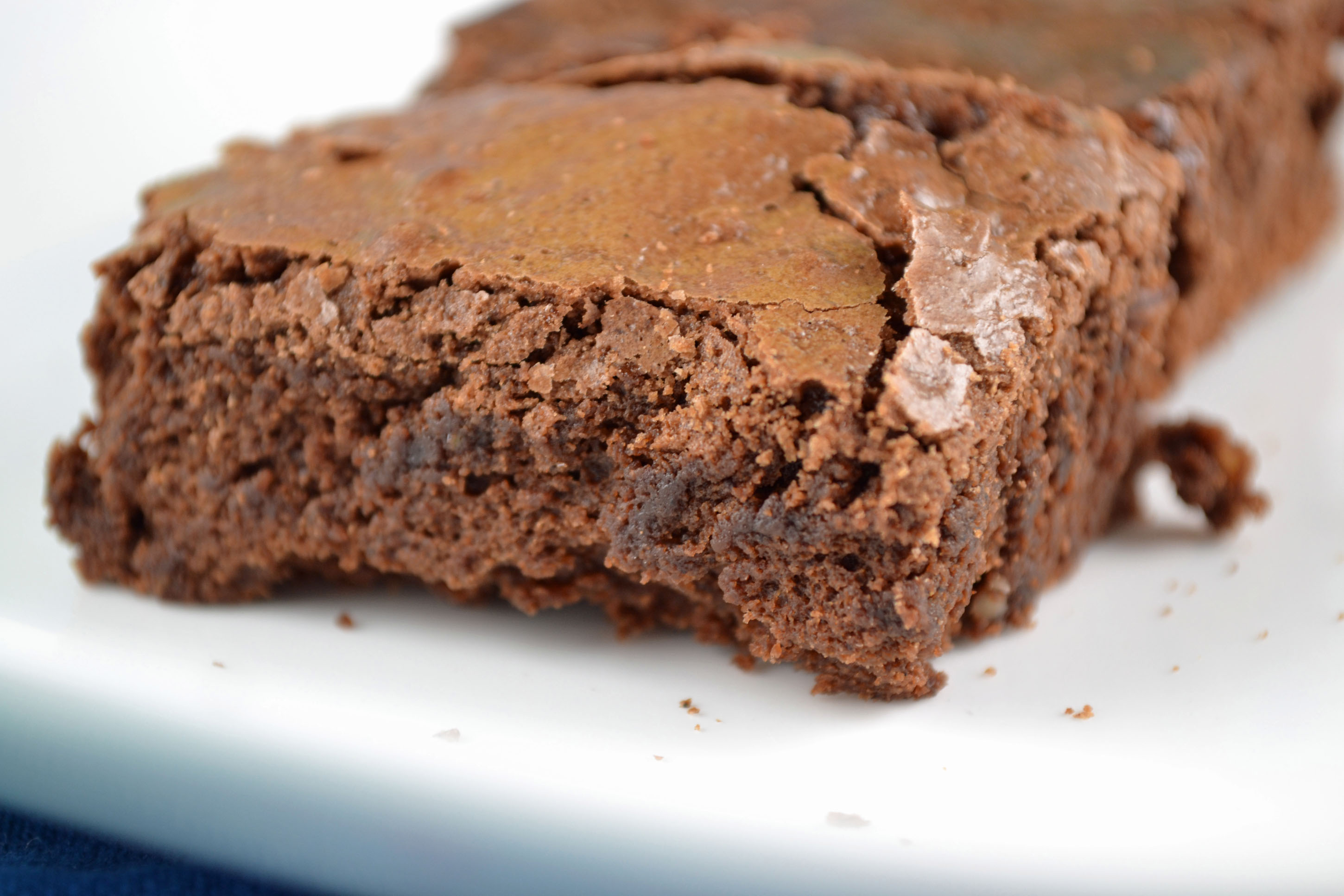
If there’s one recipe that my grandmother is most well known for, it’s brownies. Search for Paula Peck recipes on the internet and this brownie recipe is one of the first to pop up. Many of you may have seen Mark Bittman’s recent article, “Fear of Frying”, in The New York Times Magazine that acknowledges my grandmother‘s cooking (and this blog!). But it was one of his much earlier articles where I found her amazing brownie recipe mentioned (“Truth in Fudginess“). I have to admit that my views differ somewhat from his. With an extra large sweet tooth, I don’t discriminate against those brownies with all the bells and whistles (as long as they’re not dry and crumbly of course). However, the beauty of my grandmother’s recipe is its old-fashioned simplicity. I’ve experimented using semi-sweet chocolate instead of unsweetened, and the cakey brownie that emerged was just not the same. This is a classic, no-fuss recipe with minimal ingredients that creates the perfect, fudgy, sweet, chocolaty brownie that makes you want to devour every last crumb.

Ingredients:

3 ounces unsweetened baking chocolate
1/4 cup plus 2 tablespoons unsalted butter
3 eggs
1 1/2 cups sugar
1 teaspoon vanilla extract
3/4 cup all purpose flour
1/4 teaspoon salt
3/4 cup walnut pieces (optional)

Preheat oven to 325 degrees. Grease and lightly flour an 11 x 13 baking dish or pan.

Melt chocolate and butter together over low heat and set aside to cool slightly. Beat eggs and sugar together until light and fluffy. Add vanilla. Stir in chocolate mixture, then flour, salt, and nuts. Mix only until combined.

Pour into prepared dish/pan. Bake about 25 minutes until top looks dry. Cool before cutting into squares or bars.

Yield approximately 25.

Adapted from “The Art of Fine Baking,” by Paula Peck.

Individual Egg Potato and Cheese Casseroles

So I might have used this recipe as an excuse to use these cute little individual casserole dishes from Le Creuset. There’s something welcoming and comforting about having your own personal casserole, lid included. What’s layered underneath the two peeping egg yolk eyes? Alternating layers of mozzarella cheese and potato lightly seasoned with with dried herbs and fresh parsley. Let’s face it: between the melted strings of mozzarella and the brilliant yellow runny yolk flowing over slices of baked potato, gooyeness has undoubtedly taken over this brunch dish.

Ingredients:

4 medium potatoes, boiled, peeled and cut into slices about 1/3″ thick
3/4 lb mozzarella cheese, sliced thin
salt and pepper
1/2 cup shredded parmesan cheese
1/2 cup chopped parsley
1/2 cup melted butter
6 eggs
3/4 teaspoon dried oregano
3/4 teaspoon dried tarragon

Preheat oven to 350 degrees. Grease 3-6 ramekins (6 small ramekins or 3 large ones).

Place a layer of potato at the bottom of each ramekin. Cover with slices of mozzarella. Sprinkle with salt, pepper, 1/4 teaspoon each dried tarragon and oregano, parmesan cheese, and parsley. Add another layer of potatoes and repeat seasoning. Add a layer of mozzarella slices. Brush the top of each ramekin with melted butter. Bake about 30 minutes. Break eggs on top (one egg for small ramekins, 2 eggs for large). Sprinkle with remaining butter, herbs, salt, and pepper. Return to oven and bake about 20 minutes or until eggs are set.

Serves 3-6 (depending on the size of ramekins used).

Adapted from “The Art of Good Cooking,” by Paula Peck.

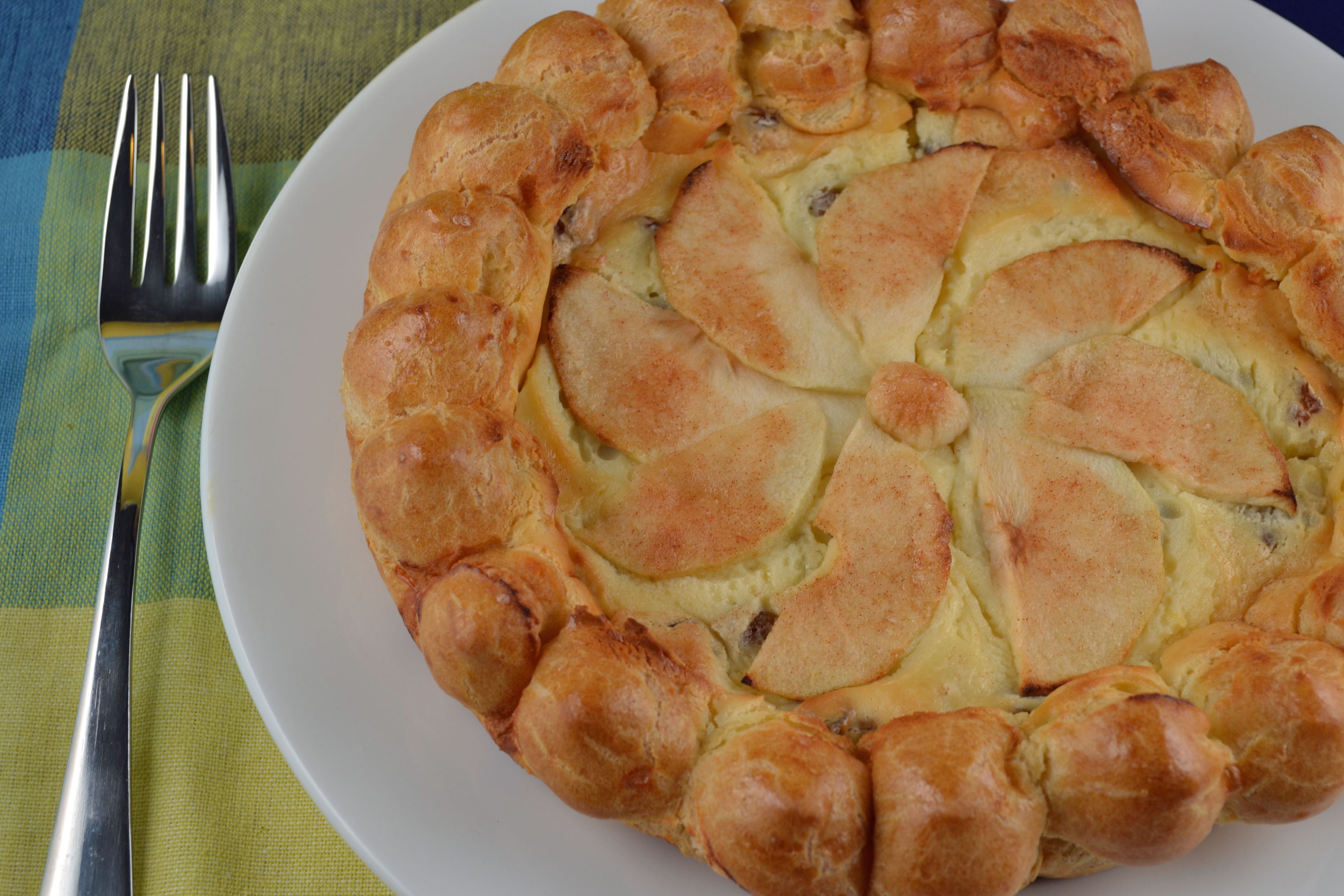
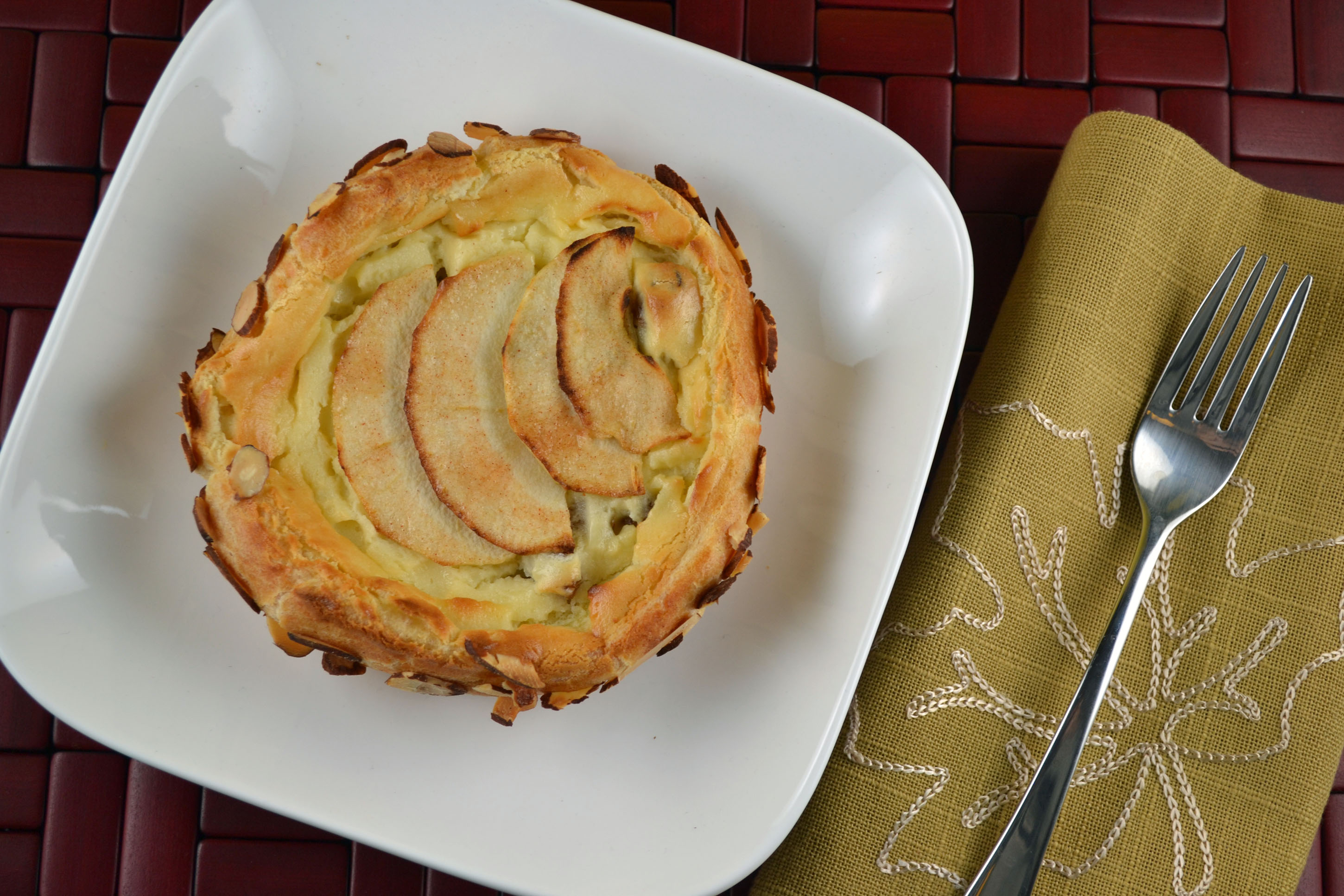
Apple Cheese Cake Puff

This recipe immediately caught my eye. Where apples, pate a choux, and cheese cake filling meet in one inspiring cake puff. I’ve never seen a recipe quite like it. Apple season is in full swing and I find cheese cake hard to resist so it seemed this recipe from “The Art of Fine Baking” was calling out to me. The result is impressive but must be devoured quickly due to the short life of the puff portion of the cake.

I made two sizes of this cake puff. The larger version follows the original recipe instructions and I improvised to make the smaller one using leftovers. I can’t help but feel like the puffed border of the large one could be over-the-top delicious if filled with sweetened whipped cream- like a cream puff apple cheese cake puff…whoa. But as is, the lemon zest in the cheese cake filling brings out the fresh tartness of the apple and provides a delicate contrast to its puffed shell. Another Paula Peck show stopper.

Ingredients:

Cheese Filling
2 tablespoons golden raisins
1 tablespoon cognac
1 cup cream cheese
1/4 cup sugar
1 tablespoon flour
1 egg yolk
1 teaspoon melted butter
1 tablespoon sour cream
1/2 teaspoon lemon zest
1/2 teaspoon vanilla extract

1 recipe pate a choux
1 tart apple (such as granny smith), peeled, cored, and sliced thin
2 tablespoons cinnamon sugar (see note)
1 egg yolk mixed with
1 teaspoon cream
1/4 cup sliced blanched almonds (optional)

Preheat oven to 375 degrees. Line a baking sheet with parchment paper.

Make cheese cake filling:
Mix raisins with cognac. Cream together cheese, sugar, and flour. Stir in egg yolk, then melted butter, sour cream, lemon zest, and vanilla. Mix in raisins.
For a large puff:
Trace a 8-inch circle in flour on a parchment lined baking sheet, using a plate or pan as a pattern. Turn parchment paper over. Spread a thin layer of pate a choux about 1/4 inch thick within the circle. Place remaining pate a choux in a pastry bag fitted with a plain round tube. Squeeze out small mounds of paste, one right next to the other, to make a low border around the layer.

Pour cheese filling into center of shell. Spread evenly. Arrange sliced apples on top. Sprinkle with cinnamon sugar. Brush border with egg yolk mixture. Sprinkle with almonds (if using).

Bake in preheated oven 50-60 minutes or until entire pastry is golden brown.

For small puffs:
Use pastry tip to pipe a spiral, starting in the center, about four inches wide. This creates the bottom layer so make sure there are no holes in the pate a choux. Pipe a second layer just around the rim of the spiral, creating a border. Spread cheese filling in center as instructed above. Bake about 30 minutes.

Note: Cinnamon Sugar can be made by simply combining 1 cup granulated sugar with 1 tablespoon cinnamon.

Adapted from “The Art of Fine Baking,” by Paula Peck.

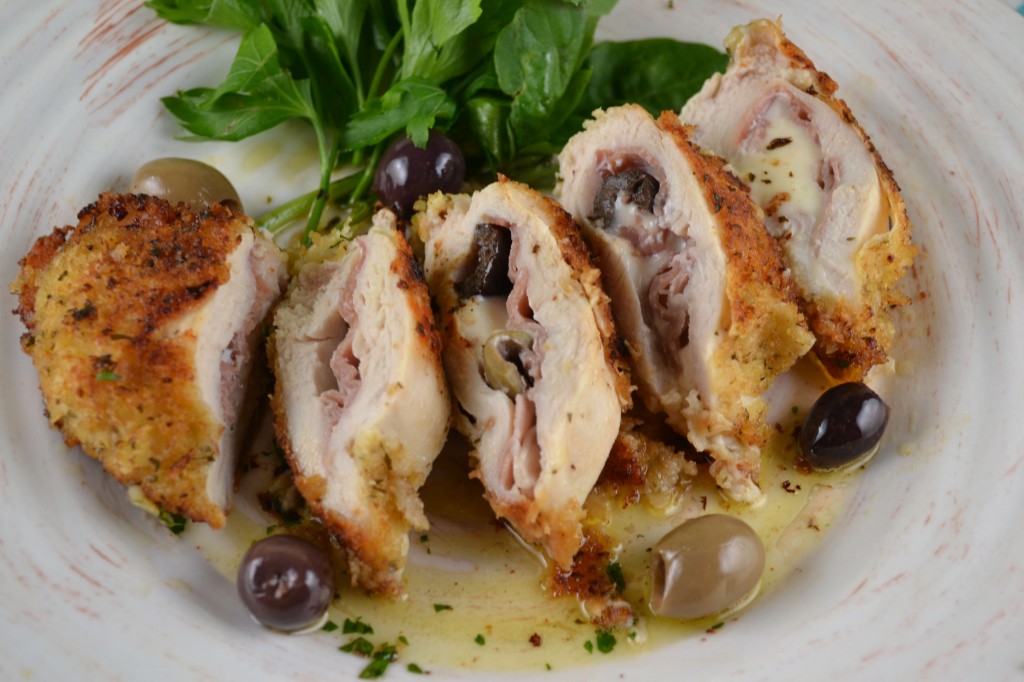
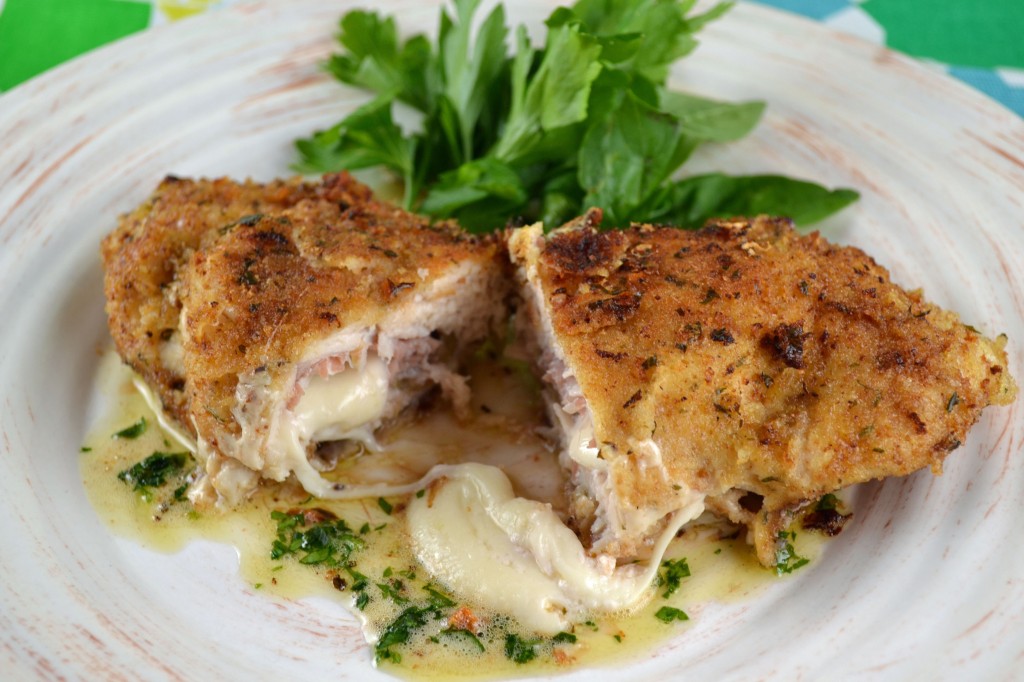
Chicken Saltimbocca

Saltimbocca has become somewhat of a classic. Originally Mediterranean, the name Saltimbocca is Italian for “jump in mouth” – a reference to the flavor explosion that takes place while eating this dish. There are varying ways to make saltimbocca. Veal, sage, capers, and sometimes provolone cheese are common ingredients. However, in each scenario the basics remain the same: the chicken or veal is sautéed and prosciutto is always involved (though I see no reason why you couldn’t use ham for a less expensive version). This recipe for Chicken Saltimbocca from “The Art of Good Cooking” happens to include black olives, which is somewhat rare but the beauty of this dish is its flexibility. Though I didn’t add it here, I think roasted red pepper could also make a nice addition to the center filling. The mozzarella is a natural match with the prosciutto and the crunchiness of the breading that soaks up some of the garlic butter is a combination that’s worth it alone – the other ingredients are just a bonus!

Note: the original recipe did not include toothpicks. I find that it’s easier to ensure the filling stays between the two cutlets by securing each package with a couple of toothpicks. Just make sure to take them out after cooking!

Chicken Saltimbocca

Ingredients

6 chicken breasts, boned, skinned, and cut in half (or 12 thin chicken cutlets)
6 thin slices of prosciutto, cut in half
12 pieces of mozzarella cheese, about ½ inch thick rectangles
12 pitted black olives, halved
1 teaspoon ground black pepper
½ cup flour
1 egg
3 tablespoons milk
2 cups bread crumbs of your choice
¼ cup unsalted butter
2 cloves garlic, finely minced
½ cup chopped Italian parsley
toothpicks (optional)
¼ cup butter and ¼ cup olive oil (or enough to cover the bottom of a large skillet to a ¼ inch depth, equal parts)

Instructions

On one side of each breast or cutlet, place a piece of prosciutto, a piece of mozzarella, and two olive halves. Sprinkle with freshly ground pepper. Fold unfilled side over to cover filling, and press edges firmly together to enclose filling or secure with toothpicks.

Flour each package so it is dusted on all sides. Beat egg slightly, adding milk. Dip chicken packages into mixture on both sides. Then dip into bread crumbs. Chill for at least a ½ hour or longer.

Melt ¼ cup butter in a small saucepan. Add half the chopped garlic and parsley. Keep warm until chicken is cooked.

Heat butter and olive oil in skillet with remaining garlic and parsley until fats are hot but not smoking. Place breaded chicken in skillet and turn heat to medium high. Saute chicken quickly, only until golden. Turn once to cook the other side.

Remove to heated serving dish. Remove toothpicks, if using. Pour warm garlic parsley butter on top.

Serves 8-10.

Adapted from “The Art of Good Cooking,” by Paula Peck.

Schnecken

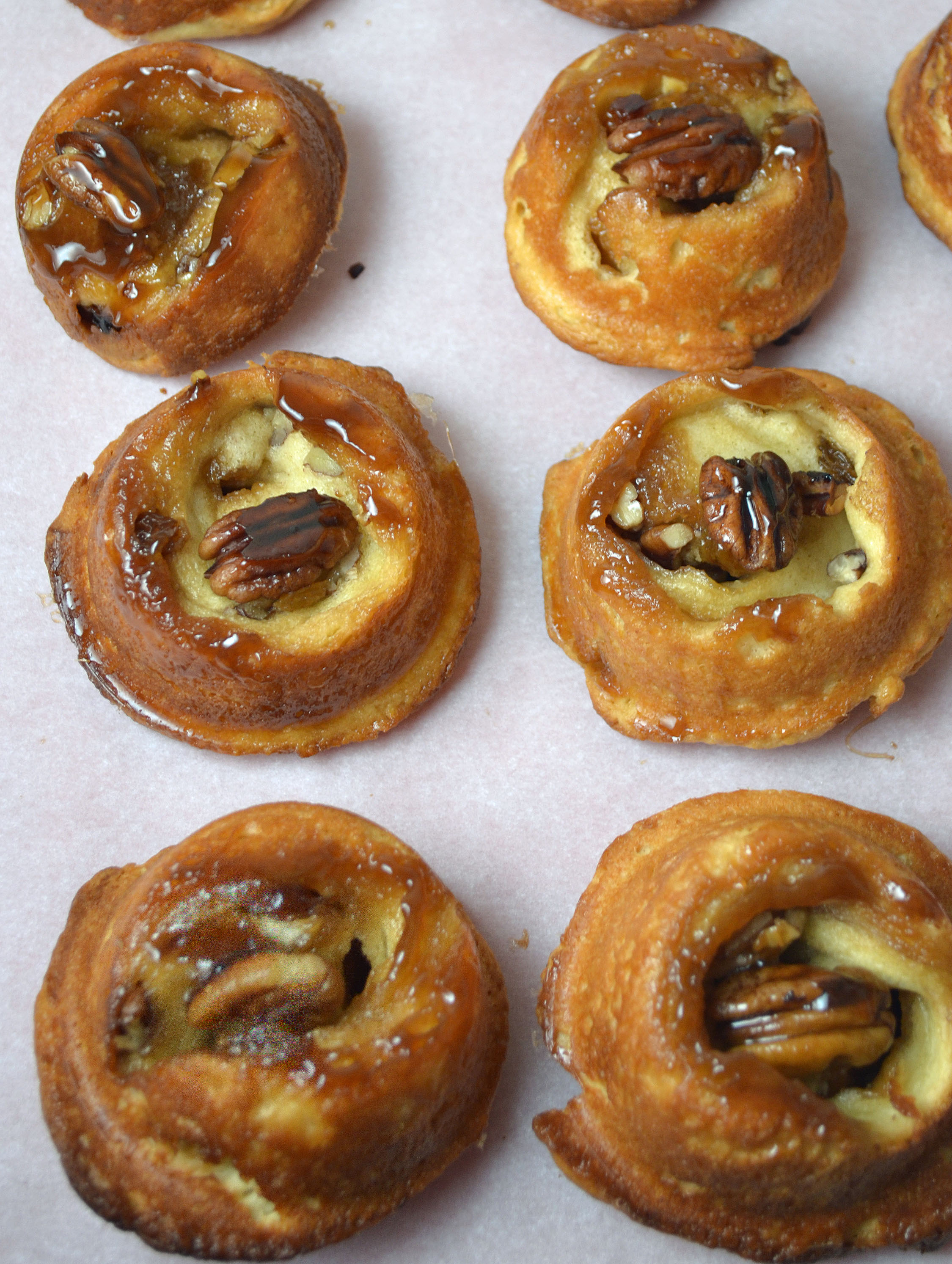
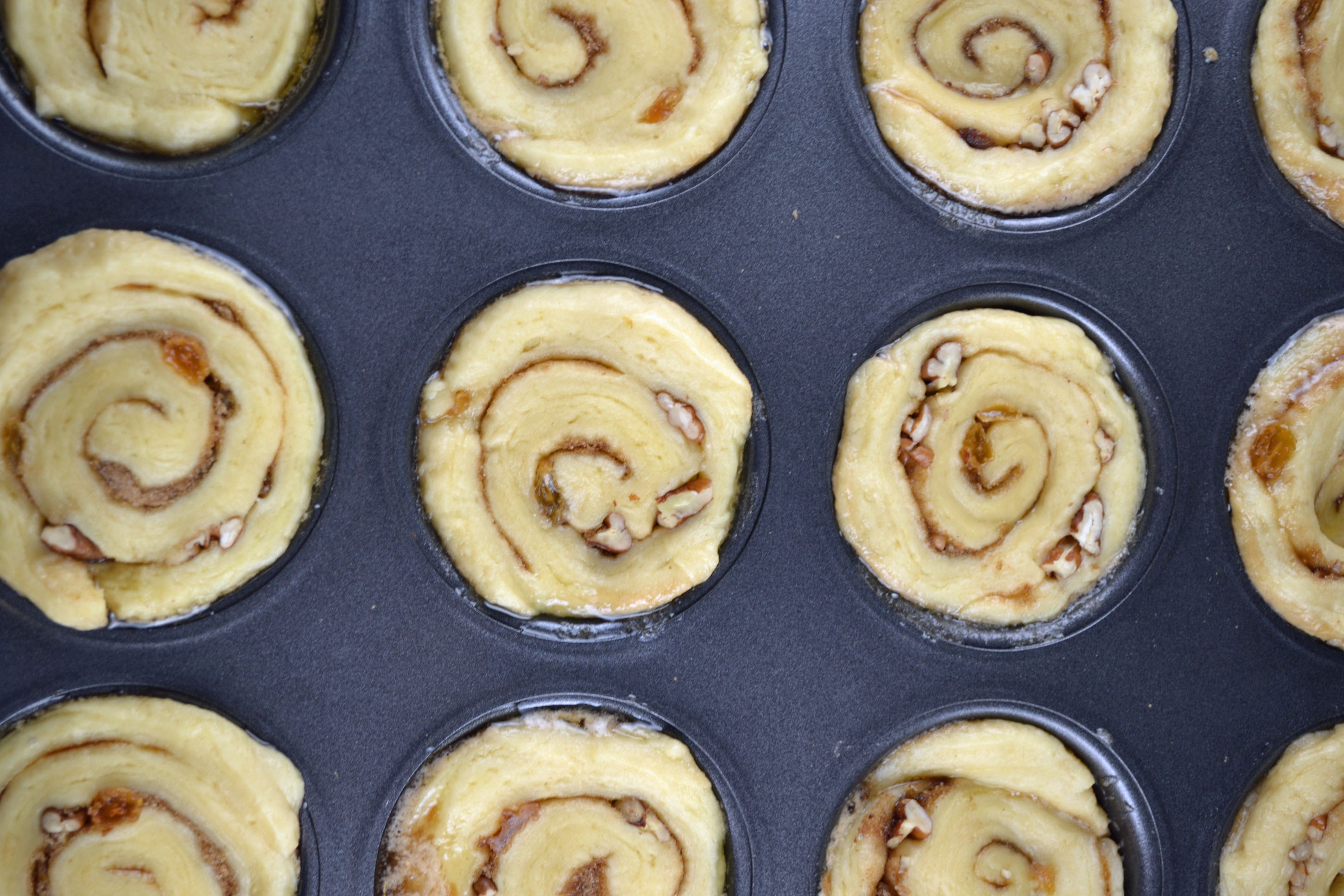
What’s a Schnecken? Some kind of gadget souvenir? This was the thought that crossed my mind when I found this recipe in “The Art of Fine Baking.” After reading through it and then of course baking some, I came to the conclusion that these are basically small, almost bite sized, cinnamon/caramel rolls. For those of you who are unfamiliar with Schnecken, as I was, it’s a German pastry and the name Schnecken means snails – referring to the shape of these delicious breakfast treats. Apparently, Schnecken are often confused with rugelach (also German) but I don’t see much of a similarity other than that they are both rolled pastries creating a spiral of the filling.

I happen to have a weakness for caramel and cinnamon rolls and though these photos may lack the bells and whistles of a carefully styled shoot, you can see that this recipe definitely delivers on all the important aspects: ooey gooey caramel, crunchy nuts, cinnamon, and raisins. One tip: just make sure to use enough of the butter sugar mixture –  the softer and stickier, the better.

Ingredients:

1/2 cup soft unsalted butter
1 1/2 cups well-packed light brown sugar
1 tablespoon white corn syrup
1 1/2 cups coarsely broken or whole pecans
1 recipes Rich Sour Cream Dough
2 teaspoons cinnamon
1 cup raisins
1 cup finely crushed pecans

Cream butter with 1/2 cup light-brown sugar. Beat in corn syrup. Grease regular size or mini muffin tins with this mixture, using it generously. Place 2 or 3 pecan pieces into each muffin cup.

Preheat oven to 375 degrees.

Roll dough into a long rectangle 1/4 inch thick. Sprinkle with remaining sugar, cinnamon, raisins, and crushed pecans. Roll dough tightly, jelly-roll style, sealing the seam. If roll becomes much thicker than the size of muffin tins, stretch it out. If it is too thin, gently compress it.

Slice roll into pieces which will fill muffin cups halfway. Press into cups firmly. Let rise only until dough looks puffy.

Bake in preheated oven about 20 minutes, or until tops of shnecken are golden brown.
Turn muffin pans upside down immediately, to remove schnecken and to permit glaze to run over sides.

Yield: approximately 7 dozen small shnecken or 5 dozen larger ones. Recipe can be easily halved.

Adapted from “The Art of Fine Baking,” by Paula Peck.

Frozen Raspberry Mousse

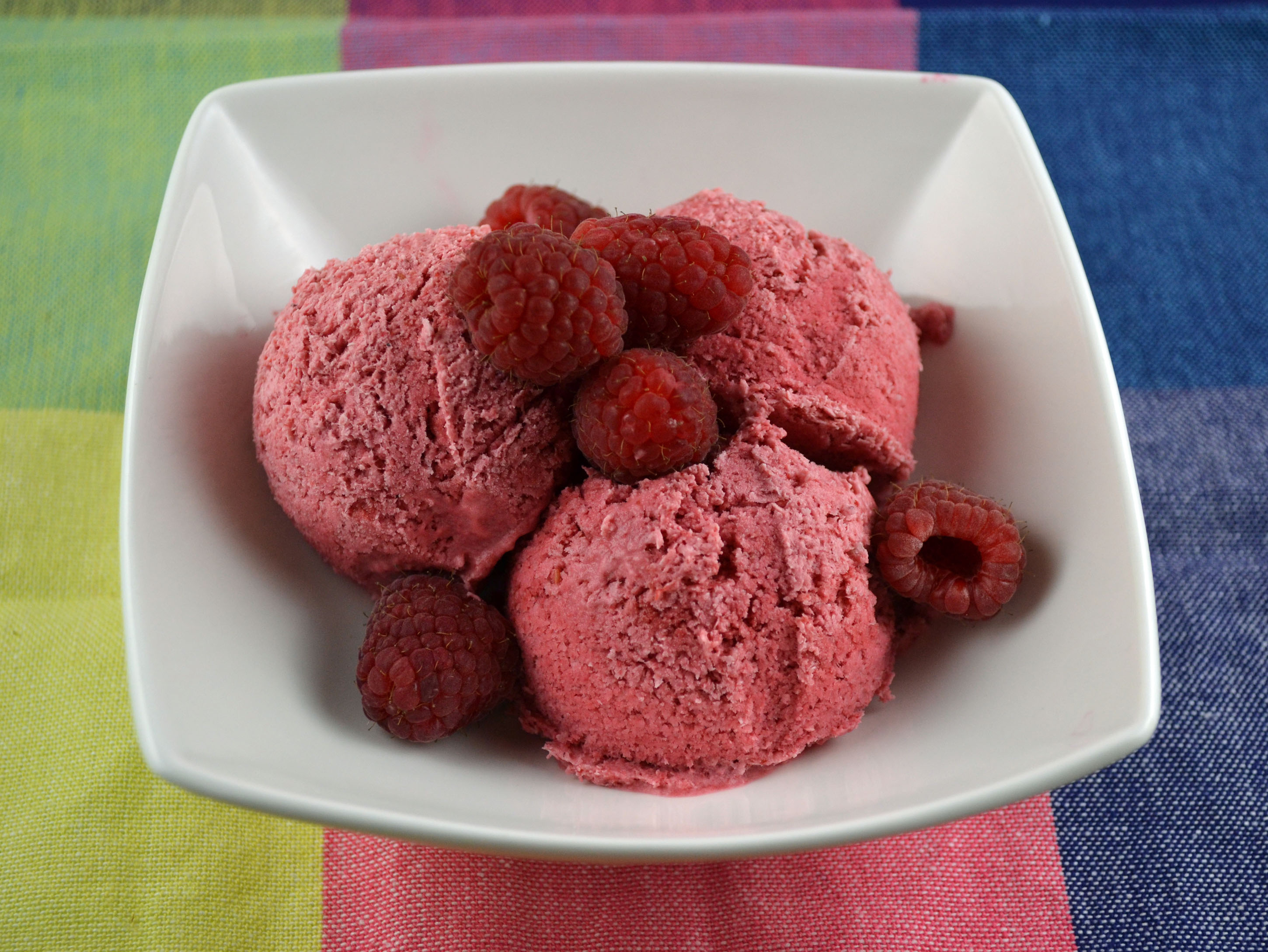
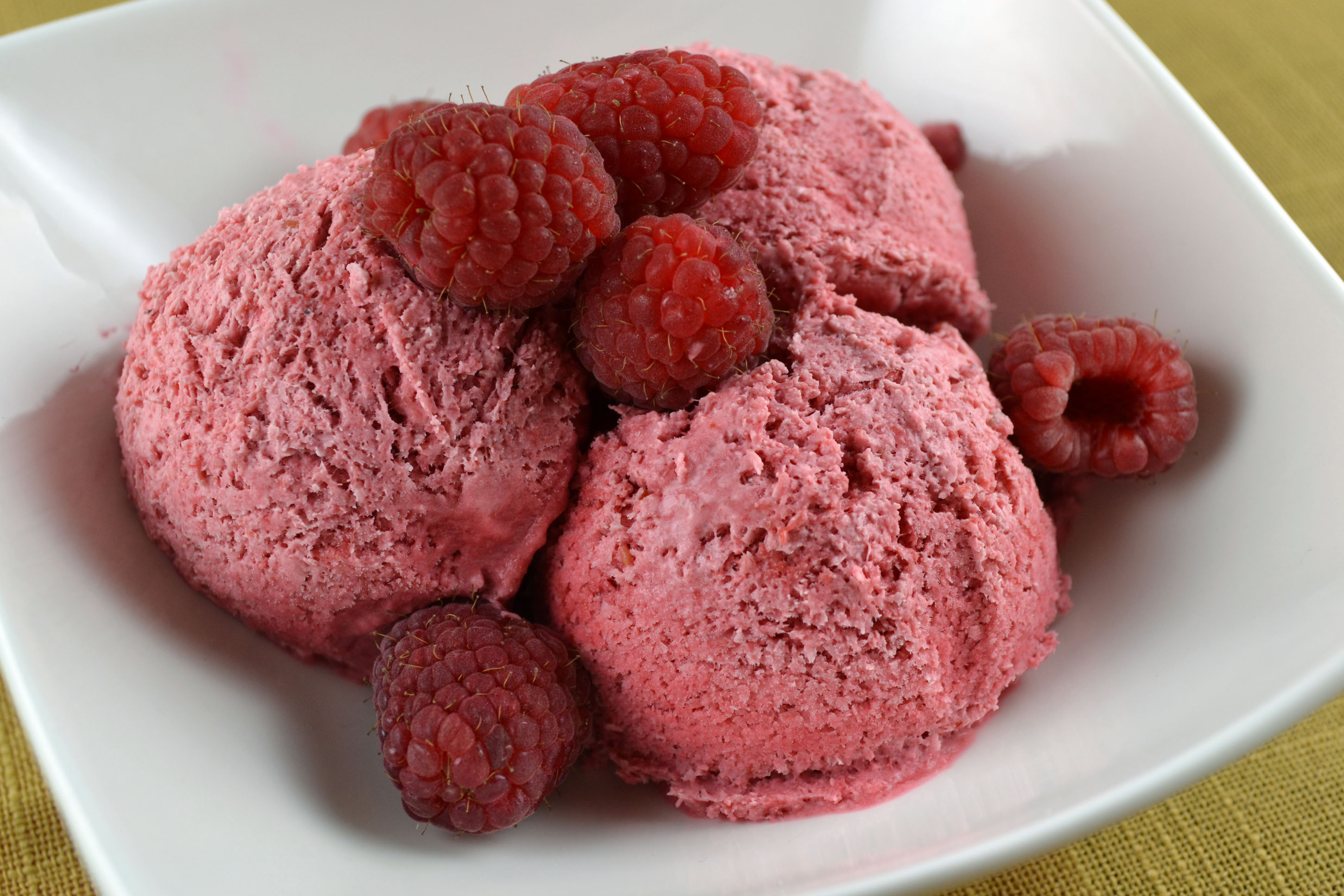
Don’t let the photo deceive you. This is not ice cream despite what you maybe thinking. At least not conventional ice cream (it is afterall, a form of iced cream, literally). No ice cream maker needed for this bright mousse made with fresh or frozen (more affordable) raspberries. Easily summed up with 5 ingredients and though the final texture is more icy and less creamy than I would normally want in a mousse, I keep going back for more. The tang of the raspberries is balanced by the richness in the cream and the kirsch or framboise ensures the mousse doesn’t harden too much in the freezer. As summer comes to a close, this quick mousse is a reminder of light refreshing desserts as the heavier fall pies and cobblers begin to takeover.

1 cup raspberry puree (1-2 packages frozen raspberries or 2-3/6 oz packages fresh raspberries, pureed and sweetened to taste with 1-2 tablespoons confectioners sugar; seeds discarded)
2 tablespoons framboise or kirsch
2 egg whites
pinch of salt
2 tablespoons granulated sugar
2 cups heavy cream, whipped

Combine raspberry puree with framboise or kirsch. Beat egg whites with salt till they are stiff. Beat in sugar, a little at a time, and continue beating till whites are very firm. Fold whipped cream and stiffly beaten egg whites together. Fold in raspberry puree. Pour into a bowl which can be placed in the freezer. Cover and freeze in freezer until mixture is firm.

Serves 6.

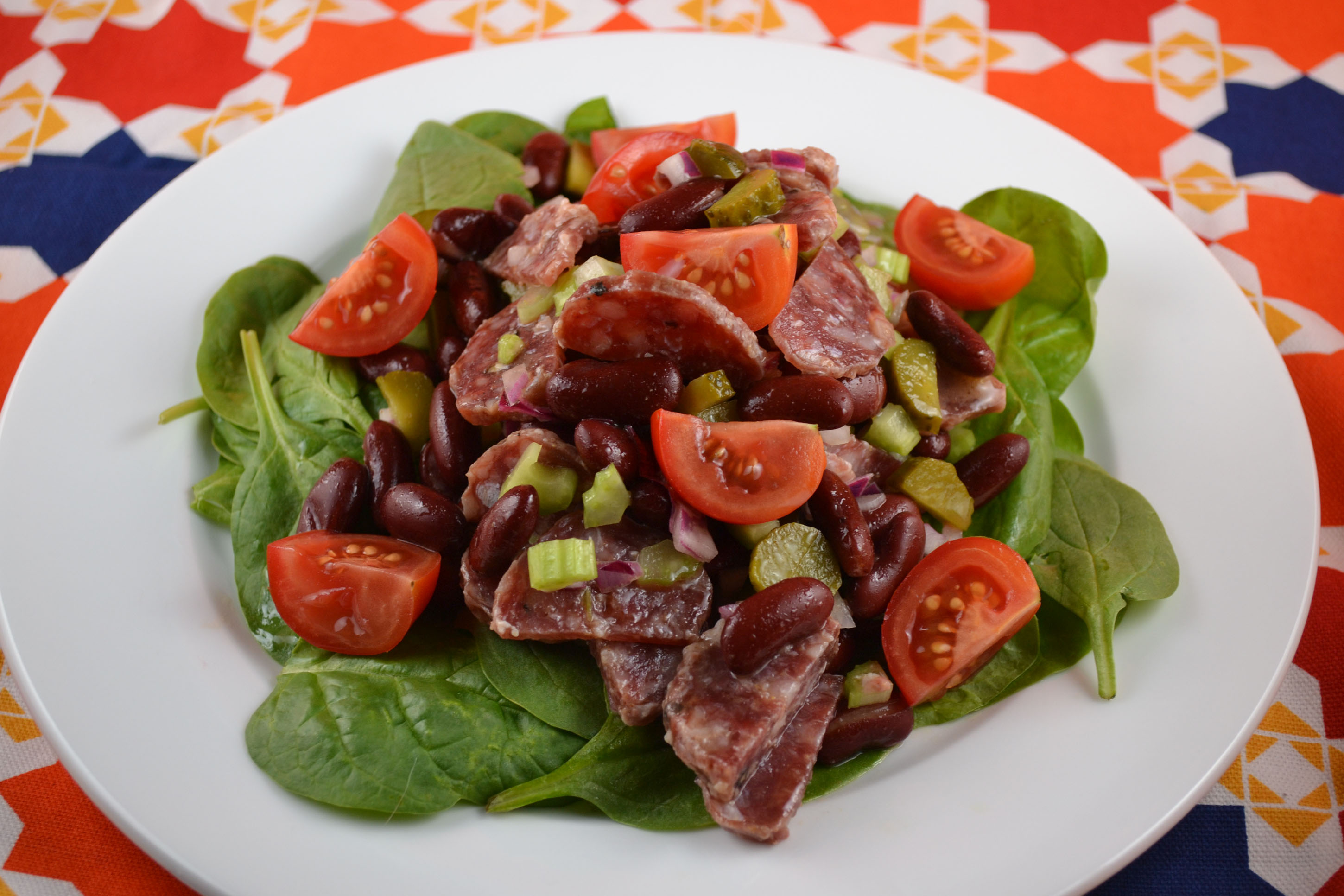
Red Bean and Sausage Salad

 A hearty protein filled salad that promises to keep you full. Red bean and Sausage Salad is an unpublished Paula Peck recipe that includes just the right combo of fat and acidity to make it an antipasto like satisfying addition to any meal or greens.
Though the recipe recommends salami, any cured sausage may be used. I happened to have an Olli salami on hand which is part of a high end artisinal salami line made using old fashioned family recipes (how appropriate!). This recipe is flexible and the sweet pickles and kidney beans provide the right balance to work well with just about any variation of sausage or greens.

Ingredients:

2 1/2 cups cooked kidney beans
1 lb salami or other cooked sausage, sliced
1 cup finely chopped celery
1/2 cup chopped sweet pickles
1/4 cup chopped parsley
1/2 cup chopped red onion
1 tomato diced or a handful of grape tomatoes, halved
1/2 cup olive oil
1/4 cup red wine vinegar
1 tablespoon dijon or spicy mustard
salt and freshly ground pepper to taste

Combine the first seven ingredients in a bowl. Allow to stand while you make dressing. Combine oil, vinegar, mustard, salt, and pepper in a container with a lid. Close container and make sure it is well sealed. Shake vigorously for about 30 seconds to blend and thicken. Pour over salad and season to taste. Serve on spinach or other fresh greens.

Serves 6.

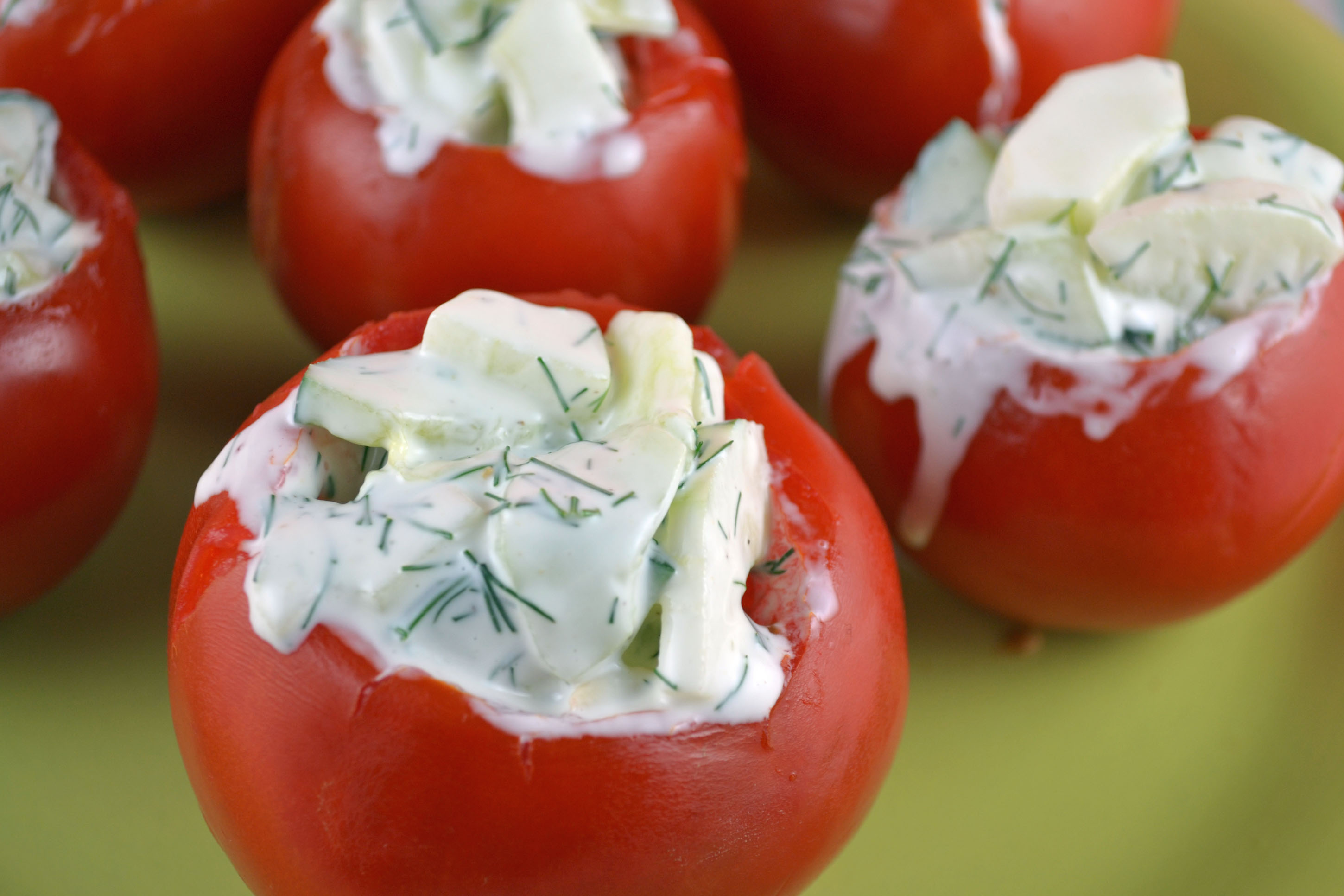
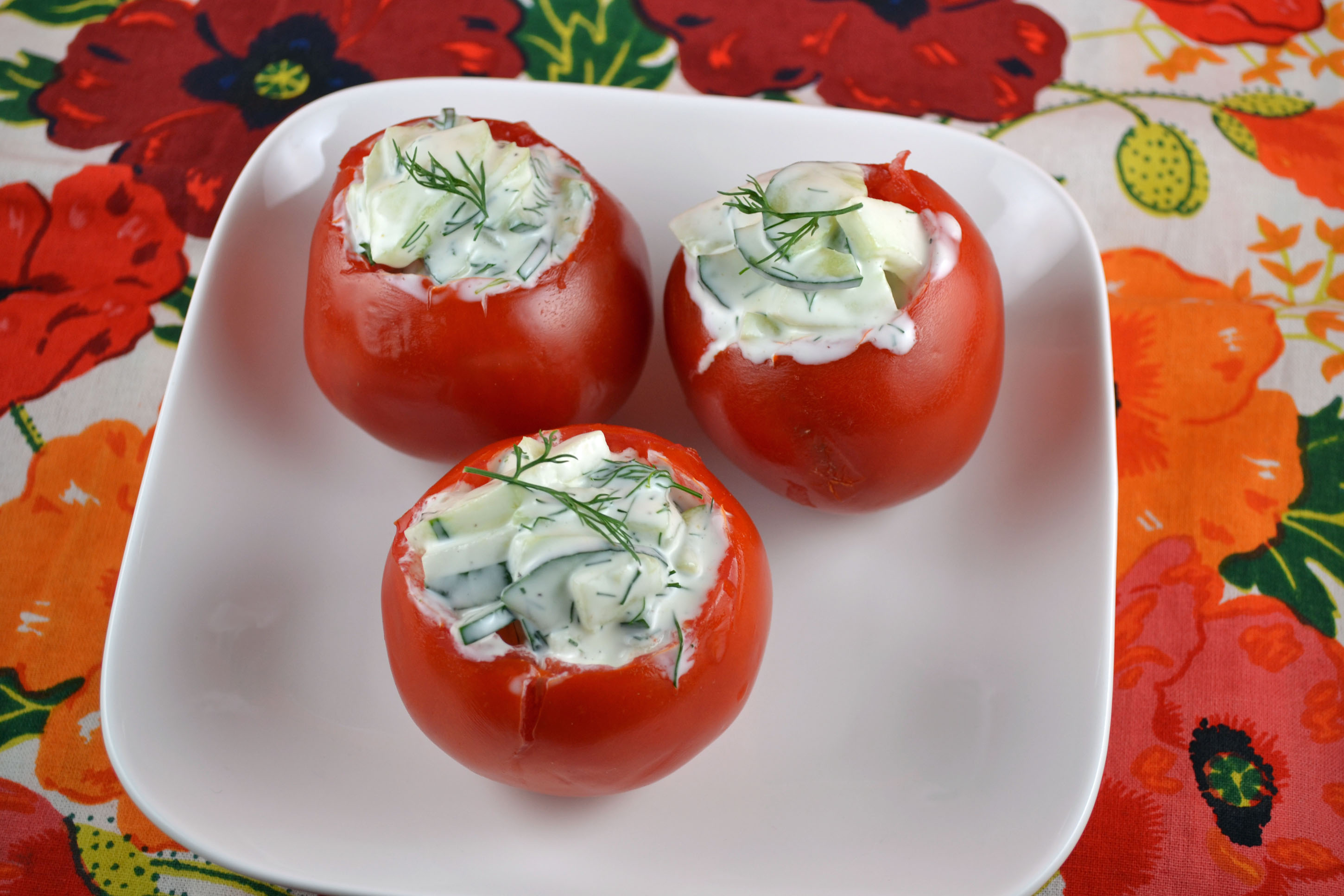
Tzadziki Stuffed Tomatoes

The original title of this recipe from “The Art of Good Cooking” is Danish Stuffed Tomatoes. However, when I tried to research this recipe, I found little on what makes them “Danish.” I decided to lighten the stuffing by using yogurt, making it more about the cucumbers and less about the overbearing amount of sour cream and mayo originally used. It now maybe considered more Greek than Danish since the stuffing is more of a basic tzadziki. Creamy yogurt, garlic, and dill brighten the cucumbers that then add crunch to the soft juicy ripe tomatoes.
This is a tasty little no bake/cook seasonal appetizer or side dish that presents beautifully.

2 hothouse cucumbers
2 teaspoons salt
1 teaspoon sugar
1 teaspoon cracked pepper
1 small garlic clove, minced
1 ½ tablespoons lemon juice
2 cups lowfat yogurt or greek yogurt
2-3 tablespoons chopped dill
6 vine ripe tomatoes

Peel cucumbers and cut in half lengthwise. With a spoon, scoop out seeds and discard them. Slice cucumbers thin. Place in a bowl, sprinkle with salt and place in refrigeration for at least 2 hours. Pour off water which has accumulated and press out any additional water so that cucumbers are dry. Add sugar and pepper and stir.

Combine garlic, yogurt, and lemon juice. Pour over cucumbers and toss lightly, adding half of the dill. Place in refrigerator until needed.

Remove a circle from the stem ends of the tomatoes. Carefully scoop out all the seeds and pulp. Turn the tomato shells upside down on paper towels so that any juice may drain.

Stuff each tomato with the cucumber mixture. Sprinkle remaining dill on top of each tomato.

Serves 6

Adapted from “The Art of Good Cooking.”